


In August 2025, National Security Adviser (NSA) Nuhu Ribadu enthused about the capture of Ansaru terror leaders, Mahmud Muhammad Usman (aka Abu Bara’a/Abbas/Mukhtar) and Mahmud al-Nigeri (aka Mallam Mamuda), as signifying the end of Mamuda terror masterminds in Nigeria. As he put it: “Abu Bara’a was the self-styled Emir of ANSARU and coordinator of various terrorist sleeper cells across Nigeria. He was also the mastermind of several high-profile kidnappings and armed robberies used to finance terrorism over the years. The second was Mallam Mamuda, Abu Bara’s proclaimed Chief of Staff and Deputy. He was the leader of the so-called ‘Mahmudawa’ cell hiding out in and around the Kainji National Park, straddling Niger and Kwara States up to Benin Republic. Mamuda trained in Libya between 2013 and 2015 under foreign jihadist instructors from Egypt, Tunisia, and Algeria, specialising in weapons handling and IED fabrication.”
Mr Ribadu continued: “These two men have been on Nigeria’s most-wanted list for years. They jointly spearheaded multiple attacks on civilians, security forces, and critical infrastructure. Their operations include the 2022 Kuje prison break, the attack on the Niger Republic uranium facility, the 2013 abduction of French engineer Francis Collomp in Katsina, and the May 1, 2019 kidnapping of Alhaji Musa Umar Uba (Magajin Garin Daura). They were also behind the abduction of the Emir of Wawa, and they maintain active links with terrorist groups across the Maghreb, particularly in Mali, Niger and Burkina Faso.”
The exultation has proved to be short-lived. Barely six months later, the same group, having replenished and rebranded itself as a Boko Haram affiliate and produced vicious successors as well as rearmed its foot soldiers, has attacked Kwara State again and massacred dozens of people in Woro community of Kaiama local government area. Casualty estimates range from over 75 to over 170. The scale of the slaughter has shocked not only Nigerians but the rest of the world. The Kaiama attack was, however, not the first in the Borgu area of the state, and despite the continuing arrest of terror leaders, it may not be the last. Far beyond the discouraging scale of last week’s killings, and beyond the episodic and desultory response by Nigeria’s security agencies, it is time for a comprehensive review of the country’s security paradigm. The existing one, this column continues to argue, is simply not working. Whether in Kebbi, Zamfara, Nasarawa, Benue, Niger, Plateau, and now Kwara, the response to terrorist attacks has been chaotic and ineffective, achieving occasional triumphs, but in general unable to stanch the flow of blood in those theatres.
A security paradigm review is sorely needed, for the mere act of arresting or neutralising terror leaders in the Northwest, Northeast and now North Central has become an insufficient deterrence. Here are a few suggestions: (1) Nigeria must refuse to resign to the fatalism of accepting terror attacks as a way of life. It implies embracing, like Pakistan, Somalia, and DR Congo, the idea that the problem is insurmountable. (2) While the country rapidly expands military recruitment, it must recognize that it will never have enough troops to deploy to trouble spots. So, it needs winning strategies. (3) But it is time the country and its government realise that Nigeria is at war, and the country must be put on a war footing. It is futile thinking a few deployments here and there will be enough to pacify trouble spots that began in the Northeast, has spread to the Northwest, is now effectively in the North Central, and appears set, with probing attacks already taking place, to spread to the Southwest. (4) The new security paradigm must be firmly anchored on the right military doctrine that produces strategies, tactics and principles to guide how Nigeria battles and counters centrifugal forces encircling the country and gnawing away at its central nervous system.
Related News
Stop dropping NSA’s name, group tells Adamawa APC governorship aspirants
Ribadu in talks with U.S. fact-finding Congressional delegation
Lighting strikes again
Specifically and tactically, while the security paradigm must encompass all other threats, including providing for hybrid warfare, it clearly knows that the terror attacks on Nigeria have been largely asymmetric. This requires Nigeria to also be highly innovative, mobile, and equipped with diverse platforms. Consequently, among other measures, it is urgent to do the following. (1) The threat areas must be saturated with surveillance and intelligence gathering to locate and neutralise terror cells, regardless of the inhospitable terrains involved. (2) Divide the attacked states into operational sectors for monitoring and action, and equip troops with the most modern and secure communications gadgets to alert intervention forces. (3) Create rapid deployment intervention forces capable of deploying forces quickly and in all terrains and in all weather in response to alerts from forces near the epicenters of attacks. (4) Assign local commanders to the various sectors for close monitoring and control, reconnaissance patrols, initial interdictions, and capacity to link up with nearby sector commands for cordon, search, and elimination of enemy forces. And (5) enshrine the doctrine of hunting attackers down until they are eliminated, not repel, secure the release of abducted people, or keep attackers at bay. The best form of defence is always attack.
Read Also: Press freedom, intelligence power, and Nigeria’s democratic signal to West Africa
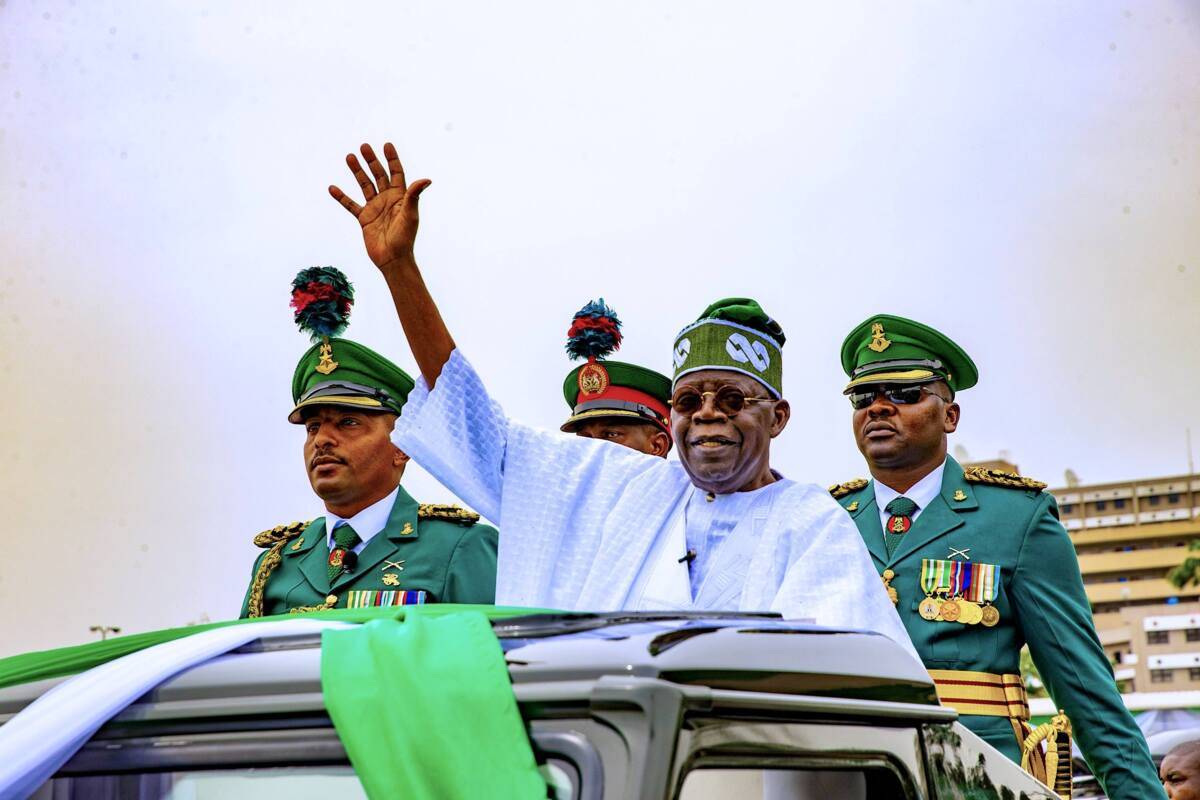
President Bola Tinubu has responded to the attacks by ordering the deployment of a battalion of troops in the Kaiama area. But what is the size of the battalion? The Woro community recalled a previous deployment of 15 soldiers who were eventually withdrawn after an attack by the Mamuda/JNIM terrorists. The beleaguered community fears that local informants and collaborators might have aided the attackers and compromised the safety of the entire area. Why would there be no collaborators where terrorism has festered for too long? Indeed, the confidence rebuilding that must be done and the infrastructure needed to combat Ansaru will be much bigger than whatever had been mustered in the past or the current desultory approach. The president must get the security agencies to come together and plan a final assault. Enough of the pussyfooting. It is time to take the battle to the terrorists, as is being done in the Northeast, after many years of dithering and hand-wringing. Delay can be fatal to the country’s existence.
Importantly too, it is time the military reappraised their tactics. It is not enough to foil terrorist attacks, especially when the attacks target communities, or rescue abducted victims; they must, in addition to developing intelligence on enemy movements and camps, urgently develop the capacity to isolate the enemy and conduct large-scale encircling operations against them until they are choked and destroyed. Yes, there may continue to be a few collaborators and infiltrators, but these must also be ferreted out and terminated. Everyone in Kaiama Knows where the terrorists camp in the Borgu Reserve and Kainji National Park areas are located. Nigeria’s security agents can’t claim ignorance of those locations, especially after the Woro community passed on the threat messages sent by the terrorists. The massacre in Kaiama is inexcusable. It is time to do something about Mamuda/JNIM terror groups, whether they are affiliated to Boko Haram or Al-Qaeda in the Maghreb. There is no reason to allow the terrorists stay in those locations for much longer, not to talk of planning the next set of attacks, except compromisers have hollowed out the security services and are calling the shots. Hopefully, Nigeria’s military top brass and Defence ministry officials will visit the massacre scenes and be prodded into finally addressing the country’s intelligence failures and slow response time, both of which are costly and unpardonable.