


May the January 18, 2026 agreement between the FG and ASUU permanently end their hostilities. Amen!
January 18, 2026, would for a long time be remembered in the annals of university education in Nigeria. It was a day that two hitherto sworn ‘enemies’ agreed to sheathe their swords.
This is significant given the belligerent nature of their relationship, especially since the signing of a controversial 2009 agreement that had been the source of acrimony between the two parties. This had led to strike several times, which paralysed academic activities on our university campuses, and made nonsense of their academic calendars.
Some accounts say the country’s university system lost about 1,200 days to the 17-year-old crises.
I am here talking about the Academic Staff Union of Universities (ASUU) and the Federal Government.
The 2009 agreement dealt essentially with university funding and budgeting; academic welfare; university autonomy and governance; research and development (R&D); legal frameworks and implementation, as well as implementation and review.
It was supposed to be a foundational document aimed at revitalising public universities in the country, which, really, were in dire need of revitalisation. However, the agreement suffered poor implementation, leading to incessant strike by the university lecturers.
On the basis of the agreement, ASUU called its members out on a strike that lasted four months in 2009; followed by another that lasted five months in 2010. There was a 51-day strike in 2011 and another five months strike in 2013. In 2017, ASUU members went on a month-long strike while students were sent packing for three months in 2018.
As if these were not damaging enough, ASUU went on what could pass for the ‘Mother of all strikes’ in 2020. The strike lasted nine months, followed by another eight months strike in 2022.
The effects of all these strikes cannot be quantified in financial terms alone. Students who should spend four years on their chosen courses ended up spending six years or more. Of course, students staying at home for longer than necessary were exposed to all manner of dangers, including but not limited to drug taking and sundry crimes. As they say, ‘an idle mind is the devil’s workshop’.
Abroad, certificates issued by our public universities lost recognition. It was private universities to the rescue.
It was not that ASUU did not have good reasons to protest. Things were bad enough in our tertiary institutions to make anyone who had an idea of what many of these institutions were in the past, angry.
Just that many Nigerians saw ASUU as too rigid in its demands from successive governments, especially its penchant to resort to strike. The truth of the matter is that our higher institutions, including the hitherto iconic ones, have become shadows of their former pristine state.
Those of us who went to some of these institutions even as late as the 1980s know the kind of things we met on ground, which were even at that time mere remnants of what those who were ahead of us enjoyed in the higher institutions, particularly the universities.
I remember vividly then that we had foreign lecturers that were among some of the best anywhere in their respective disciplines. Till today, myself and some of my colleagues still speak nostalgically about one of such lecturers, one Father Schuyler.
Just as we had foreign lecturers then at the University of Lagos, we also had foreign students on the campus from around the globe. These were positive indices about those institutions then. One, foreign lecturers on our university campuses pointed in the direction of the comparative pay the institutions offered, among other things. Foreign students on our campuses, on the other hand, was indication of the high quality of our academic standards.
All of these are gone with the winds.
A few months back, I was discussing with one of my seniors at the Federal School of Arts and Science in Ondo, Ondo State, who is now a lecturer at the University of Lagos. When he told me what a professor earns, I felt so sorry, first for myself, and then the country. How come? How did we sink that low?
How do you attract good hands to the universities if lecturers are not well paid? It is only a matter of time for the institutions to decay because they would not be able to attract brilliant minds and can only recourse to people who just want a job, any job at all, not necessarily people who want to impart knowledge to others. Even if they want to impart knowledge, where do they get it? If they too had it, they wouldn’t be in the universities where they are paid peanuts when they can get better pay outside of the academic environment.
In the same vein, foreign students would not come to study in universities where students perch on windows to listen to lectures. The state of most of our public higher institutions is just nothing to write home about.
This reminds me of what a student in one of the public higher institutions told me about two weeks ago. I am talking specifically about The Polytechnic, Ibadan. We were discussing on why the student chose to stay off campus when there are hostel facilities on the campus. I expected her to say it was because they didn’t have enough space to go round. But what she said surprised me: she said many of them chose to stay off-campus because the toilets and some other facilities were bad. And, as if to punish the students for the bad state of the facilities, the institution forces those of them who chose to stay outside to pay about 50 per cent of the accommodation fee for what it calls “hostel refusal”!
In our time, we did everything possible to stay on the campus. The situation must be so bad for many students to want to stay off-campus, given the many advantages. Of course, a few may want to stay outside because they have free accommodation somewhere around or because they want to do some other things beyond what their parents sent them to do in school. But there is cause to worry when majority fall for the off-campus accommodation and, on top of that, they are forced to pay for refusing to stay in the hostels.
Let no one get me wrong. The Polytechnic, Ibadan, might not be alone in this. It is only a metaphor for the state of affairs in many of our public higher institutions. Perhaps the institution itself was forced to be collecting money for a service not rendered as a result of the larger malaise of underfunding that the institutions are grappling with.
Given the afore-stated, among others, one would think successive governments would have dealt with the tertiary institutions’ matter with utmost urgency. That they didn’t, and only kept flexing muscles with the union lent the governments open to accusations of being insensitive to the plight of the students and their parents.
Although the neglect that these institutions suffered from successive governments was not good enough, ASUU still got the chunk of the blame for its inability to think out of the box for solutions to the universities’ seemingly intractable problems. As people in the ivory towers, Nigerians expected them to be more creative in dealing with the government.
Indeed, this penchant for strike led to the formation of CONUA, the Congress of University Academics, which has always opposed ASUU’s flagrant recourse to strike to settle disputes with the government.
Be that as it may, it is good that, as they say, “all is well that ends well”.
The ASUU/government feud has only confirmed what Ralph Waldo Emerson said that “Peace cannot be achieved through violence, it can only be attained through understanding.” Many other people have affirmed this saying in different words. For instance, Sun Tzu also said that “The supreme art of war is to subdue the enemy without fighting.”
It is incredible that the braggadocio and an ego war that has lasted so long could end, albeit at a roundtable without, literally put, any single ‘shot’ being fired. But that is the way of all wars.
I am not sure that many Nigerians were aware of the processes that led to the signing of the agreement. Even if they were, they would have simply dismissed it as improbable fiction.
But here we are today, celebrating what should herald hope of uninterrupted academic activities in our universities, a thing that has eluded us for years.
Although one would have to see the details of the current agreement before drawing conclusions, one needs to remind the government that the curtains cannot be drawn on the challenges in the universities without attention paid to the aforementioned areas and others outside of the universities.
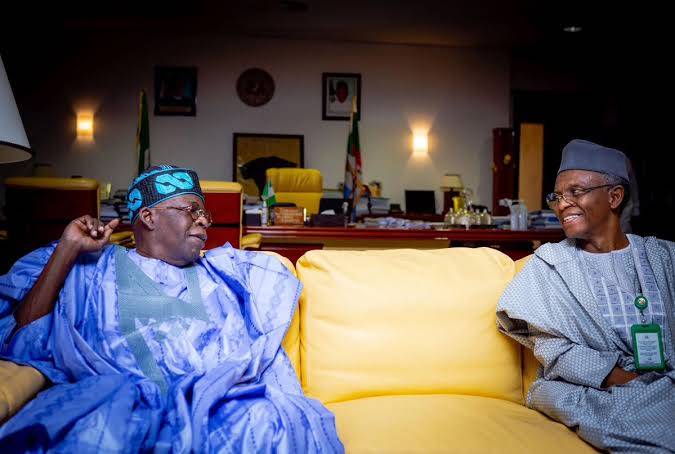
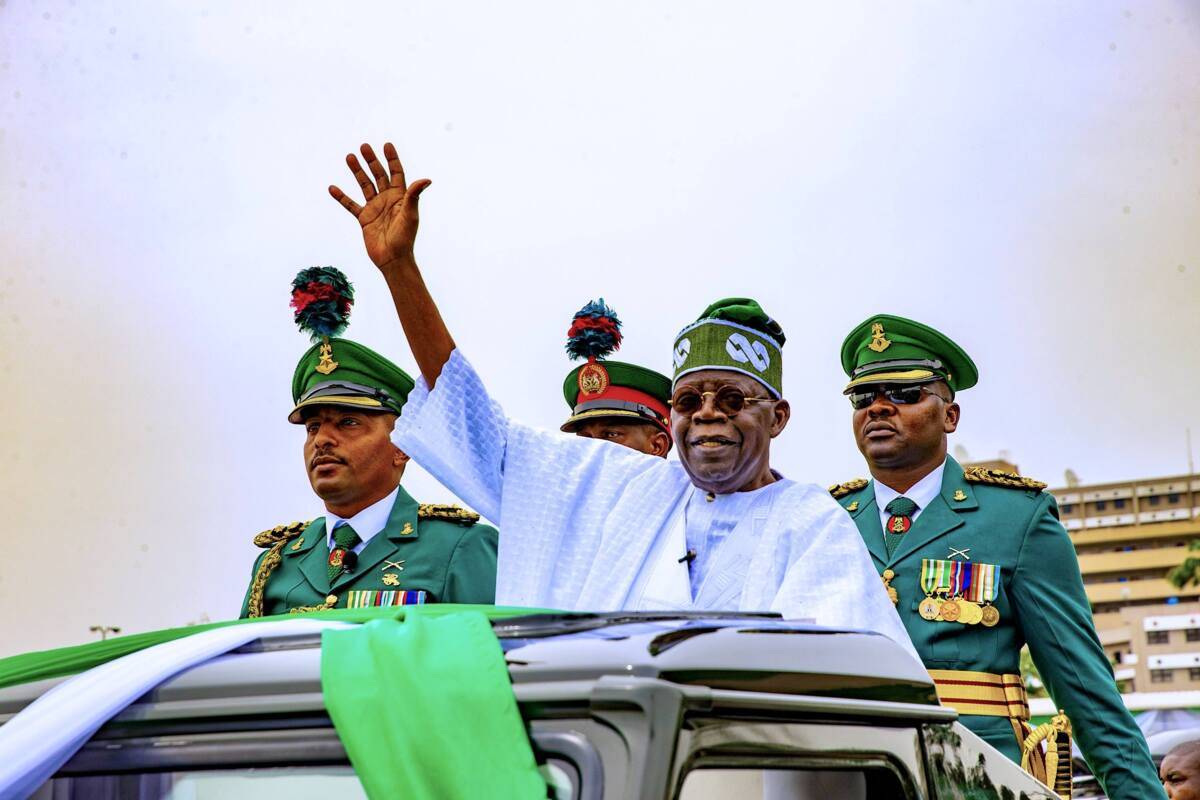
The Bola Ahmed Tinubu administration has come a long way in barely 30 months in office, particularly in the area of tertiary education.
The government’s student loan scheme, the Nigerian Education Loan Fund (NELFUND), alone speaks to this commitment. It is one major way of demonstrating its resolve to expand access to tertiary education.
At least about N89.94 billion has been paid directly to 263 tertiary institutions for tuition and institutional fees, and N72.03 billion paid directly to students as upkeep allowances at N20,000 per student, for the over 864,798 students that had benefitted from the fund as at January 13.
As the Managing Director of NELFUND, Akintunde Sawyerr, noted, “These figures are not just statistics. They represent real lives impacted, real barriers removed, and real opportunities created.”
I commend the Tinubu administration for coming this far on the ASUU crisis. Specifically, the Minister of Education too, Dr Maruf Tunji Alausa, should be commended.
But, as we have seen with past pacts, the problem is not in signing agreements, the issue is honouring them. This government must do its utmost to honour the agreement. At least we did not see anyone pointing a gun at the other person before it was signed.
Not only that, it is not only our university teachers that have been clamouring for better conditions of service. Their counterparts in the nonacademic unions, teachers in the polytechnics, etc. also deserve consideration. Mercifully the minister acknowledged that much: “I can assure you that the ASUP and the NASU agreements will be finalised as well.”
Again, as Dr Alausa observed, “However, we cannot resolve a 20-year-old problem in just two and a half years,” nonetheless, we urge it to sustain the tempo such that our public higher institutions would gradually begin to regain their lost glory.
This is the expectation if we must avert the kind of violence that we are battling with in the northern parts of the country. Half-baked graduates are only a shade better than stark illiterates.
What would it benefit us if we invest so much in education only to reap whirlwinds in return? God forbids,
We must never return to the ugly era of incessant strike. This is a cautionary note to both the government and ASUU.
Culled from The Nation