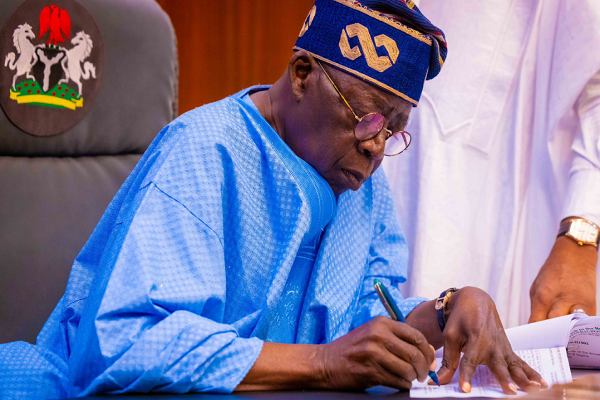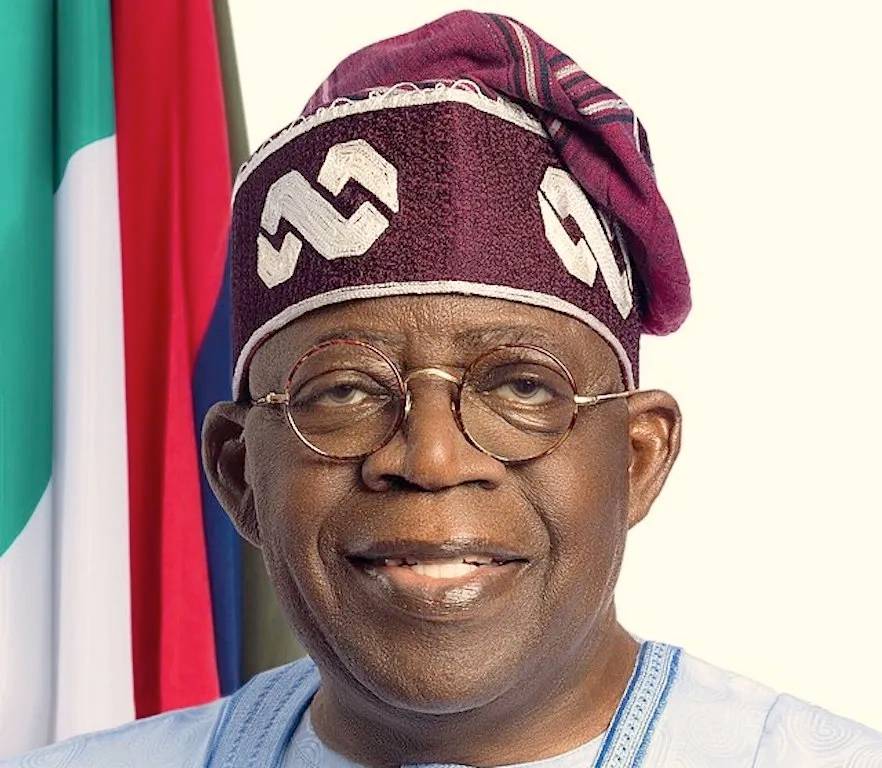



President Bola Tinubu marked his 74th birthday with a move that startled admirers and unsettled critics: he pledged his entire presidential salary since assuming office on May 29, 2023, as seed capital for a fund to support families of security personnel who lose their lives defending Nigeria.
At a time when insecurity remains a defining national challenge, the symbolism is powerful. It signals that the sacrifices of soldiers and other security agents are not abstract to the Commander-in-Chief. By donating his own earnings, Tinubu placed personal weight behind public rhetoric.
Days earlier, during his state visit to the United Kingdom at the invitation of King Charles III, detractors had anticipated a different spectacle. They hoped for a repeat of his earlier misstep in Turkey—fodder for mockery. None came. At Windsor Castle, the 74-year-old Nigerian leader walked steadily beside the 77-year-old British monarch. The predicted stumble never happened.
Denied that moment, critics pivoted.
Instead of acknowledging the significance of a £746 million UK government–guaranteed facility to modernize Nigerian ports, some dismissed it as a “mumu loan.” That reaction betrays either ignorance or mischief.
Since when did loans stop being investments? Was the $20 billion Dangote refinery not largely financed by debt? Is it not rightly classified as an investment?
Export credit financing across the world comes with domestic content requirements. The U.S. EXIM Bank typically requires at least 50 percent local content. UK Export Finance operates on similar principles. Japan’s ODA loans hover around 30 percent. China’s financing arrangements often range between 50 and 70 percent. The European Union frequently falls within the 50–60 percent bracket.
That part of the steel for Nigerian port rehabilitation will be sourced from the UK—the guarantor of the facility—is not scandalous. It is standard practice. Export credit agencies are designed to support jobs and industry in their home countries while financing development abroad.
Many of the Chinese-funded rail lines, airports and highways in Nigeria followed comparable patterns. That is how global project finance works.
In politics, perception often competes with reality. Tinubu at 74 remains, as ever, enigmatic—capable of disarming critics with unexpected gestures and forcing opponents to shift the battlefield.
The birthday donation speaks to symbolism. The UK-backed port financing speaks to strategy. Both deserve analysis, not derision.
Critics are free to disagree. But they should at least argue from facts.
In light of these comparative realities, what exactly is the hullabaloo about President Tinubu securing a £746 million facility allegedly deemed unfavorable to Nigeria and more beneficial to the UK?
Alh.Aliko Dangote, Africa’s wealthiest man, and president of Dangote lndustries , on a visit to president Tinubu as part of Sallah celebration has applauded president Tinubu for securing the UK loan and even stating that the president has pointed entrepreneurs like him to a new source of funding in the UK.
In Nigeria’s era of universal banking, the standard operating procedure (SOP) is clear: when a loan is procured from Zenith Bank, GTBank, UBA, or Access Bank, it is typically the bank’s affiliated insurance company that provides the risk cover. That is one way income is generated and retained within the financial group.
That is, more or less, what has occurred with the UK government–guaranteed investment secured by President Tinubu during his state visit. It is an accomplishment that should be applauded—if it materializes—not parodied, as some segments of the media, apparently goaded by opposition politicians, have chosen to do. With many opposition platforms in disarray, political opposition in Nigeria appears largely comatose.
Rather than repairing their fractured parties, some displaced politicians have resorted to criticizing the UK-backed loan for Nigerian seaports, often without a full grasp of the facts. A more compelling argument would have been to advocate for extending port development to dormant facilities in Warri and Sapele (Delta State), Onitsha (Anambra State), Calabar (Cross River State), Oron (Akwa Ibom State), and Port Harcourt (Rivers State).
Notably, Ambassador Joe Keshi, Director-General of the BRACED Commission—the Niger Delta regional development agency representing Bayelsa, Rivers, Akwa Ibom, Cross River, Edo, and Delta States—has drawn the federal government’s attention to the urgent need to decongest Lagos by developing ports in the Niger Delta.
For years, Nigerian policymakers have spoken about harnessing the immense potential of the blue economy, yet it has remained largely untapped due to inadequate marine and port infrastructure.
President Tinubu now appears determined to match words with action, as he did with the removal of petrol subsidy—which reportedly reduced petrol import costs by about $10 billion—the transition to a managed float of the naira, allowing it to reflect market realities, and the review of the colonial-era tax system through new tax laws aimed at broadening the tax base.
Research indicates that the global blue economy is projected to be worth approximately $2.46 trillion in 2026 and is expected to grow to about $3.9 trillion by 2033, representing a compound annual growth rate (CAGR) of 6.8%.
In the United States, the blue economy is a significant contributor, with North America projected to account for 23.7% of the global share in 2026. This growth is driven by its extensive coastline, developed port infrastructure, and sustained investment in marine innovation.
For Nigeria, the blue economy holds substantial promise. Estimates suggest it could contribute between $1.2 trillion and $1.5 trillion to GDP over time. Key sectors include:
• Marine Fisheries and Aquaculture: Reducing heavy fish imports through expanded local production.
• Offshore Energy and Marine Resources: Harnessing offshore wind, tidal energy, and seabed resources.
• Coastal Tourism and Marine Biotechnology: Leveraging biodiversity for eco-tourism, research, and innovation.
• Ports, Shipping, and Trade: Modernizing maritime infrastructure to improve efficiency and attract investment.
Beyond port refurbishment, the federal government has embarked on ambitious infrastructure projects, including the coastal highway from Lagos to Calabar and the Badagry–Sokoto superhighway. It has also launched initiatives to stimulate blue economy growth, including a proposed $1 billion fund for blue economy start-ups.
In that context, does refurbishing the congested Tin Can and Apapa ports in Lagos not complement the construction of coastal highways designed to enhance trade and connectivity?
Now, President Tinubu appears to have identified the gap in Nigeria’s port and marine infrastructure and has decided to upgrade it by leveraging financial facilities from the United Kingdom.
As we are aware, seeking UK-backed funding reflects the current dearth of domestic capital for projects of such magnitude. Nigeria is presently committing a significant portion of its national budget to servicing legacy debts. Hence, the recourse to a sovereign facility guaranteed by the UK for what is clearly a productive venture.
It is disappointing that many Nigerians fail to see that coastal road development and port refurbishment are interconnected components of a broader economic strategy.
This is why I believe one major challenge besetting President Tinubu’s administration is the lack of a coherent and strategic communication policy. The government has struggled to convincingly explain to citizens that, despite the current hardship—which it insists is temporary—it is laying the foundations today for a more stable and prosperous future by resetting the fundamentals of the economy.
If effective communication helps discouraged Nigerians connect the dots and see that relief is forthcoming, the administration may find it easier to scale the hurdles ahead of the next general election.
Interestingly, while President Tinubu has deployed remarkable political dexterity—leaving opponents flat-footed by attracting 32 of Nigeria’s 36 state governments into the ruling All Progressives Congress (APC), an unprecedented development in Nigerian political history—he has yet to deploy similar skill in mobilizing non-politicians and persuading ordinary citizens that his reforms, though painful, are purposeful.
To many, his policies appear haphazard and incohesive. Yet, on closer examination, they are interconnected. The coastal highways and port refurbishments align with the pursuit of the much-touted blue economy, for which $1 billion has reportedly been earmarked for start-ups.
While economic reforms often have long gestation periods before yielding tangible benefits, President Tinubu has been phenomenally successful in the political arena. After winning a fiercely contested presidential election in 2023, he has positioned himself as a dominant force in Nigeria’s political landscape.
It is worth recalling that candidate Bola Tinubu secured 8,794,726 votes—36.61% of valid ballots—to win the 2023 presidential election. He defeated Atiku Abubakar of the People’s Democratic Party (PDP), who garnered 6,984,520 votes, and Peter Obi of the Labour Party, who secured 6,101,533 votes. Despite winning with a plurality rather than a majority, he emerged victorious in one of the most competitive elections in Nigeria’s recent history.
Following the 2023 election, the APC controlled 20 states. That number has since increased significantly, with 32 states participating in the party’s recent convention held from the 26th to the 28th of this month—just days before the President’s 74th birthday.
Remarkably, about four years ago, Tinubu was politically sidelined within the very party he helped build and that wrested power from the PDP in 2015. Today, by any measure, his political fortunes appear resurgent. He seems poised for what could resemble a political coronation rather than another razor-thin contest like that of 2023—an election as difficult as the biblical metaphor of a camel passing through the eye of a needle.
That he prevailed in 2023 despite internal resistance and external obstacles is a testament to his political astuteness, resilience, and capacity not only to survive but to thrive in a hostile political environment.
Ordinarily, political parties in opposition gang up to oust the ruling party. That is what happened when Tinubu as opposition party leader rallied four political parties- ACN, CPC,APGA and a splinter group from PDP in 2013 to form the APC with which then ruling People Democratic Party, PDP was defeated and replaced in 2015 election by the coalition.
Today, with APC as the ruling party, it is extra ordinary that the current opposition parties instead of ganging up against the ruling party as expected are against the run of play making a bee line into the APC. Hence the rank of the APC controled states have swollen exponentially from only twenty (20) states just three( 3) years ago (2023) to the current thirty two (32).
It is amazing that in a space of a mere three (3) years, twelve (12) state governors from the opposition platforms have joined the APC under Tinubu’s watch.
That indeed is one of the reasons that Tinubu is deemed an enigmatic leader,and a maverick political tactician, possessing a mysterious persona.
President Bola Ahmed Tinubu, on the auspicious occassion of your 74th birthhday, here is to your dedication to Nigeria’s progress and many more years of service to your fatherland.
•Magnus Onyibe, an entrepreneur, public policy analyst, author, democracy advocate, development strategist, an alumnus of the Fletcher School of Law and Diplomacy, Tufts University, Massachusetts, USA, a Commonwealth Institute scholar, and a former commissioner in the Delta State government, sent this piece from Lagos