
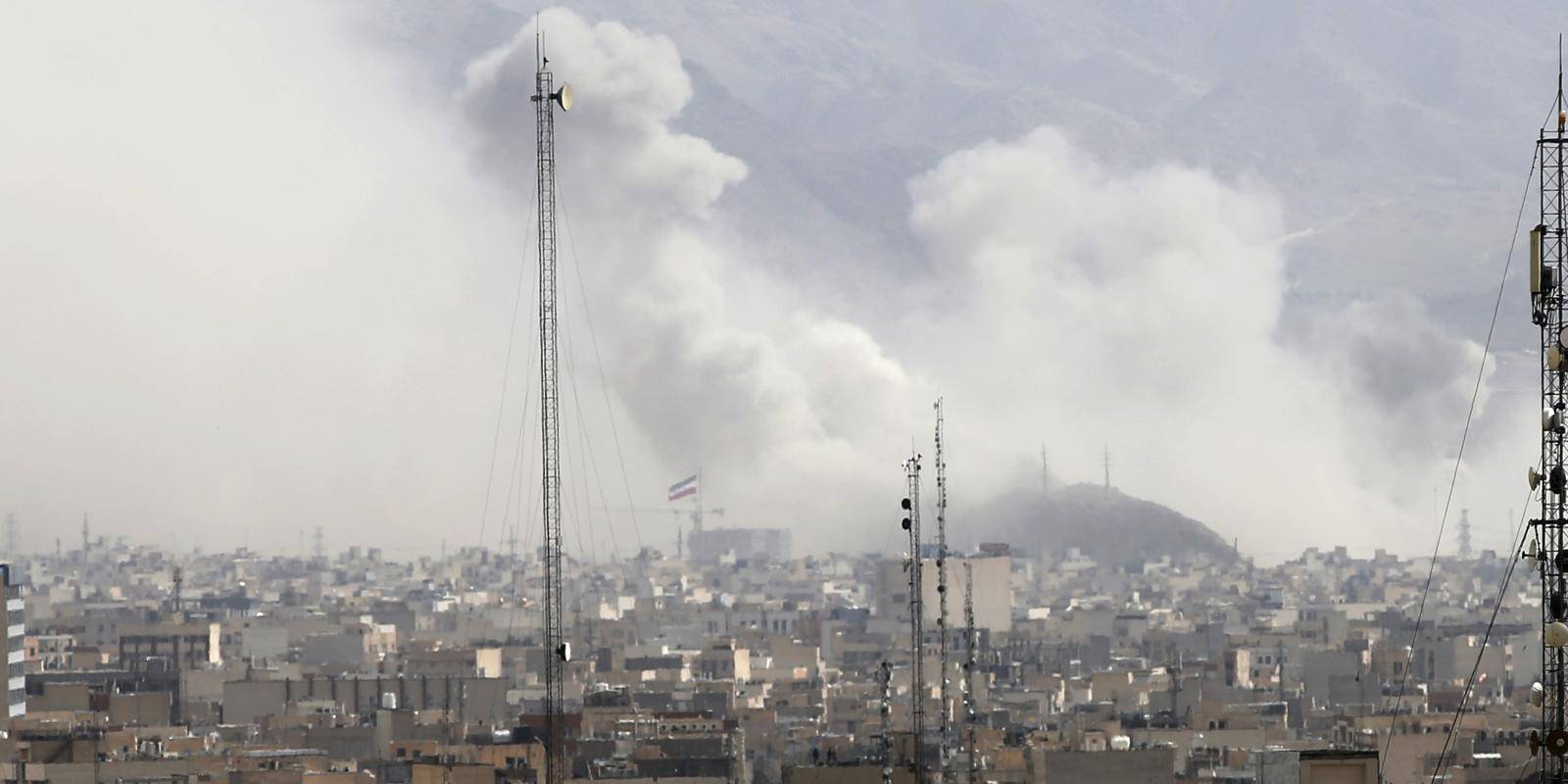

Iran continues to strike US assets across the Gulf after the killing of more than 550 people, including Supreme Leader Ayatollah Ali Khamenei, in joint US-Israeli attacks.
Ali Larijani, the secretary of Iran’s National Security Council, has refuted US media claims that he had made a fresh push to resume nuclear talks with Washington.
If you have just joined us, here are the latest developments:
At least 555 people have been killed across Iran in joint US-Israeli attacks on 131 counties so far, the Red Crescent says.
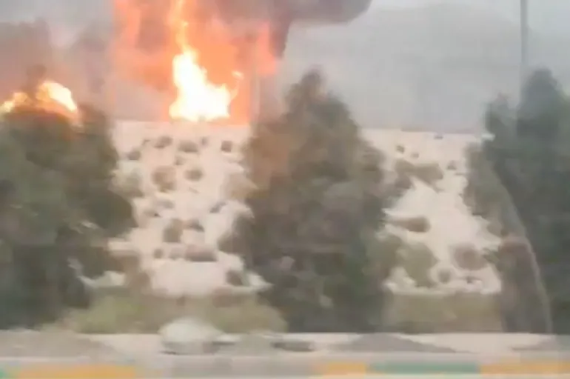
A fire has broken out at Saudi Arabia’s Ras Tanura oil refinery due to debris falling from two drones that has been intercepted, the country’s Defence Ministry has said.
British Foreign Minister Cooper has said a drone that struck a UK military base in Cyprus hit the runaway.
“Several” US warplanes have crashed in Kuwait, the country’s Defence Ministry has said, adding that all the crew survived.
Israeli air attacks on Lebanon have killed at least 31 people and wounded 149, the Health Ministry has said.
The US embassy in Bahrain has said “terrorist groups” are intent on attacking” US citizens.
A security source has told Al Jazeera that an Israeli-US missile attack targeted sites belonging to Iran-backed paramilitary group Kataib Hezbollah in Jurf al-Sakhr, south of the Iraqi capital, Baghdad.
Colleagues at Al Jazeera Arabic have reported “strong explosions” in Erbil.
During the morning hours, sirens have blared in Bahrain and explosions have been heard in Abu Dhabi and Doha.
Non-oil growth outlook downgraded for Bahrain, UAE as tensions in Gulf escalate: JPMorgan
JPMorgan, leading global financial services firm and largest bank in the US, has trimmed its outlook for non-oil growth across Gulf economies this year after the Iran conflict widened over the weekend, warning that further downward revisions may follow.
The Wall Street bank cut its non-oil growth forecast for the region by 0.3 percentage points overall. Bahrain and the United Arab Emirates saw the largest downgrades, at 0.5 percentage points and 0.4 percentage points, respectively.
“Risks are elevated across multiple fronts and will depend heavily on the conflict’s outcomes,” JPMorgan analysts said.
The bank also said it no longer expects Turkiye’s central bank to cut interest rates at its March 12 meeting. It revised its end-2026 policy rate forecast to 31 percent from 30 percent and now expects inflation to reach 25 percent by then, up from a previous forecast of 24 percent.
“With Israel directly involved in the current conflict, it is probably fair to assume the Bank of Israel will not cut in March either,” JPMorgan added.
Israeli defence minister says Hezbollah chief Naim Qassem now ‘target for elimination’
Israel Katz, Israel’s defence minister, has said Hezbollah Secretary-General Naim Qassem was now a “target for elimination”.
It comes after Israeli jets bombed Lebanon, killing at least 31 people, after Hezbollah launched what it said was a rocket and drone attack against a military base near Haifa, in northern Israel, in retaliation for the killing of Khamenei.
Qassem succeeded Hezbollah chief Hassan Nasrallah who was assassinated by Israel on September 27.
Over 3,400 flights cancelled as Gulf countries’ airspaces remains closed
An estimated 300,000 people are currently stranded across the Gulf region, and we’ve heard the UK reportedly sending teams to assist with evacuations.
According to flight-tracking data, more than 3,400 flights have been cancelled in the first few days of the conflict. Major regional airports – including Dubai International, Sharjah, Abu Dhabi, and Hamad International Airport in Doha – have suspended operations. In total, six or seven major airports across the region were shut down.
Airspace over much of the region remains closed. This has had a major knock-on effect on global air travel, as Middle Eastern hubs serve as critical connectors between Europe, Asia, Africa, and beyond. When these hubs shut down, the disruption spreads worldwide like a domino effect.
Social media is filled with posts from stranded passengers at Hamad International Airport, Dubai International Airport, and Abu Dhabi. Travellers report long queues to rebook flights, secure hotel vouchers, or receive assistance, with many sleeping inside terminals.
As long as the airspace remains closed and the conflict continues, thousands of passengers will remain in limbo.
At least 131 Iranian counties affected by US-Israeli attacks, Red Crescent says
We now have more lines for you from the Iranian Red Crescent Society.
Here is a summary of what it said:
So far, 131 counties in the country have been affected by the US-Israeli attacks.
Relief operations, led by the Red Crescent’s humanitarian mission, are continuing without interruption, with rescue teams present in the affected areas and more than 100,000 responders on full alert nationwide.
At present, a network of about four million volunteers is on standby to deliver humanitarian services, assistance, and psychosocial support.
Iran death toll surpasses 550: Red Crescent
At least 555 people have been killed in US-Israeli strikes across the country, the Iranian Red Crescent Society has said.
Developing
Saudi Arabia says it intercepted drones trying to attack oil refinery, debris sparked fire
Two drones that “attempted to attack” the Ras Tanura refinery this morning were intercepted and destroyed, Saudi Arabia’s Defence Ministry has said in reports carried by Saudi state-run SPA news agency.
A “small” fire broke out as a result of the debris falling during the interception operation, it said, adding that there were no civilian casualties.
Amazon cloud services in Bahrain, UAE disrupted
Amazon’s cloud unit (AWS) says that its data centres in Bahrain and the UAE are experiencing power and connectivity problems, amid Iran’s retaliatory strikes.
Two of Amazon cloud unit’s zones, which are clusters of data centres, in the UAE were without power, the company said on its status page.
AWS said that one zone in the UAE was affected after “objects” struck the data centre and created sparks and fire, following which power was shut off.
The cloud firm asmed customers to rely on its services in other regions, adding that recovery was expected to be “multiple hours away”.
Al Jazeera