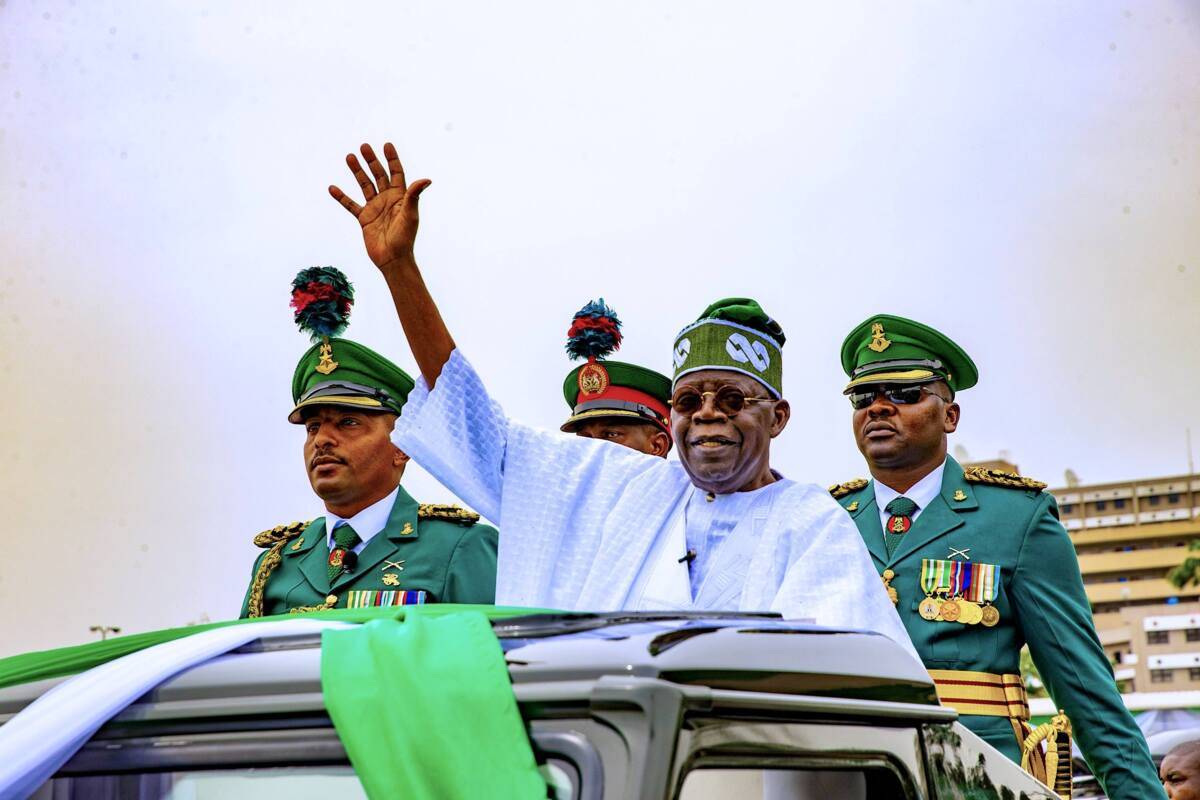


Much of the discourse by contending stakeholders on Nigeria’s electoral structures, processes and behaviour is driven by the parochial interests, partisan inclinations and self-serving calculations of the various participants in the typically rancorous conversations, and there is nothing abnormal or unnatural about this. This is no less true of the controversies and heated debates as regards the deliberations on, passage by the National Assembly and enactment into law by President Bola Tinubu of the 2026 Electoral Act. What is disturbing is the attempt by a vocal minority to have their viewpoint particularly on so-called ‘real- time’ transmission of election results, just one aspect of a multidimensional far-reaching law, foisted on the country even when the extant Act is the product of due process in which the lawmakers had their say in both chambers of the National Assembly and the position of the majority prevailed as provided for in the Constitution.
To arrive at a decision on the Electoral Act through any other means than as constitutionally stipulated would not only be anarchic but also anti-democratic. In a constitutional democracy, electoral and legislative minorities or majorities are not immortally and inflexibly fixed entities inscribed on stone. Today’s majorities may become tomorrow’s minorities. Ask the People’s Democratic Party (PDP). The former political juggernaut that bestrode the political landscape like a Colossus for 16 years once controlled at least 31 states with an overwhelming majority in the National Assembly. It thus behoves the minority today to respect decisions legitimately arrived at by the majority, knowing that the dynamics of the electoral process may favour it in future.
It seems to me that most of those who have been fixated on the mode of transmission of election results while ignoring other pertinent aspects of the 2026 Electoral Act are largely motivated by two considerations. First is to reinforce the mischievous and utterly misleading impression created that the outcome of the 2023 presidential election was irredeemably flawed and did not reflect the will of the electorate because of the glitches that inhibited the electronic transmission of results as promised by the electoral umpire. But the division and fractiousness within the ranks of the opposition were a more cogent and plausible factor in the results of the election, as the leading opposition candidates – Abubakar Atiku, Peter Obi and Rabiu Kwankwaso – won more votes combined than the eventual winner, President Tinubu.
The second motivating factor is to sow doubts in the minds of their supporters and the wider general public as regards the integrity, goodwill and sincerity of purpose of the Independent National Electoral Commission (INEC) to deliver a free and fair election next year, thus denting the credibility of the polls even before the first ballot is cast. This line of action has become imperative as the opposition ranks slip into even greater disharmony and incohesion than was the case prior to the 2023 polls. This is just as the ruling APC ceaselessly leverages on its power of incumbency, the advantages of dispensing patronage and the increasing attainment of the goals of President Tinubu’s economic reform policies to enhance and strengthen its electoral prospects.
If the Electoral Act provides only for ‘real-time’ electronic transmission of results from polling units and unanticipated glitches occur in the process, as happened with the 2023 presidential election, there would be legal grounds for the truncation of the entire exercise, which would obviously be much to the delight of an opposition that knows time is not on its side. But the 2026 Electoral Act makes it mandatory for electronic transmission of results from the polling units to the IREV portal while making a proviso for resort to results entered manually into EC8A forms and signed by electoral, security and party polling agents in cases of transmission failure. That removes any possible legal impediment to the continuation and finalization of the electoral process in situations of network failure.
But the political coalition leaders in the ADC see matters differently. As reported in the media, they perceive the provision of Section 60 (3) of the Act as giving too much discretion to Presiding officers and weakening the framework for the transmission of results. In their words, “This negation is unambiguously intended to provide a blank cheque to those who seek to manipulate the election results by delaying the electronic transmission of results from the polling units to the IREV on the pretext of network failure”. But the voting process in Nigeria is substantially manually-driven. Despite the undoubted improvement brought about by the Bimodal Voter Accreditation System (BVAS) technology, voters still physically check their names on the voters’ register. They physically thumbprint ballot papers and drop them in prescribed boxes.
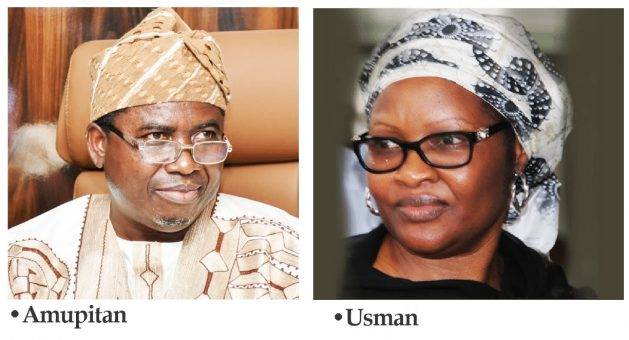
At the end of the time allotted for voting, the ballots are physically counted, manually entered into the Form EC8A, countersigned by electoral and security officials as well as party electoral agents, before being uploaded to IREV electronically. Can the entire voting process be electronically conducted from beginning to the end with no manual human input? That would be in the realm of magical realism. It is unlikely that the paper trail has been completely eliminated even in the most advanced democracies. But then, should this be a big deal? The Chairman of INEC, Professor Joash Amupitan, speaking last weekend, emphasised that the Commission has the capacity for electronic transmission, saying that this was not an issue.
According to him, “I don’t see the issue of transmission as a problem; the problem is not the network but the adequacy of the networks that we have…The glitch has been eliminated. It will not resurface in Nigeria. We have the capacity to transmit results electronically”. There is nothing in the Electoral Act that precludes electronic transmission. In fact, the new law makes it mandatory. But it provides manual backup in case of unforeseen circumstances. Let us not forget that Professor Amupitan’s immediate predecessor at INEC was no less optimistic about the Commission’s technical capabilities to handle elections ‘real time’ until the unprecedented attacks on its transmission network during the presidential election.
Professor Amupitan highlighted plans by INEC to align the Commission’s guidelines and regulations for political parties with the Electoral Act 2026 and ’emerging realities’, thus indicating the significance of the new law far beyond the tantrums of its antagonists. A statement by the Commission averred that “The recently enacted Electoral Act 2026 introduces significant legal and operational changes affecting political party administration, candidate nomination processes, compliance obligations, dispute resolution mechanisms and the Commission’s regulatory mandate… Beyond legal compliance, the Commission is drawing lessons from previous elections to strengthen preventive regulation. Persistent challenges such as opaque party primaries, membership disputes, weak financial disclosure practices, and exclusionary participation patterns have contributed to avoidable litigation and electoral uncertainty. Addressing these gaps early remains central to the Commission’s preparations for 2027”.
Last week, we took exception to pseudo-intellectual attempts to wholly dismiss the entire Electoral Act as constituting ‘the murder of freedom’ in Nigeria or ‘the destruction of democracy’ on the basis of rash generalisations or misleading insinuations. The question of conducting free, fair and credible elections has been a persistent problem in post-colonial Nigeria and a key source of political instability. Serious scholars have sought to grapple with this challenge without resorting to cheap hysteria or superficial histrionics. A good example is the 1987 study of the Second Republic by renowned political scientist, Professor Richard Joseph, in his book ‘Democracy and Prebendal Politics in Nigeria’.
Writing of the 1983 elections, for instance, Professor Joseph submits that “This ‘political culture’ of electoral behaviour is appropriately captured by the following remark: “Rigging elections has for a long time been as Nigerian as pounded yam or millet”. When interviewed for an overseas article on the state of affairs in Nigeria in mid-1983, Wole Soyinka’s comment about the probable behaviour of the ruling party, the NPN, can be applied broadly to all the parties, depending on the leverage they already enjoyed based on their share of political and economic power: “They’ll steal it…Sure, they might not take the whole thing. But they’ll steal enough to stay in power”.
This kind of detached, sober analysis does not fraudulently compartmentalize Political actors into agents of life or of death, of light or of darkness. Seeking to manipulate and undermine electoral outcomes is not limited to particular parties or sets of politicians. It is a general problem of the entire political class and substantial sections of the general populace with deep roots in political culture and political economy. However, in the face of often manifest unreason and blinding sentimentality in Nigerian political discourse, there are still political actors capable of commendable clarity in political analysis. One of such is the Interim National Chairman of the Labour Party (LP), Senator Esther Nenadi Usman, who spoke in Abuja at a Citizens’ Town Hall on the 2026 Electoral Act.
As reported by Onyekachi Eze of New Telegraph newspaper, Senator Nenadi Usman said, “the controversy surrounding the proviso to Section 60(3) of the Act is not necessary if political parties could deploy well-trained, vigilant and capable agents across all polling units. Senator Usman noted that Form EC8A is the primary source of result collation, which should be countersigned by candidates or polling agents.”
Senator Usman further stated that “I understand the concerns expressed, particularly by opposition parties, about the possibility of fallback to Form EC8A in the event of network disruptions could be abused. However, I have consistently maintained that the success or failure of any political party at a polling unit ultimately depends on the party’s preparedness and presence at that polling unit.”
The report continued, “According to her, the responsibility of ensuring that the votes are protected, properly documented and accurately reflected on the IREV portal lies with political parties. We must all remember that IREV is primarily for viewing results and keeping records, not collation, she stressed. The National Chairman stated that LP has learnt some lessons from the last presidential election, stating that the party realised that the foundation of electoral success lies in meticulous grassroots preparation, particularly the deployment of agents. She disclosed that the party is committing significant resources and energy toward ensuring effective representation across the 176,974 polling units nationwide”.
“In the previous presidential election”, Senator Usman noted, “despite our strong belief in our performance, we faced challenges substantiating certain claims, largely because we lacked comprehensive agent coverage capable of producing duly countersigned copies of Form EC8A from across the Federation”.
Usman expressed the belief that if political parties could strengthen their internal structures and perform their responsibilities diligently, the anxiety over real-time electronic transmission as the guarantor of credible results could become less compelling”.
The LP Interim National Chairman surely deserves applause for such analytic keenness, mental acuity and intellectual courage and honesty; virtues far beyond the ken of certain overrated and unduly celebrated professors.