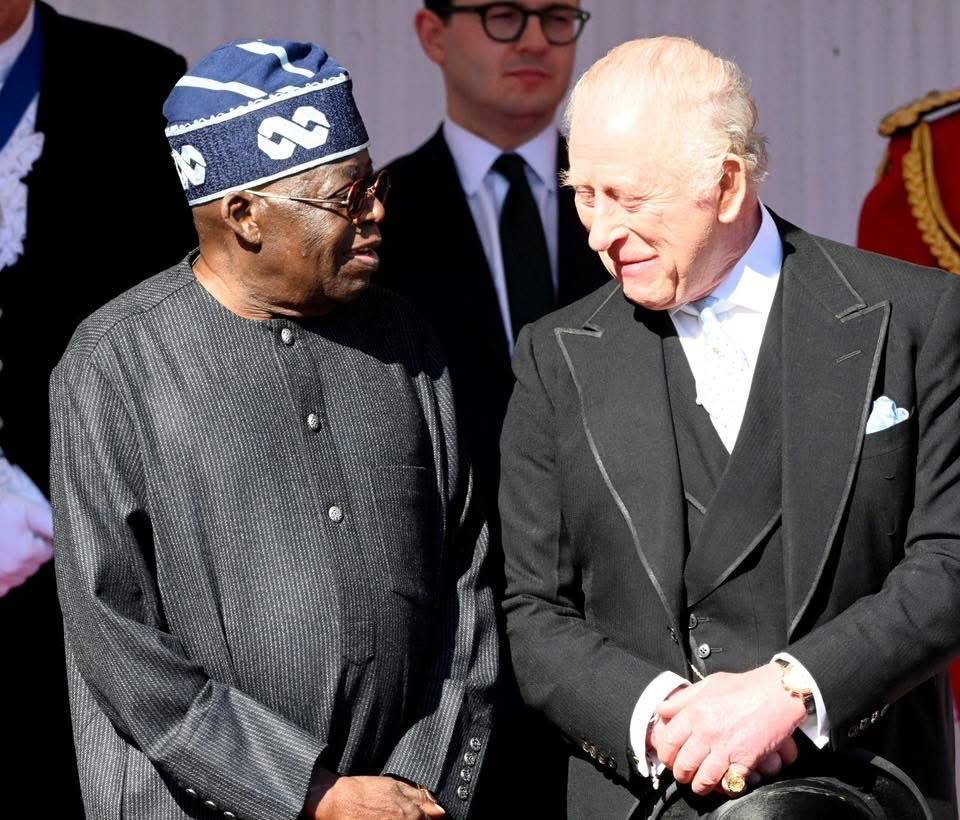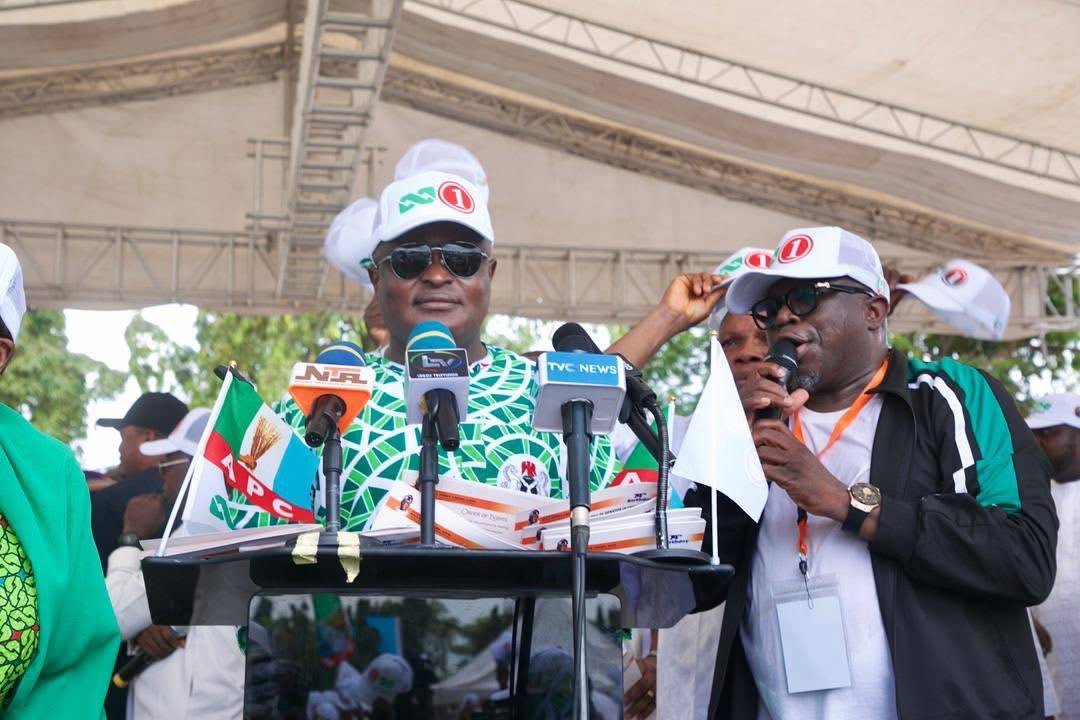

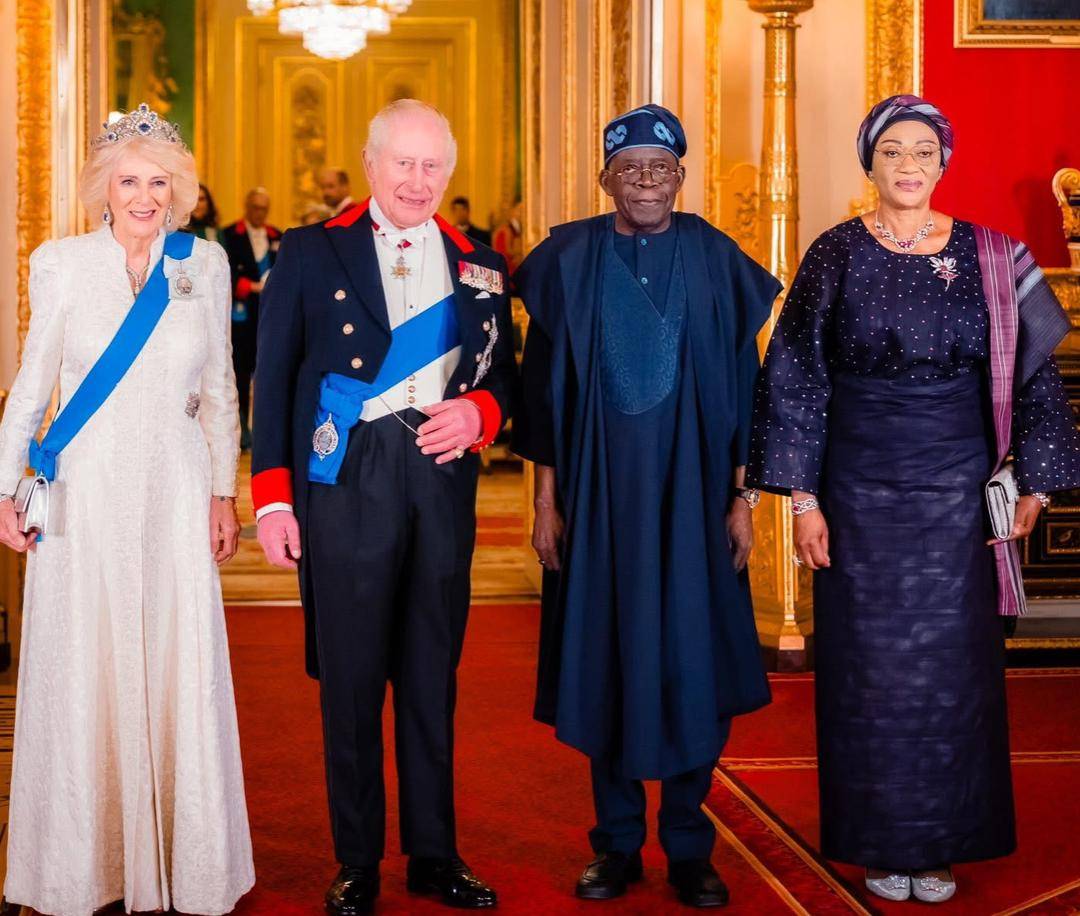
Never mind the accent. The setting forgives it. It even ennobles the king. In Windsor Castle where England held colonial sway, the king himself offers respect. He does it in a diction that bows to a decolonised hour. He says, “Naija no dey carry last.” This is not the line William Shakespeare could have concocted as the Mount Everest of the English language. He would not have known it or added it to his repertoire of immortal phrases. This was a term rooted in Warri. The city takes its name from Iwere, which is an Itsekiri folksy word for its people. The Portuguese never knew how to say the word. So they called it Warri. We have normalised that corruption by formalising it.
Well, Warri folks had a sense of their own. For all the diminished glory of the city, they still rekindle its honour. And so they say, “Warri no dey carry last” in moments of triumphs. Their neighbour Sapele purloined it, and they also say, “Sapele no dey carry last.” The state of Delta has now appropriated the term for glory.
It is no longer a Delta term. It is a quiet paen beyond the Niger Delta. It is now a sort of national hum. Naija no dey carry last. It is a term when we excel in sports, in debate contests abroad, at the Olympics when we are not borrowing equipment, etc.
The song has now carried a royal halo. Not just at home. But where it can gain global resonance. Let us not forget the piquant power of that moment. It is the colonial king bowing to our own logic of the English Language. We had recolonised the English language in those five words, and the king accepted.
A king does not bow. Others bow to him. In Soyinka’s Kongi’s Harvest, the king makes to bow, and the folks yelled ewo. It is forbidden. Soyinka exemplifies the art of linguistic subversion. Just like Achebe does and other writers who have domesticated the colonial trope. King Charles III, in a stroke of humour, bowed to Nigeria’s iteration of their language. He bowed not as worship. He bowed for equality, for our sweet subversion. English Language is for the English, but it is Nigerian English he spoke. It was more potent than his Yoruba phrase, Ekaabo. Se daada ni. That was cross linguistic. It was he paying homage to another language. But by saying, Naija no dey carry last, he also paid tribute to a linguistic independence.
Before the president arrived with his elegant First Lady Oluremi, King Charles had played host to another king, the Olu of Warri, Ogiame Atuwatse III. It was as though a royal dress rehearsal. First, king to king. Then king to president.
The United Kingdom is a society Nigerians live in as though their own. This can be exaggerated, especially with many of them living in the lower layers of its hierarchy. But that does not vitiate its familiarity. On high street, you could not stay an hour without hearing an Igbo filtre, a Yoruba lilt, an Edo signature, et al.
The state visit was not the first in this republic for nothing. Obasanjo was president. No visit. Yar adua? Let’s say his was a cameo. Forgiven. Goodluck Jonathan with his cartoonish extravagance and a caricature of governance drew no applause. Of course, Buhari, with questions about his being out of touch, would not enter such a conversation.
This invitation was a crucial acknowledgment of a fact. That the Tinubu government has brought reforms to a spotlight. It was a nod to economic audacity and imagination. Some who looked for rhetorical stumble were disappointed. Those who wanted a stumble as well. Rather they started nitpicking about a port deal that is designed to help transform an economy. Even a section of the media backpedalled on its significance. But it happened. The Naira is on the rebound, and investors for the first time in over a decade are looking at the economy as a place to stake their high dollars. The visit also highlights the interconnectedness of both nations.
Yet, as President Tinubu has noted in his speech, Nigeria has appended its fingerprint in the British soul with reference to men like Saka of Arsenal and oxer Anthony Joshua, the pervasion of medical talent of doctors and nurses. In all major areas of British life, though, we cannot ignore our imprimatur. In the literary world, our own Chinua Achebe won the lifetime award for the booker foundation, just as Ben Okri with his novel The Famished Road clinched the honours of being the first Nigerian to win the booker prize. Recently, Bernadine Evaristo, a British Nigerian, shared the prize with the great Magaret Atwood. Other writers have been on the scene including Abi Dare, author of the Girl with the Louding Voice. We cannot forget that music icons Seal and Sade Adu are Nigerian vocal presences in the culture.
In the art world, Nigeria is in their picture. Yinka Shonibare, Yinka Ilori, Ben Enwonwu, Ladi Kwali and more are notable. Misan Harriman, son of the colourful real estate icon – Chief Hope Harriman – is one of the top photographers in the world today. In film, Chiwetel Ejiofor, a BAFTA winner for his 12 Years a Slave as well as David Oyelowo grace the screens. Over a year ago, this essayist watched Oyelowo perform Shakespeare’s Coriolanus at the National Theatre in London. Adejoke Bakare is stirring the kitchen as the UK first black female Michelin star chef.
It is not only on the culture front. In the corporate arena, we often hear of Nigerians doing the contemptible jobs. Yet, the former colony has its citizens opening frontiers. In technology, for instance, names come up to take a bow. In robotics, Silas Ardon. Joshua Mba is a software developer. Just as Joshua Oguntade with his Clio retuning human resources applications.
In faith, we can remember that some of the pastors have had to account for their financial accounts. We cannot push aside the moment prime minister David Cameron, who had described Nigeria as fantastically corrupt, visited a Nigerian church as a force for the elections. If they proselytised us with such marque names as Mary Slessor, our churches are reversing it. We are repackaging the same God to them. Is it the revenge of the divine?
In the intellectual area, three nations continue to receive some of our best minds, the United States, Canada and Great Britain. They are many a professor. Our students continue to attend their high schools and universities and excelling. For instance, 18-year-old Abiola Abidoye from Ipswich, earned the highest A level Law grade in the United Kingdom. We have a panoply of schools in Nigeria like the British International School, Charterhouse, Atlantic Hall, Avi-Cenna International School, Lekki British School. They are making lots of money and taking advantage of the colonial mentality that says theirs is the superior way to learn. Nigerians are paying top dollar – or is it pounds – for this subordination.
In politics, Kemi Badenoch, for all her self-rejection, tops the list of how Nigeria has painted its soul in the highest stratum of British life. While President Tinubu was there, we never heard anything from her. She should have been upfront and centre in showcasing the Nigerian pride. But the last she spoke anything significant, it was to tarbrush immigration as the evil.
President Tinubu signed deals, enjoyed with his wife and entourage the hospitality and glamour of a state visit. But he did not flinch from a topic. He took cover in that land when a top soldier with a goggle known as Sani Abacha hounded him and others for fighting for democracy. It was a time of hope and despair, apologies to Charles Dickens’ A Tale of two Cities. Well, London became a tale of two cities to President Tinubu. In the one city, he ran to safety. That was during the NADECO years. It was a city of refuge. In the second city, the king played host to him. The one was a ragged hour. The second was a royal grandeur. In the first city, he stole away with stealth into town. In the second, pomp ushered him to the royal portal.
If Naija no dey carry last, so be its president.