

The transition of leadership at the Nigeria Police Force is never a routine administrative exercise. It is a solemn institutional moment, rich in symbolism, discipline, and continuity. That is why the recent handover by the former Inspector-General of Police, Kayode Egbetokun, conducted while dressed in a suit rather than police uniform, deserves serious public reflection. This is not a question of personal style or comfort; it is about institutional meaning and the signals leadership sends to officers and the public at critical moments.
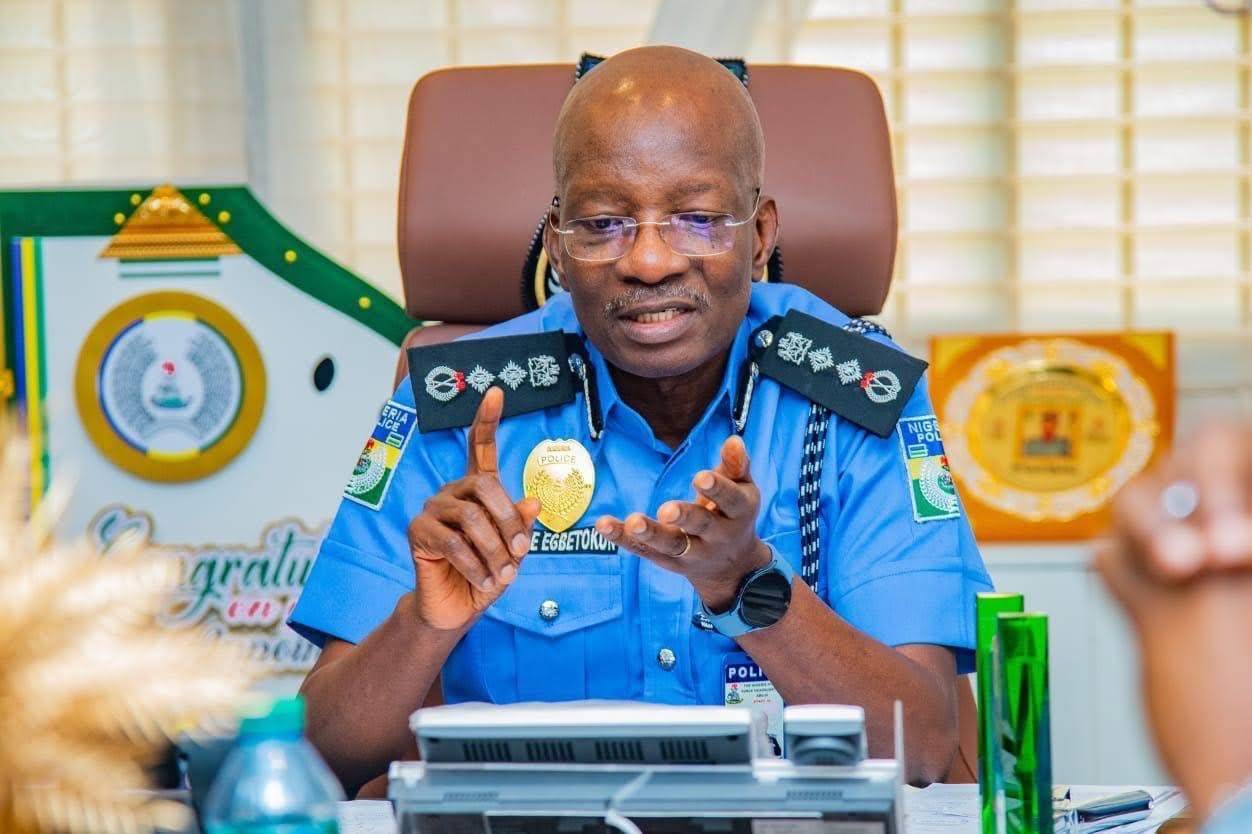
The uniform is the office. In every disciplined service, the uniform is not mere attire; it is identity. It represents authority exercised under the law, obedience to hierarchy, accountability to the state, and loyalty to the institution. For the Inspector-General of Police—the highest-ranking officer in the Force—the uniform embodies the very soul of policing. A handover ceremony is the final official act of command, the moment when authority is formally transferred from one custodian to another. To step into that moment without the uniform is to weaken its gravity and diminish the institutional message it should convey.
Leadership is demonstration, not declaration. Throughout his tenure, the former IGP emphasised professionalism, discipline, and proper conduct, including clear guidance discouraging inappropriate use of mufti in sensitive operations. These directives rightly underscored the principle that appearance reflects discipline, and discipline reinforces credibility. Against that backdrop, appearing at the most important ceremonial transition in civilian attire creates an unfortunate contradiction. Standards set from the top must be most visible at the top, especially on days when the entire Force is watching.
Symbols speak powerfully to the rank and file. In disciplined institutions, symbolism is not cosmetic; it is instructional. When junior officers observe the highest officer stepping out of the uniform at the point of exit, it risks sending the wrong message—that the uniform is incidental, that institutional rituals are optional, or that the office can be personalised at will. For a Force working to rebuild morale internally and confidence externally, this is a message Nigeria can ill afford.
The question of the pulling-out ceremony further sharpens this concern. Traditionally, the Nigeria Police honours senior officers with a pulling-out parade—a final salute celebrating years of service rendered under the uniform. Such a ceremony, if held, must be conducted in full ceremonial uniform, not mufti. A pulling-out parade is not about wardrobe; it is about reaffirming respect for service, hierarchy, and institutional memory. Anything less diminishes the honour of the office and weakens collective pride in the institution.
This commentary is not personal; it is institutional. It does not seek to diminish years of service or individual contributions. Rather, it raises a principled objection to a choice that carries broader consequences for institutional culture and public perception. In a country where citizens already question consistency and discipline in public institutions, leaders must be acutely conscious of optics. The smallest gestures at the top often have the widest ripple effects below.
With leadership responsibility passing to Tunji Disu, this moment should serve as a lesson for the future. Ceremonial protocol, uniform discipline, and institutional symbolism must be restored and protected. The Nigeria Police must continue to project seriousness, order, and pride—beginning from the very top.
The uniform is not an accessory to policing; it is its most visible expression. On a day meant to reaffirm continuity, discipline, and institutional dignity, the absence of the uniform spoke louder than any speech. As Nigeria looks to a more professional and trusted Police Force, one truth should remain non-negotiable: the office of the Inspector-General should always enter and exit in uniform, because the institution is bigger than the individual.
•Ernest Ofoye, a public affairs commentator, wrote from Lagos