

This should be Aiyedatiwa’s song in 2029, at the rate he is going
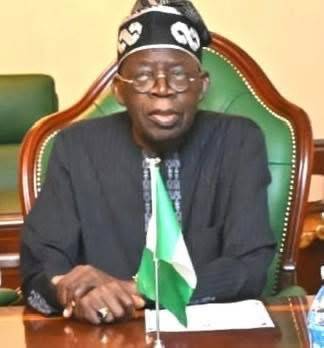
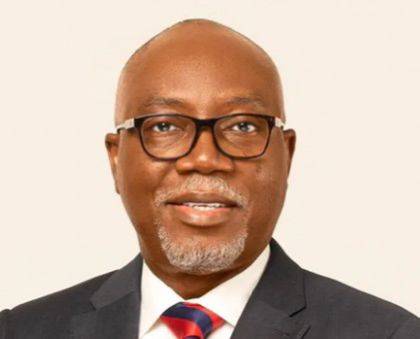
Little Lucky Orimisan Aiyedatiwa’s parents could not have imagined that the bundle of joy they gave birth to on January 12, 1965, would one day be governor of the present Ondo State, which was carved out of the Western Region in 1976, barely 11 years after they gave birth to him. Aiyedatiwa became acting governor of Ondo State on December 13, 2023, following the death of his predecessor, Arakunrin Rotimi Akeredolu. He was made substantive governor on December 27. He was later sworn in for his first full term on February 24, last year, after winning the 2024 gubernatorial election.
It would appear that his name worked in his favour on his political odyssey. Aiyedatiwa has his parents and all those who chose his names – Lucky, Orimisan Aiyedatiwa, to thank for the favour he has enjoyed ever since he came into limelight as deputy governor to the late Governor Akeredolu. There is none of those names that you can write off. They all carry great cultural and perhaps spiritual significance.
Lucky is self-explanatory. Orimisan literally translated means ‘my head is good’. Someone with a ‘bad head’ or an unlucky fellow could not have attained the relevance that Aiyedatiwa has attained within so short a period. Aiyedatiwa also translates to ‘the world has become our own’. Pardon my translation if they do not adequately capture what these names actually mean. Akeredolu himself was on record to have pointed out the significance of Aiyedatiwa’s names.
Since he took over in December 2023, first to complete Akeredolu’s tenure, he has done a lot to transform the state, and, in cases where necessary, he has even continued with some of the projects that Akeredolu could not complete before his passing. It is not all the time that such a thing happens in our clime where virtually everything is politicised, even when predecessor and successor are from the same political party.
One of such projects that readily comes into mind is the completion of the overhead bridge in Akure, which was started by the late Akeredolu, as well as the inner roads across the 203 wards in the state that are ongoing.
Present-day Ondo State turned 50 on February 3. There must have been a reason why Aiyedatiwa is the one in charge in the state when the state clocked the 50 years milestone. The state, alongside others like Bauchi, Benue, Borno, Imo, Niger, Ogun were created by the then Head of State, General Murtala Muhammed on February 3, 1976, barely 10 days to his assassination on February 13, 1976, in a failed coup d’etat led by Lt.-Col. Buka Suka Dimka.
Compared with the six other states that were created with it on the same day, Ondo State cannot be described as a laggard. And, Aiyedatiwas has done a lot in about two years by way of value addition to what he met on ground. Hence, the golden jubilee, with the theme “Ondo State: Yesterday, Today and Tomorrow,” was still moderately celebrated with a public lecture, cultural festivals, and an awards night to honour distinguished sons and daughters of the state, as well as President Bola Tinubu and former President Olusegun Obasanjo, among others.
The anniversary also afforded the governor an opportunity to render the account of his stewardship. Although he called the transformative initiatives modest, his government has implemented several key programmes to drive development in every corner of the state.
A major area of focus for the governor’s administration has been the education sector where emphasis is being laid on digital education. Special Science schools, teacher training and school renovation scheme have also been launched. There is a special focus on the improvement of educational infrastructure in the 18 local government areas of the state.
The government has also improved healthcare delivery substantially with about 102 healthcare centres renovated, some of them upgraded while the Orange Health Insurance Scheme has been expanded in line with the President Tinubu government’s Renewed Hope Agenda. The state government has allocated N59.5 billion (11.4 per cent of the budget) to improve healthcare services, to demonstrate the importance the government attaches to the sector.
Indeed, the commissioner for health, Dr Banji Ajaka, appreciated the governor for initiatives such as transactional ambulances, a 24-hour solar-powered water system, and staff quarters for health centres. Permanent Secretary, Ondo State Primary Healthcare Development Agency, Dr Francis Akanbiemu, said in the history of the state and his years of service in the medical sector, this is the first time a governor is building staff quarters for health workers; in reference to this kind gesture from the governor.
Another commentator recorded that ‘’The administration has also initiated state-round infrastructural development … On point is the dualisation of Igbokoda-Okitipupa-Ore Road, Ikare-Akungba-Owo Road, among several others, to stem the tide of rural-urban population drift and to ensure agricultural produce from within the state could get to the urban centres.
Ondo State is blessed with vast human and natural resources. So, the governor is doing a lot to move the state from the so-called ‘civil service’ state that some Yoruba states like to call themselves. No true Yoruba state should be proud to call itself a civil service state and be lamenting as if it was not the same geographical space that the sage, Chief Obafemi Awolowo, did all the magnificent things he did as premier.
Aiyedatiwa is also not unmindful of the fact that the state is an agrarian one. As a matter of fact, it accounts for about 40%–60% of the nation’s total cocoa output. It is also a major agricultural hub producing oil palm, rubber, cassava, timber, cashew, and rice. Ondo is also not a pushover in the production of kolanut, walnut and many other cash crops, as well as poultry, and fish, particularly in its southern coastal areas.
The Aiyedatiwa administration launched the “Youths-on-the-Ridges” initiative, a targeted agricultural empowerment programme designed to transform the youths into professional “agropreneurs” (agricultural entrepreneurs). Under the programme, about 18,000 youths (1,000 from each of the 18 local government areas in the state) are to be equipped with modern, practical skills to create jobs for them, as well as shift attention from total reliance on oil. It aims at changing the perception of youths about agriculture for only the never-do-wells but rather as a profitable venture.
The government is to provide financial and technical support to participants at low-interest rates, to enable them start their own ventures.
Cocoa cultivation has over 5,000 hectares dedicated to it under this scheme. We also have the “Tomato Revolution,” which supplies about 40 percent to the Lagos market daily. This is huge income for farmers, given the population of Lagos, estimated at not less than 21 million.
The Aiyedatiwa government has also earmarked about N30 billion of the government’s 2026 budget to drive the agricultural sector.
There is no doubt that, if well handled, the initiative would guarantee food security and long-term sustainability in the state. And, as a Yoruba proverb says: ‘ti ounje ba ti kuro ninu ise, ise bu se’ (once hunger is out of the question, then there is no more poverty!)
One very interesting area of the governor’s ambitious projects is the 500,000 barrels per day modular refinery that the state government is working on. Here, permit me to quote from a piece published by the state commissioner for information that was published in The Guardian : ‘’Furthermore, the administration is quietly working on a 500,000-barrel-per-day (bpd) modular refinery that will provide jobs for thousands of unemployed youths. That will also provide the opportunity for a Free Trade Zone that will lead to the establishment of an international airport in Ilaje. That $50 billion oil project will amount to the single largest of its type in Africa, involving the Federal Government and international partners.’’
That is not all: ‘’The Ifon ceramic factory is due to be commissioned as a testament to the investment-friendly atmosphere enhanced by Aiyedatiwa’s government. The legacy is to transform Ondo from a mere civil service state to an industrialised state that will not only be the envy of many but the pride of the nation’’.
It is instructive that, in spite of these modest achievements in so short a time, the governor himself recognises that it is not yet the best; that there is still room for improvement.
Still, Aiyedatiwa has so far discharged himself creditably to confidently return to the people of Ondo State to give him one more chance to complete some of these projects that he initiated, and which stand the risk of being abandoned should he miss the opportunity, a thing that would not be in the best interest of the state. Of course, other contestants would also want to join the wagon when the time comes, for whatever reasons. No one can stop them if they have the support of their respective political parties and they emerge as their parties’ candidates.
But Ondo State poses a peculiar challenge in terms of gubernatorial political succession: and that is the regimented nature of the state politics. Almost without exception, at least since the return to civil rule in 1999, as another commentator noted, ‘’ In 1999, Ondo North senatorial district produced Governor Adebayo Adefarati. In 2003, Ondo South produced Olusegun Agagu, thereafter Olusegun Mimiko, Ondo Central. It then went back to Ondo North, Akeredolu. By the time Aiyedatiwa completed Akeredolu’s tenure, the pendulum naturally swung South… When Aiyedatiwa’s tenure runs out in 2033, it is the Ondo Central that comes in…’’
So, whoever wants to challenge the incumbent governor has to bear this in mind. Unless it can be proved that what had been happening were mere happenstances. Even if the rule was not stated formally anywhere, Yoruba people would always want to go with their ‘omoluabi’ (person of integrity or honour) principle.
One point is clear, though. Aiyedatiwa is the only one that can stop himself in 2029. And, what do I mean? He still has at least two solid years to prepare for the next election. Already, he has one thing to his advantage: the power of incumbency. This counts for a lot. It is different from people who are talking from the sidelines.
What Aiyedatiwa should do is refuse to be distracted, consolidate on his achievements which, ultimately, are the things that would speak for him. While others are brandishing ‘ifs’ and theories, he would be brandishing ‘come and see’. If the other Lucky had to repeat because he failed, Lucky Aiyedatiwa should come again because he passed. There is a difference between repeating and coming again.