

There are moments in the life of a people when something unusual appears on the horizon. Not the familiar politician whose promises arrive with great fanfare and depart with suspicious speed, but something steadier. Something that does not merely announce itself but offers direction.
It seems the people of Owan Federal Constituency in Edo State are now at such a moment.
I am inclined to avoid grand metaphors that shine brightly but explain very little. What is required here is not fleeting spectacle. It is reliable orientation.
Call it a compass.
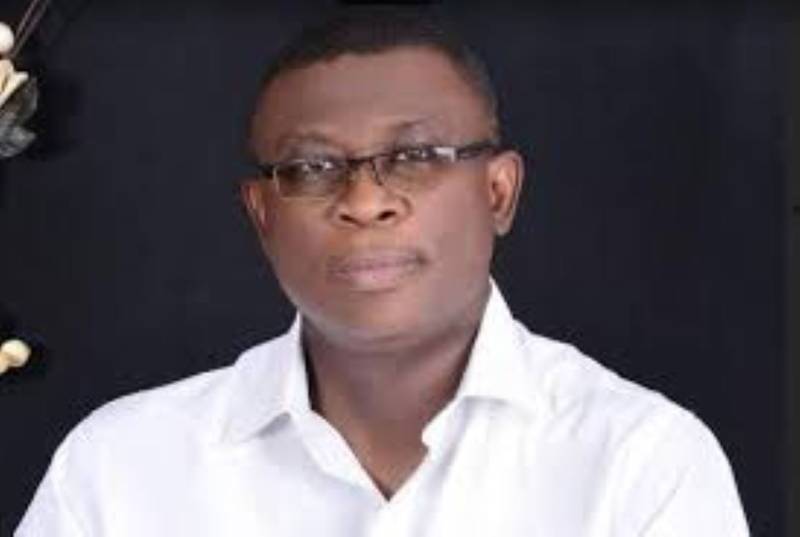
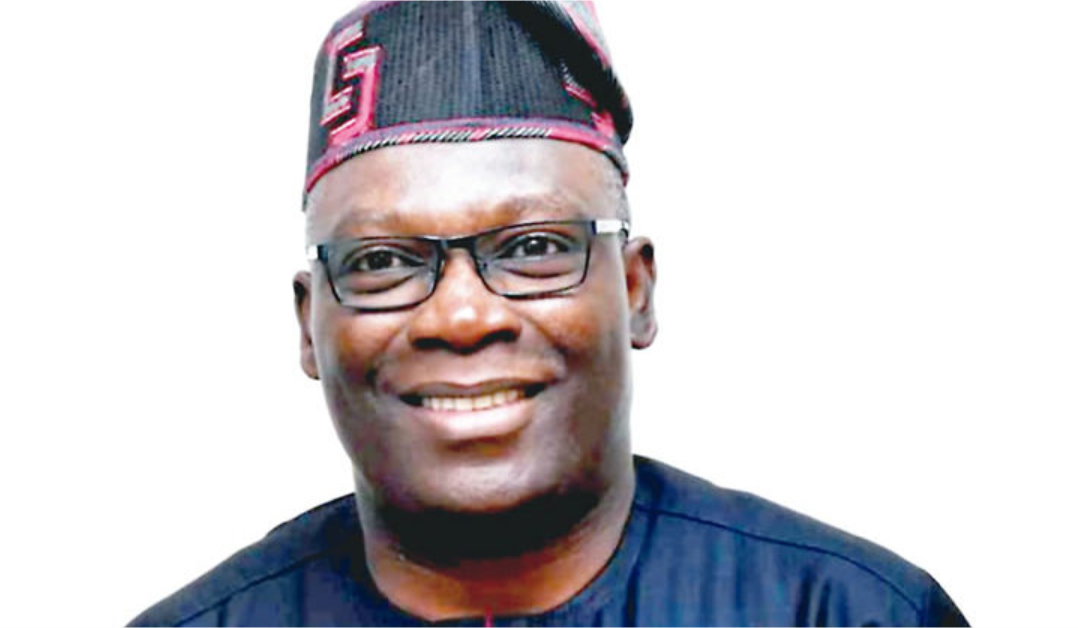
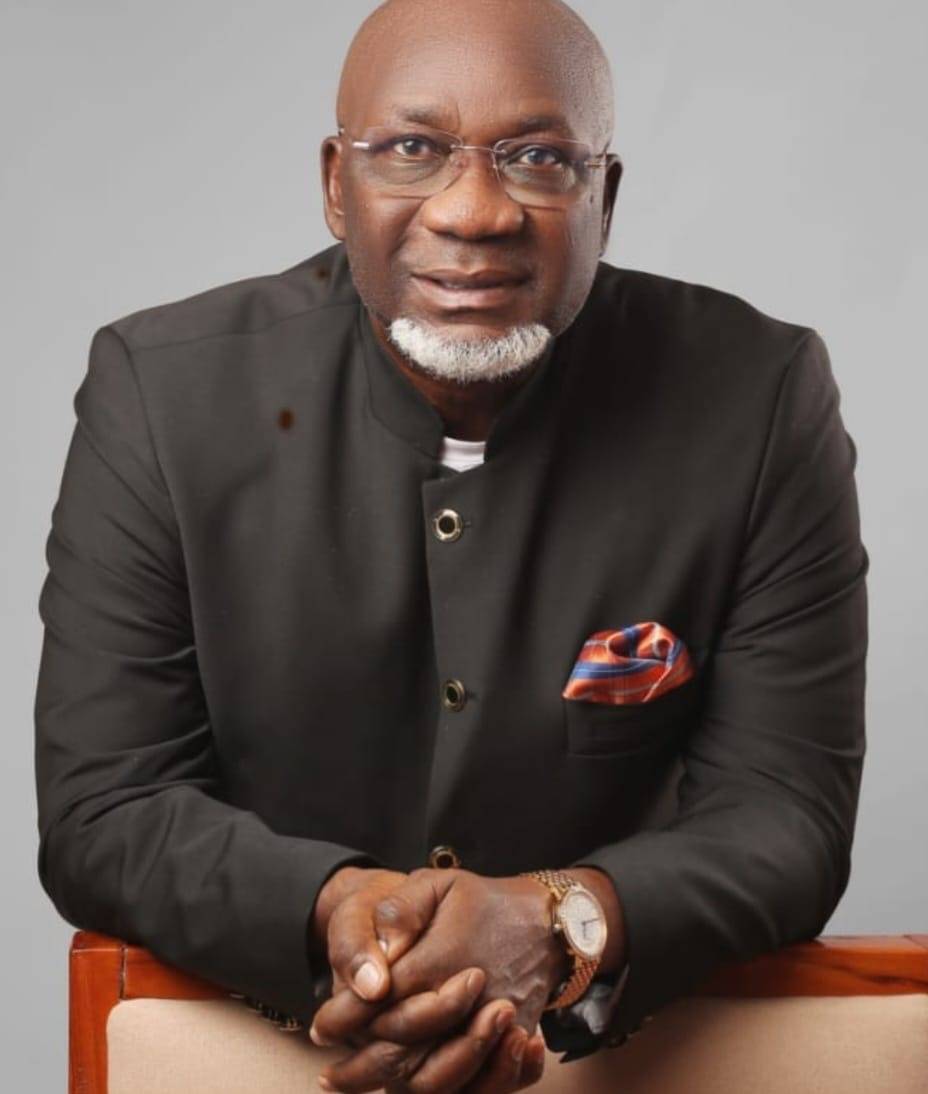
The name of that compass, in this instance, is Dr Ernest Afolabi Umakhihe.
Now, before the choir gathers to sing the usual election hymns, a measure of restraint is in order. Nigerian politics has trained even the most optimistic among us to approach glowing profiles with a certain suspicion. We have heard the speeches. We have seen the posters. And so we have mastered the art of clapping politely while quietly asking a far more important question.
What exactly has this person done previously before stepping forward to offer himself as a possible candidate to represent his people?
It is a simple question. It is also the one that separates serious candidates from enthusiastic storytellers.
In Umakhihe’s case, to his credit, the answer does not require imaginative reconstruction. It sits plainly in the public record. This is a man who has operated at the highest levels of Nigeria’s public service, particularly within the Ministries of Foreign Affairs, Defence, Budget and National Planning, Works and Agriculture and the broader architecture of food security. Not as a commentator. Not as an observer peering in from the outside. But as Permanent Secretary [in Budget and National Planning, Works and Agriculture and Food Security respectively], the point at which policy stops being theory and begins the difficult journey towards implementation.
That distinction matters more than campaign rhetoric ever will.
For a constituency like Owan, where agriculture is not a talking point but a way of life, the difference between theory and implementation is the difference between potential and prosperity. Land alone does not produce wealth. Labour alone does not guarantee success. What bridges the gap is access. Access to programmes, to funding, to infrastructure, to the quiet decisions made in offices far removed from the farms they affect.
This is where the Umakhihe proposition begins to make practical sense.
A man who had sat at the centre of that system does not approach it as a stranger. He understands its rhythms, its bottlenecks, and its possibilities. He knows which programmes have substance and which exist mainly in policy documents. He knows the difference between an announcement and an outcome.
And perhaps most importantly, he knows where the levers are.
Every discerning Nigerian knows that the country’s development challenges are not always the result of a lack of ideas. More often, they stem from a lack of connection between those who need support and the systems designed to provide it. Somewhere between policy formulation and local reality, things have a habit of getting lost.
Occasionally, someone comes along who understands both ends of that journey.
Consider what this could mean in concrete terms. Farmland supported not merely by seasonal enthusiasm but by structured programmes that improve yields. Storage facilities that reduce the quiet tragedy of post harvest losses. Rural infrastructure that ensures produce does not perish on its way to market. Irrigation systems that make farming less dependent on the generosity of the weather.
These are not abstract ambitions. They are the practical outcomes of effective representation linked to relevant experience.
Then there is the question of inclusion, a word that appears frequently in policy discussions but is less frequently translated into action. Umakhihe’s recognition as a gender-friendly permanent secretary is not an ornamental detail. It suggests a track record of ensuring that women who form a significant portion of the agricultural workforce are not treated as an afterthought in the design and delivery of programmes.
In places like Owan, where women carry a substantial share of the burden of food production, that orientation is not merely progressive. It is necessary.
Of course, competence alone is not sufficient. Nigerian politics has produced no shortage of capable individuals who, upon entering elective office, develop an unfortunate allergy to accessibility. The higher they rise, the more distant they become until constituents are left communicating with their representatives through layers of intermediaries who filter both information and intention.
Here, again, the reputation that trails Umakhihe offers a different picture. Accounts of his engagement with communities, his responsiveness to ordinary people, and his consistent support for those in need suggest a style of leadership that does not rely on distance for authority.
I will resist the temptation to canonise any candidate. Experience has taught us that political sainthood is a title best avoided. What can be said, however, is that proximity matters. A representative who listens is more likely to understand. A representative who understands is more likely to act.
Which brings us, inevitably, to the broader political question.
Elections are often framed as contests of popularity, as though governance were a popularity competition conducted at scale. In reality, they are choices about capacity. About who is most likely to convert opportunity into tangible outcomes.
For Owan Federal Constituency, the choice is not between perfection and imperfection. Such options do not exist in politics. The choice is between familiarity and function, between rhetoric and record, between promise and preparation.
Dr Ernest Afolabi Umakhihe presents himself as a candidate whose preparation aligns closely with the needs of his constituency. A background rooted in agriculture and rural development. Experience at the highest levels of policy implementation. A demonstrated concern for inclusion. A reputation for accessibility.
These are not guarantees. Nothing in politics ever is. But they are indicators. In a system where voters must often make decisions with imperfect information, credible indicators are valuable.
A constituency does not require spectacle. It requires direction. It requires a steady hand on the wheel, someone who understands both the terrain and the machinery needed to navigate it.
The opportunity before Owan, then, is not merely to be impressed. It is to be deliberate in the choice of a representative.
Because in the end, constituencies do not develop on the strength of applause. They develop on the strength of choices. And every so often, a choice presents itself that is less about hope and more about alignment between experience and need.
This may well be one of those rare moments. And, Dr Ernest Afolabi Umakhihe, by preparation and by record, presents himself as a compass pointing towards progress.
■ Sufuyan Ojeifo is the publisher/Editor-in-Chief of THE CONCLAVE online newspaper.