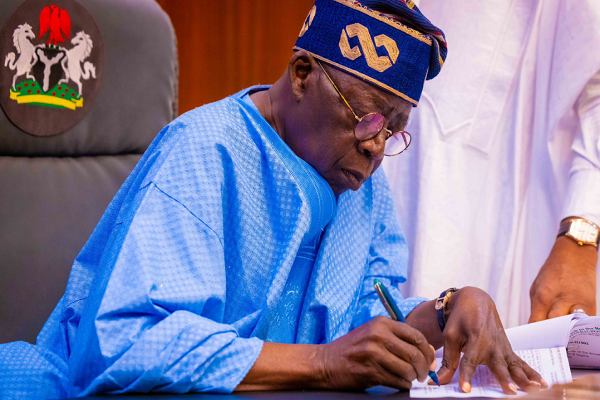

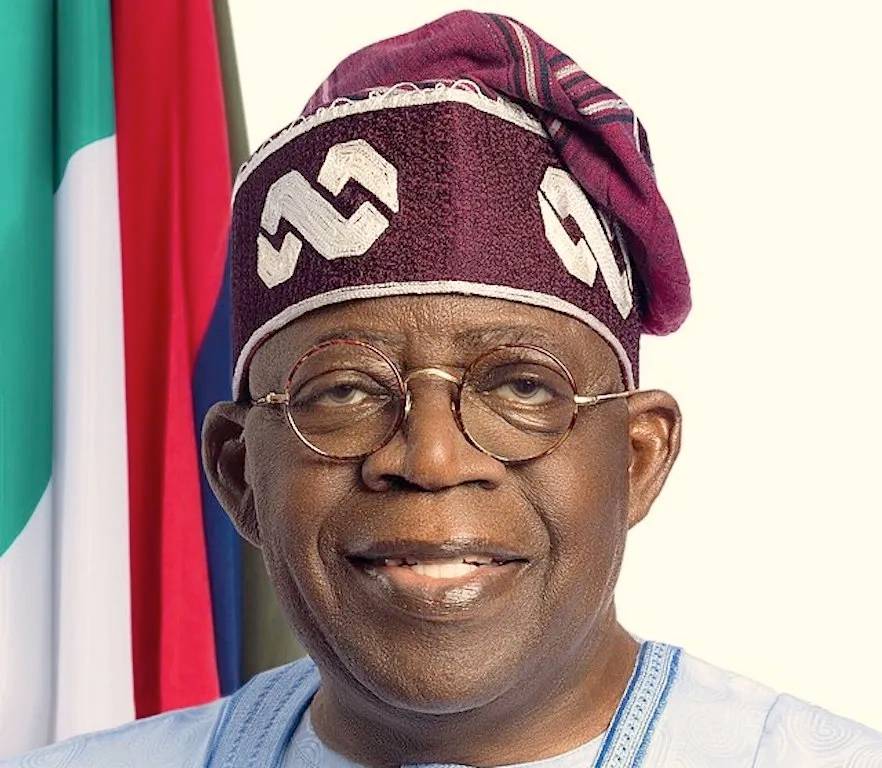

As President Bola Tinubu marks his 74th birthday, this essayist is producing an excerpt from an upcoming book that may show him as a man with a halo on his head. Enjoy
It was in a room in London, and members of the NADECO Abroad had convened. The meeting was tense. An earthquake had happened at home, and the consequence was one for the ages. The dictator Sani Abacha had died. Abiola was still alive and in jail. What next for the country? The military was still in power, but the new man in charge, General Abdulsalami Abubakar, was conveying a conciliatory tone to the civil society. General Abdulsalami had been in Abacha’s doghouse, and had manifested his quiet disdain for the new character of the army, its corruption, its lack of finesse or discipline, its subordination to the caprices of one man. He had wanted to quit, and even Abacha had almost railed at him over his meeting with some NADECO chieftains like Chief Olusegun Osoba and Ayo Opadokun. The despot and his cohorts implied he was supping with the enemy. He was now to steer the affairs of the country, manage the ominous intricacies of the hour, the rumble of the civil society organisations, the suspicion of the political class, the state of health of M.K.O. Abiola whose June 12 mandate still hung over the past and the horizon.
At the meeting, there was no cheer. Even Professor Wole Soyinka had told a western reporter when asked about the prospect of the country after Abacha’s death that he did not trust that things would change for the better. “Don’t let your guards down,” he cautioned.
So, at the meeting, the NADECO Abroad was to map their response to the new development. Some of the stalwarts at the meeting were Professor Bolaji Akinyemi, General Alani Akinrinade and Prince Eludoyin. Having suffered the pangs of exile, deprivation, dodged gunfire, and eluded the pursuit of the soldiers, the question was, should they return or stay? In the language of Shakespeare, to be or not to be?
Most did not want to return just yet. They still wanted to watch the direction of affairs. There was a sense in which caution made sense. The military from the times of Babangida had laid ambush against the political society. Fortunes, they say, belongs to the brave. Tinubu, who was the face of NADECO Abroad tried to persuade them that it was necessary to return and be part of the new dispensation. If they delayed and stayed back, they would surrender the country to the apologists of the military. They were the members of the five leprous fingers, and they could execute a pirouette and style themselves as democrats. It would turn the work of all of them, who had lost lives and resources, into a waste. He did not want that. Tinubu tried to persuade them to take the plunge, and that the death of Abacha meant the decapitation of an era.
They did not agree. Even if they did not want to resettle at home, it made sense to visit and assess the situation first hand to equip the group on the right course of action for the cause. They would not bend to his idea.
So, in order to provide an excuse, he brought a sense of domestic humour to disarm his fellows. He burst out in Yoruba, “Mo fe lo ri maami.” (I want to see my mother.) They were amused but they had no counterpoint to his cheerful alibi.
With a scanty wardrobe and just enough resources for a short stay, he headed out to Lagos. On arriving at the Murtala Muhammed International Airport, he did not head home immediately. He made a stop at the office of the Concord Press that published Concord newspapers and magazines…
He met with Dele Alake, editor of the National Concord, Tunji Bello, editor of the Sunday Concord and a few others. He told them that he had returned to explore the prospect of running again for the senate…
“Why don’t you run for governor?” suggested Alake. Bello endorsed the idea as well.
He responded he had not given it a thought.
The next day, he proceeded to the home of Alhaji Hamzat where a group known as the Primrose had gathered. Their agenda was to decide who to endorse for the position of governor. The Primrose Group was also associated with Dapo Sarunmi during the military era. They had received tremendous support from Tinubu. In fact, he had rallied resources, moral support and logistical power for them when he was the treasurer of Mobil Nigeria. He was the third ranked officer of the corporation. When the group wanted to pick candidates to run for the senate, he had shown no interest to run for public office.
“We already had people for the two areas here. It was Oseni and Olowu that said, let’s call Bola now,” narrated Oyinlomo Danmole, one of the stalwarts of the group and a Lagos legislator, in fact the youngest, when Lateef Jakande was governor in the Second Republic. He was referring to Kola Oseni. “He said, let’s talk to Bola now. I’m sure he would like to do it. He has the financial ability and he has the wherewithal.”
They went to Tinubu’s mother, Chief Abibatu Mogaji, the Iyaloja of Lagos. They secured her consent and sent a delegation to Tinubu in his office at Mobil. Tinubu accepted the offer.
“They thought he was mad,” recalled Danmole, referring to his colleagues and corporate friends. How could he abandon a plum office of treasurer as the most senior Nigerian in the company for the uncertainty of an electoral gamble.
“He took permission. Dr. Pius Akinyelure, who was at Mobil was furious,” said Danmole. But Tinubu had decided, and it signaled a trait that would career his political life: his knack to take a path less traveled and defeat naysayers in that resolve.
“They thought he was mad,” said Danmole.
They rented a house in Agege and he was embraced by the then monarch, the Oba of Agege Lateef Adams, and Sarunmi’s house was also available in Agege, and he registered there and the campaign kicked off. Speaker of Lagos State House Assembly, Mudashiru Obasa confirmed the story. His opponent was Odu Onikosi, who was no small shakes in the political arena. It was a David versus Goliath scenario. Like the Biblical tale, the Goliath and his followers succumbed to a shock as they were stunned by the outcome of the fight.
It was this same Primrose Group that Tinubu met at Alhaji Olatunji Hamzat’s place. Tinubu had met his mother the day after meeting Alake and Bello at Concord, and he came to the group as a courtesy.
“I don’t know what dragged him out of his hideout in London,” wondered Danmole. “When he came, I asked him, he said ‘I don’t know what just happened. I was just feeling like I should come and see my mother.’”
Tinubu said he was just back to Nigeria for two days. He brought with him only two trousers and two shirts.
“The second day when he landed was when we were going to decide which of the two candidates that are available that we were going to support for governorship of Lagos,” said Danmole. The candidates were Wahab Dosunmu and Funsho Williams. So when Tinubu addressed the elders, he said, “Mo ni kin wa so fun yi wipe mo si ni interest ninu senate yen oo. But mo wale wa wo mama mi. Won wa wipe e wa nibi.” Translation: “I am here to intimate you that I am still interested in running for senate. I came to see my mother and she informed me that you are here.”
So, he walked out and stood outside. “One of the leaders was telling the others that when that guy was coming in, ‘my mind tells me that there is something gubernatorial about him.’”
It was either Prince Olusi or Bush Alebiosu, recalled Danmole, who was not sure. The person said, “Let’s call him back and ask him now.” That person who made the remark that he saw a governor in him, as Tinubu recalled to this author, was Alhaji Mufutau Olatunji Hamzat. “He was presiding at the meeting,” said Tinubu. “He was the one who said, I should return to the meeting and that he saw a governor in me.” Alhaji Hamzat was a Nigerian banker and monarch. He was also well-honed in Lagos politics as a member of the Lagos State House of Assembly in the Second Republic. He was also a commissioner. His son, Femi Hamzat, is the deputy governor of Lagos State.
So, when Tinubu returned to the meeting, Hamzat asked him, “Se o le je governor ni”. Translation: Can’t you be a governor? “We’ve taken a decision,” they declared. “If you agree, we know you can handle it. He said they should give him two weeks, and that he had not thought about it,” said Danmole.
“Alhaji Hamzat stopped the meeting and said let’s meet in two weeks,” recalled Tinubu.
Tinubu recalls that he had stepped into a barbershop in Agege, and the present speaker Obasa saw him yelled, “our governor.” It caused a stir, and pointed to a bedlam of expectation in the grassroots. Speaker Obasa said it was a homecoming since as a senator during the military era, Tinubu had represented Agege. Obasa was one of the point men in Tinubu’s organisation. “We did not want him to run for senate. He was ripe to be governor,” he insisted. That was the consensus in the crowd awaiting him in Agege that afternoon, he said.
That was how he set in motion a drive to be governor. It was the genesis of the second phase of a political career of consequence to the nation. The tapestry of Nigerian politics was about to welcome a man of extraordinary statecraft into its bosom.