

The US and Israel have launched a large-scale attack on Iran.
President Donald Trump said the US had begun “major combat operations” and urged Iranians to overthrow their clerical rulers once they were complete.
Israeli Defence Minister Israel Katz earlier announced that Israel had launched a “pre-emptive attack” against Iran to remove threats to the country.
Iranian Foreign Minister Abbas Araghchi said the strikes were “wholly unprovoked, illegal, and illegitimate”.
His country responded by launching missiles towards Israel and four Gulf Arab countries which host US military bases: Bahrain, Kuwait, Qatar and the UAE.
It came after weeks of threats from Trump that he would order military action if Iran did not agree a new deal over its nuclear programme.
Here’s what we know.
What is happening in Iran?
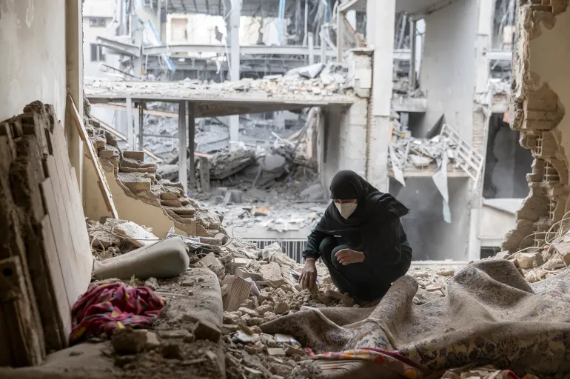
Shortly after 09:30 local time (06:00 GMT), Iranian media reported explosions in the capital, Tehran. Pictures showed smoke over the city’s Jomhouri Square and Hassan Abad Square.
Explosions were also reportedly heard in multiple other cities across the country, including Karaj, near Tehran, Isfahan and Qom in the centre of the country, and Kermanshah in the west.
Videos circulating on social media showed people running in panic near sites of explosions. The sound of screams and crying could be heard in the background.
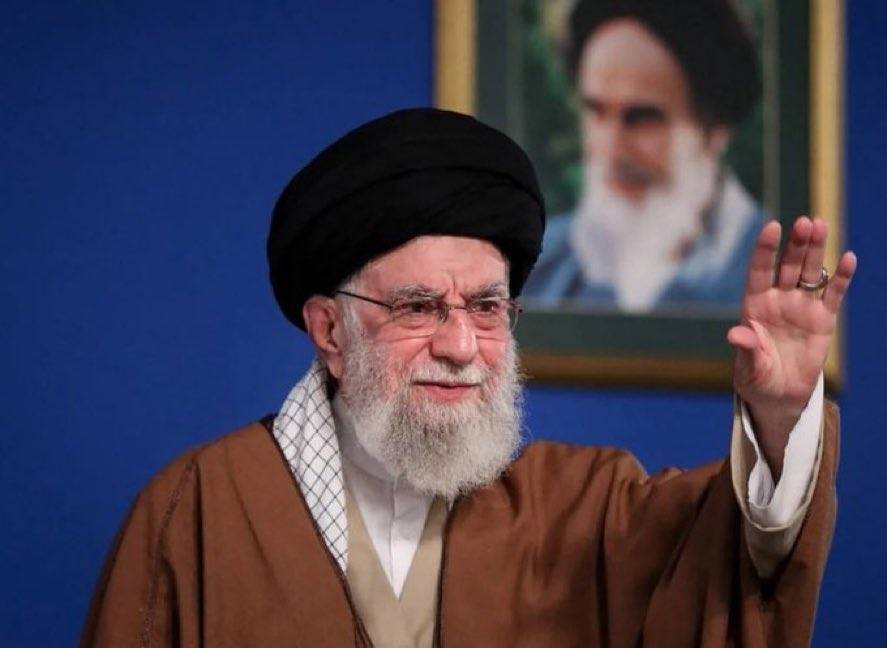
Footage from Tehran verified by the BBC showed explosions within 1km (0.6 miles) of Leadership House, the compound of Supreme Leader Ayatollah Ali Khamenei, who has ultimate power in Iran.
Satellite imagery also showed signs of significant damage in the compound, including blackened buildings, debris and a column of smoke.
It was not immediately clear whether Khamenei was there at the time of the strikes. But Araghchi told NBC News that the supreme leader was still alive “as far as I know”.
The office of President Masoud Pezeshkian in the capital was also reportedly targeted.
Iranian state TV said President Masoud Pezeshkian was “safe”.
An Israeli military official later briefed journalists that Israeli and US forces had carried out an initial, “broad wave” of strikes against “hundreds of targets”.
Among the targets, they said, were three gatherings of senior Iranian officials. “Several senior figures essential to the management of the campaign and the regime’s governance were eliminated,” they added.
The IDF said it had also struck ballistic missile launchers and “strategic defence systems”, an advanced SA-65 system in the Kermanshah area.
The number of casualties across Iran is unknown, with Iran in the middle of a near-total intent blackout that monitors detected late on Saturday morning.
However, state media said at least 85 people had been killed in an Israeli strike on a primary school in the southern county of Minab. The BBC has not been able to verify the reports.
Iran’s Civil Aviation Organisation has said the country’s airspace is closed until further notice.
Map of Iran showing Tehran in the north of the country, with Karaj just to the west of the capital, Qom to the south, Isfahan further south in central Iran, and Kermanshah in the west near the border with Iraq. Kharg Island on the western coast is also marked.
What have the US and Israel said?
The first statement on Saturday morning came from Israel’s defence minister, who said the country had “launched a pre-emptive strike against Iran to remove threats” and warned Israelis to prepare for retaliatory missile and drone attacks.
Just over an hour later, Trump posted a video on Truth Social confirming US involvement in the strikes and saying the objective was “to defend the American people by eliminating imminent threats from the Iranian regime”.
“We’re going to destroy their missiles and raze their missile industry to the ground. It will be totally again obliterated. We’re going to annihilate their navy. We’re going to ensure that the region’s terrorist proxies can no longer destabilise the region or the world and attack our forces,” he added.
“And we will ensure that Iran does not obtain a nuclear weapon.”
Iran has said repeatedly that its nuclear programme is entirely peaceful and that it does not seek to obtain nuclear weapons.
Trump also told members of Iran’s armed forces could either lay down their weapons and be given “complete immunity”, or “face certain death”.
He also urged Iranian civilians to stay in their homes and prepare to overthrow the clerical establishment.
“When we are finished, take over your government.
It will be yours to take. This will be probably your only chance for generations.”
Israeli Prime Minister Benjamin Netanyahu similarly called on all Iranian people “to rid themselves of the yoke of tyranny and bring about a free and peace-seeking Iran”.
“Our joint action will create the conditions for the brave Iranian people to take their destiny into their own hands,” he added.
Thanking Trump, he reiterated his message that Iran “must not be allowed to arm itself with nuclear weapons that would enable it to threaten all of humanity”.
How has Iran responded?
Israel’s military said it identified missiles launched towards Israel by Iran, saying it was working to “intercept and strike threats where necessary”.
Explosions were heard in the city of Haifa and elsewhere in Israel, but it was not currently clear if these were impacts or interceptions.
Elsewhere in the region, Bahrain’s state news agency reported the service centre of the US Navy 5th Fleet, in Bahrain, was “subjected to a missile attack”.
Qatar’s defence ministry said it “successfully countered a number of attacks targeting the country’s territory”, state media reported, after explosions were heard in the capital Doha.
The country is home to the largest US military facility in the region, Al Udeid Air Base.
Jordanian spokesman Mohammad Momani confirmed they had intercepted two missiles targeting its territory and successfully destroyed them
Kuwait’s air defence also successfully intercepted multiple ballistic missiles, the country’s defence ministry said. A spokesman said the Ali Al-Salem airbase – where the US air force has a presence – was targeted.
Meanwhile, the United Arab Emirates condemned Iran’s attack on its territory, which they say killed one person after falling debris from their air defence intercepts. They added that several missiles were successfully intercepted.
Israelis have been warned against gatherings and going to school and work unless it is essential.
The guidance is in effect until 20:00 on Monday (18:00 GMT), authorities have said.
Israel’s airspace is also closed to civilian flights, according to Israeli media.
Map of the region shows Iran, Israel, Kuwait, Bahrain, Qatar, UAE.
Is it safe to travel to the region?
Major airlines have diverted or cancelled flights to the Middle East, citing safety, and have apologised to customers.
Wizz Air has suspended flights until 7 March in Israel, Dubai and Abu Dhabi and Amman in Jordan, and in Saudi Arabia until Tuesday.
British Airways has cancelled flights to Tel Aviv and Bahrain until Wednesday, while Saturday’s service to Amman is grounded.
Kuwait’s aviation authority said it was halting all flights to Iran until further notice, according to state media.
Emirates has temporarily suspended its operations to and from Dubai. Lufthansa, Air India, Virgin Atlantic and Turkish Airlines have also announced cancellations.
Some countries in the region – including Iraq and Jordan – have also closed their airspace. The UAE said it has “partially and temporarily” closed its airspace as a precaution, state media reported.
Meanwhile, the UK Foreign Office travel guidance for Jordan, Syria, Lebanon, Iraq, Yemen, Turkey, Saudi Arabia and Oman, is now advising travellers to “remain vigilant, follow local authority advice and take shelter if advised”.
BBC