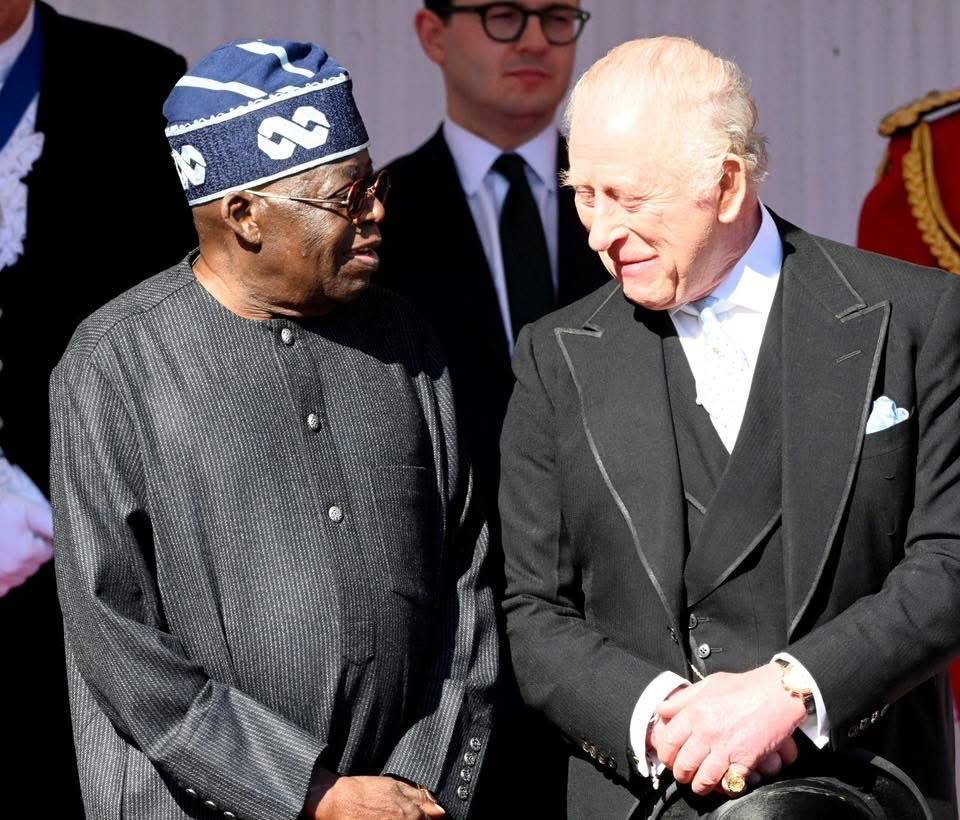

In 1992, an upwardly mobile corporate yuppie—then a political neophyte scarcely known in public life—stepped into the turbulent arena of Lagos politics. A Lagos Island big boy and Chicago returnee, he had migrated to the United States to acquire knowledge and skills, returned home, worked with the multinational oil firm Mobil, and distinguished himself as a rising corporate icon.
A true Lagos Islander in sartorial taste, class, and civility, he embodied the famed work ethic and result-driven culture for which the Island’s elite are known. A consummate workaholic, it was not unusual to see the penthouse office of the Head of Treasury on Broad Street, Lagos—opposite the National Library—fully lit late into the night. Bola Ahmed Tinubu was not merely earning a living; he was establishing a pattern of life that demonstrated what discipline and hard work could achieve.
His foray into politics culminated in his election as Senator representing Lagos Central in 1992. Although his mandate was abruptly truncated by the unconscionable annulment of the June 12, 1993 presidential election, the “City Boy” left unmistakable footprints within a short time, particularly as Chairman of the powerful Senate Committee on Appropriations. He had announced himself as a leader to watch.
By 1994, his principled opposition to the annulment of the June 12 election pitched him against the military junta. Forced into exile, he continued the struggle from abroad—financing pro-democracy activities both in the diaspora and at home. He remained steadfast until the military power-mongers imploded under the weight of their own excesses and were compelled to retreat to the barracks, restoring democracy to Nigeria.
Upon his return and the lifting of the ban on partisan politics, Bola Tinubu—now a political force in Lagos and beyond—contested the 1999 governorship election and won convincingly.
Barely had he assumed office as Governor of Lagos State when his leadership instincts became evident. However, his administration soon faced turbulence when the irrepressible human rights lawyer, Chief Gani Fawehinmi, raised questions about his academic records. Though the controversy shook both political and judicial circles, Tinubu remained undistracted. With iron resolve, he pursued his vision of a new Lagos—one driven by digital revenue systems, institutional reforms, and large-scale infrastructure development.
Before the end of his first term, Lagos had begun to transform. Internally generated revenue grew to unprecedented levels, and a massive infrastructural drive commenced—setting benchmarks later emulated by other sub-national governments across Nigeria.
By his second term, the former finance expert—now an emerging national political asset—set his sights beyond Lagos. He began to construct a pan-Nigerian political alliance capable of wresting power at the centre. This strategic vision birthed the Action Congress of Nigeria (ACN), which later aligned with General Muhammadu Buhari’s CPC and other parties to form the All Progressives Congress (APC).
A political mathematician, Tinubu understood that sacrificing his immediate presidential ambition was a necessary price for a greater victory. He backed Muhammadu Buhari in the 2015 presidential election, pairing northern popularity with southwestern political strength. The gamble paid off: APC defeated an incumbent government for the first time in Nigeria’s history.
Yet victory did not translate into influence. From the outset, Buhari’s posture—encapsulated in his declaration, “I belong to everybody and I belong to nobody”—signaled Tinubu’s marginalisation. The architect of the victory found himself increasingly distant from the power structure he helped build.
As the 2023 elections approached, obstacles multiplied. Political landmines were laid by entrenched interests—within the Villa, the party hierarchy, the legislature, and opposition camps—to block Tinubu’s path to Aso Rock.
Party chairmen perceived as loyal to him were removed. Attempts were made to foist alternative candidates on the party. Yet resistance mounted. At a critical APC NEC meeting, efforts to impose Senator Ahmed Lawan as Buhari’s preferred candidate were rebuffed. Voices within the party demanded fairness, and eventually, the President affirmed that the ticket should go to the South.
That moment marked the first breakthrough. The second came at the party primaries, where Tinubu swept the field decisively—defeating even the sitting Vice President with an overwhelming 1,271 votes.
The general election posed even stiffer challenges. Currency redesign, cash scarcity, and fuel shortages threatened to derail the process. Still, Tinubu pressed on, undeterred. Through grit and resilience, he emerged victorious.
Indeed, Bola Ahmed Tinubu appears a man of destiny. Time and again, attempts to thwart or eliminate him have failed—from the Abacha era persecutions to more recent political conspiracies. Fate, it seems, has continually intervened.
This is a man whose path appears pre-ordained, who walks with an uncommon sense of purpose, and whose resilience has defined a generation of political struggle.
Salutations to Asiwaju Bola Ahmed Tinubu—an avatar of reform and a central figure in Nigeria’s unfolding democratic journey.