
Just before the Independent National Electoral Commission (INEC) released the 2027 elections timetable, politics had begun to take added urgency. That urgency became frantic moments after the electoral body, in fulfillment of constitutional provisions, published the dates for the next national and state polls. In just one day alone, last Tuesday, former Jigawa State governor Sule Lamido and former Kaduna State governor Ahmed Makarfi met in Kaduna over the fate of the factionalised Peoples Democratic (PDP), promising themselves that efforts would be made to heal the rifts in the party ahead of the next polls. If their posture betrayed their despair, they refused to acknowledge it, but instead spoke of widening consultations, promoting reconciliation, and rebuilding trust.
On the same Tuesday, former vice president Atiku Abubakar and Oyo State governor Seyi Makinde, in company with others, ostensibly paid a courtesy call on former military ruler Ibrahim Babangida at his Minna residence. They did not disclose the real reasons for visiting the former dictator. However, some reports suggested that the visit was to consult Gen Babangida and possible get his endorsement for a number of political objectives. The visitors regard the former military ruler as still highly influential. Former Ekiti State governor Ayo Fayose, however, speculated that Gen Babangida’s Tuesday visitors went to brief him about the African Democratic Congress (ADC) presidential ticket and the state of the mega coalition they claimed to be cobbling together. The general was reticent, for that is his nature; but Alhaji Atiku prevaricated and threw a red herring.
Last Tuesday, too, acting on the Federal High Court FCT ruling indicating that former Labour Party (LP) leader Julius Abure’s tenure had ended, and following the recognition accorded the Nenadi Usman-led caretaker committee, the Governor Otti-led LP took physical possession of the party in an operation that began in the dead of the night. The combatants are back in court, but it is uncertain which way the pendulum of justice would swing. One way or the other, and in the next few months, each party will put its house in order, at least tentatively. Whether the truces will last beyond the 2027 polls or not will depend on the altruism of the disputants. Meanwhile, all the main opposition parties have been considerably weakened going into the next elections, while the ADC, for reasons commonsensically deduced from the novelty of their existence, will approach the next few months fairly aggressively but perhaps indecisively.
All the parties, whether cohesive or fragmented, have identified issues to deploy as campaign tools before the primaries this year and the main elections next year. They had tried to capitalise on last year’s by-elections on August 16, 2025 across 13 states and 16 constituencies, but the ADC came to grief, thus rendering their rhetoric less poignant than they had anticipated. A few by-elections are slated for this week and next; if the opposition still does not come up with a few spectacular wins, their political noise will be even less shrill than they had planned. At the moment, unsure of anything, particularly their internal cohesion and the marketability of their campaign platforms, and anxious to build some momentum into their campaigns, they will be depending on the distractions some of their leaders can curate for the ruling party which has all but swallowed the best of the opposition, including states and officials. They will also scrounge for tangential issues like the e-transmission of results during elections but omit the nexus with e-voting, and also tragically and ignorantly fail to appreciate the infrastructural deficit certain to hamstring their pet idea of real-time uploading of results. The National Assembly will in the days ahead harmonise the contentious legislation and deliver a more realistic Electoral Act, and particularly Section 60. The opposition will not be satisfied, for they think that there is already a grand plan to rig the next polls. They will continue to shout their fears from the rooftops, hoping to win the next poll by demoralising or weakening the ruling party, or preparing ground for popular revolt should their last and fateful election end in disaster.
The opposition had tried to make an issue out of the propriety of appointing the new INEC chairman from the North Central, especially because of his legal opinions interwoven with his religious predilections, but neither issue gained traction. Then they began making oblique references to the APC’s same-faith ticket, but that was also a dead horse no one would mount. After these, some northern leaders in the opposition raised a great hue and cry over insecurity, but their wailings were devoid of conviction because they were reminded that the largest chunk of the insecurity plaguing Nigeria was man-made and specially procured from the North by northern leaders themselves. And when in frustration they turned to the economy, which they claimed had impoverished a large number of Nigerians, they were quite unable to propound new ideas on how to ameliorate the conditions of the poor or proffer alternatives to the ruling party’s economic policies that have begun to show spectacular effectiveness to the admiration of the rest of the world. Indeed, they must contend with public perception that whatever insecurity or economic challenge remains is now rightly or wrongly thought to be orchestrated by the opposition and their sympathisers.
In short, the opposition may be left with only one option: get their leaders to raise and probably personify controversies to keep the coalition alive in the imagination of the public, an expertise some ADC leaders are quite suited for. Alhaji Atiku is too mercurial and lacking in policy depth, despite all his pretensions, to capture popular imagination. But his tough and main talking point will continue to be issues surrounding the rule of law and insecurity, while delicately deflecting questions on power rotation in total disregard for stability and inclusion on which North-South relations are balanced. He will continue to vacillate on issues of justice, especially for murdered victims of religious persecution, and play to the gallery on fixture of election dates to satisfy his ardent supporters, unaware that elections had been held many times before during Christian fasting periods. But he will try to surmount his lack of rigour and poor capacity to recall historical truths by shouting himself hoarse over general nothings. Peter Obi, another ADC leader, will not talk directly about religion again, having burnt his fingers in 2023 when he postured as the Christian champion prosecuting the Crusades against Muslim dervishes. He will restrict himself to his superficial understanding of Asian developmental models, which he was nevertheless incapable of applying to Anambra for eight years under his governorship, and will continue to sermonise ineffectually on the subject of fairness despite his deep-seated aversion to equity within the religious community he claims to represent.
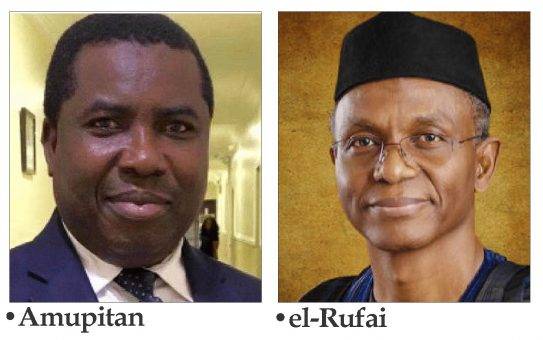
But the most loquacious of them, former Kaduna State governor Nasir el-Rufai, will present himself as the most malignant pointsman of the party he unreflectingly joined after first gallivanting around the now somnolent Social Democratic Party (SDP). He is fluent but unprincipled, mendacious, combative, and self-absorbed. The ADC may be unsure whether to let him be their rhetorical champion, but he will force himself upon them, representing the party at every opportunity. He orchestrated last week’s Abuja Airport brouhaha, and framed it as a provocation to the rule of law and Nigerian democracy; but he has now talked up a storm over the wiretapping of the National Security Adviser, Nuhu Ribadu. In addition to being wanted by the EFCC, he is also wanted by the ICPC, and will now also be wanted by the Department of State Service (DSS) for availing himself the services of wiretappers. It is Watergate all over again.
Regardless of the mindless contradictions in his politics, which became more pronounced under his tyrannical rule as governor in Kaduna State when he arrested and detained critics at will and demolished houses and structures despite pendency of suits challenging his decisions, he will speak fiercely against the government on behalf of the ADC, and pronounce magisterially on terms and concepts alien to his warped beliefs and inquisitorial leadership.
Culled from The Nation