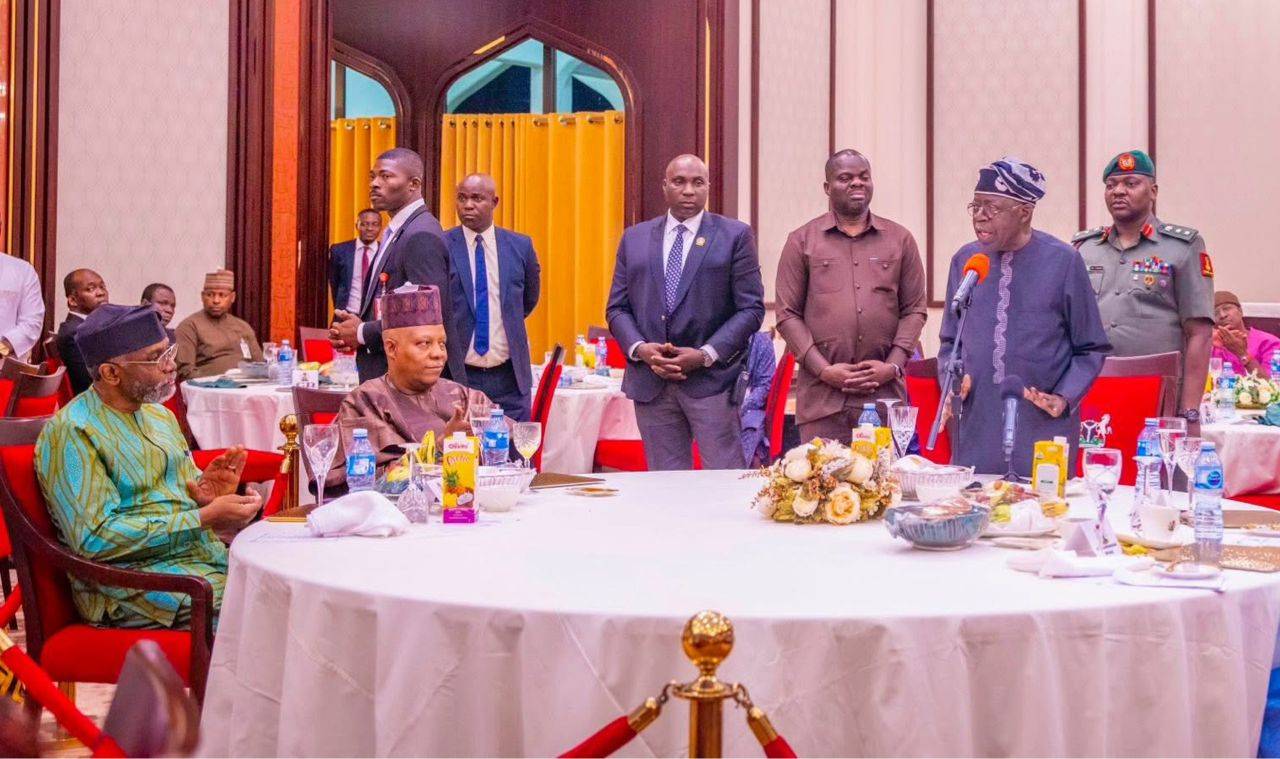

The second conference of the National Economic Council, convened on 9 and 10 February 2026, was not another calendar obligation dressed up as policy theatre. It was a working session of a federation intent on maturing. For the Federal Ministry of Budget and Economic Planning, constitutionally mandated as secretariat of the National Economic Council, the gathering signalled something deeper. Under the stewardship of Abubakar Atiku Bagudu, it represented a deliberate attempt to translate hard-won macroeconomic stability into measurable progress at the subnational level and, in so doing, to fortify the federation itself.
Without a doubt, the theme, “Delivering Inclusive Growth and Sustainable National Development: The Renewed Hope National Development Plan 2026 to 2030,” captured the Ministry’s core vocation. National planning, when done properly, is less about glossy documents and more about disciplined alignment.
In the months preceding the conference, ministry officials worked to reconcile federal ambition with the lived realities of 36 states and the Federal Capital Territory. The sessions at the Banquet Hall of the Presidential Villa were, therefore, not ceremonial. They were the point at which aspiration met accountability, ensuring that the Renewed Hope Agenda would not remain an Abuja manuscript but would instead become a working manual for every ward and local government area.
● A Federation Choosing Coherence Over Chaos
In his welcome address, Minister Bagudu situated the moment within the reform arc of President Bola Ahmed Tinubu. His words carried the weight of empirical observation. “Today, a more united federation is gathered here because of the choices you made. Your reforms have improved the fiscal condition of states and local governments, while much of the burden is borne by the Federal Government.” It was a frank acknowledgement that stability often demands sacrifice, and that the dividends of discipline must be shared if unity is to endure.
The presence of Vice President Kashim Shettima, chairing proceedings, and President Tinubu as Special Guest of Honour, gave the conference unmistakable executive gravity. Cooperative federalism was not invoked as rhetoric but enacted in real time. The Permanent Secretary and NEC Secretary, Dr Deborah O. N. Odoh, had framed the deliberations days earlier around “national economic issues aimed at encouraging economic growth and development across the country.” The implication was clear. In a federation as complex as Nigeria’s, coherence is not automatic. It must be built, nurtured and defended.
The conference thus became an exercise in collective adulthood. To be clear, states were not summoned to receive instructions. They were invited to co-design the next phase of national development, armed with data, guided by shared objectives, and bound by a recognition that macroeconomic missteps at any tier can ripple through the entire system. For the Ministry, this was the secretariat function at its most consequential, not merely recording decisions but actively shaping the deliberative space where decisions crystallise.
● Solid Fundamentals, No Illusions
A federation cannot plan ambitiously on a shaky foundation. In that respect, the presentation by Central Bank of Nigeria Governor Olayemi Cardoso offered more than encouraging statistics. External reserves at approximately forty-nine billion dollars as of 5 February 2026 marked a sharp recovery from the precarious levels of 2023.
“When we took over, the net reserve figure was about $3 billion,” Cardoso reminded the council. “As of the end of last year, the net reserve figure had gone up strongly into the 30s. And, as I said, as of February 5, 2026, it was $49 billion. We are now net buyers.”
Inflation, moderated to 15.15 per cent by late 2025, and GDP growth of 3.98 per cent signalled an economy regaining its footing. The near-elimination of exchange rate premiums between official and parallel markets, which had collapsed to “under two per cent,” spoke to restored credibility. Remittances from the Diaspora, Cardoso noted, had “made a big difference to how we have grown our reserves,” with Nigerians abroad now finding it easier to send money home.
For the Ministry of Budget and Economic Planning, these numbers are not trophies. They are tools. A development plan covering 2026 to 2030 cannot rest on hope alone. It must be anchored in fiscal discipline, policy coherence, and a realistic appreciation of risk. Governor Cardoso’s reminder that “subnational governance can significantly affect macroeconomic outcomes” underscored the urgency of the conference. Stability secured at the centre can be strengthened or squandered at the periphery.
There was no triumphalism in the room. The message was sober. Nigeria has rebuilt buffers. It must now guard them jealously. Cardoso warned that “there is still a lot of liquidity in the system and we must manage it very carefully. We are not out of the woods yet.” Fiscal coordination across tiers is not a bureaucratic obsession. It is a precondition for sustained growth. When states borrow prudently, manage revenues transparently, and align spending with national priorities, the federation compounds its gains. When they do not, the system strains.
● From Fiscal Alignment to Human Capital
The conference’s most practical dividends lay in fiscal harmonisation and renewed attention to human capital, two pillars the Ministry had deliberately threaded through the agenda. Taiwo Oyedele, Chairman of the Presidential Fiscal Policy and Tax Reforms Committee, reported that twelve states had already aligned their tax laws with the emerging national framework, with thirteen more processing legislation and eleven at advanced stages. In a country long burdened by multiple taxation and regulatory confusion, this is no small feat. Investors seek clarity. Citizens deserve fairness. A more uniform, predictable tax environment is both an economic and a moral imperative.
Oyedele’s additional counsel, urging governors to grant full autonomy to internal revenue services and to “stop using consultants to collect taxes,” found receptive ears. The new tax laws explicitly restrict consultant use for routine collection, a provision designed to build permanent institutional capacity rather than perpetuate expensive intermediaries. The planned tax amnesty programme, structured as a voluntary disclosure scheme, offers a pragmatic path for compliance without punitive baggage.
But the Ministry understood that fiscal efficiency is a means, not an end. The NEC communiqué pressed states to increase per capita spending on health, education, and youth employment, noting that Nigeria’s “persistent underinvestment in education and health remains a major challenge compared with other countries.”
This was not an ornamental add-on to a macroeconomic conversation. It was its logical conclusion. Growth that does not translate into improved classrooms, better clinics, and meaningful jobs will eventually lose its legitimacy. By elevating social investment within the broader economic framework, the Ministry signalled that inclusive growth is not a slogan but a measurable commitment.
President Tinubu himself had framed the stakes in his opening address. “When every state grows, Nigeria grows. When growth reaches the poorest households, national stability is strengthened.” For the Ministry tasked with operationalising that vision, the conference provided the mechanism, a structured space where federal resources, state priorities, and private sector energy could converge.
● The Secretariat as Steward
What emerged from the 2026 NEC Conference was not the illusion of perfection but the outline of a more disciplined federation. The Federal Government, through its secretariat role, supplied data, direction, and a coherent plan. The states responded with commitments to domesticate these principles within their jurisdictions. Between them lies the promise of a development compact that is both national in vision and local in execution.
Minister Bagudu captured this equilibrium when he noted that governors, “regardless of party, believe you are pursuing what the country needs.” The reform agenda had transcended partisan calculation to become a national project. The Ministry’s quiet work, the briefings, the data harmonisation, the patient alignment of federal and state planning cycles, had created the conditions for that consensus.
Nigeria’s complex history has often been narrated through the narrow lens of its many disagreements. The NEC Conference offered a more unifying story. A federation choosing alignment over fragmentation. Leaders acknowledging that macroeconomic stability, once secured, must be converted into opportunity for ordinary citizens from Kano to Uyo. A recognition that shared prosperity is not automatic but constructed, painstakingly, through coordination and trust.
If the first phase of reform was about stabilising the ship, this next phase is about steering it together. And to be fair, the Renewed Hope National Development Plan 2026 to 2030 will be judged not by the elegance of its prose but by the resilience of its outcomes. Classrooms built. Jobs created. Revenues managed wisely. States competing not in fiscal recklessness but in development innovation.
In the end, that is what will be counted as the true test of cooperative federalism. And at the second National Economic Council Conference this February 2026, with the Federal Ministry of Budget and Economic Planning serving as both secretariat and steward, Nigeria has signalled that it is ready to take that test with seriousness, sobriety and, above all, shared purpose.
● Johnson Momodu is a freelance journalist and public affairs analyst.