
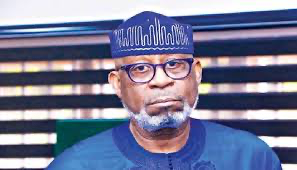

Nigeria’s Minister of Solid Minerals Development, Dr. Dele Alake, has been re-elected Chairman of the Africa Minerals Strategy Group (AMSG), a continental forum of African Ministers responsible for minerals and mining. The announcement was made during the 2026 Annual General Meeting of the AMSG, held on the sidelines of the Future Minerals Forum (FMF) in Riyadh.
Dr. Alake, who was first elected as the pioneer Chairman of the AMSG in 2024, expressed gratitude for the renewed confidence and called on African nations to work collaboratively to unlock the continent’s economic potential through solid minerals development.
“As Africa, we must unite to catalyse economic growth through responsible mining, infrastructure development, and value addition,” Dr. Alake said in his acceptance speech. He also urged member states to formalise financial contributions and refine the group’s budgeting framework to strengthen operational effectiveness, accountability, and transparency.
The AGM approved a new leadership structure to promote regional balance and inclusion. While the positions of Chairman and Vice-Chairman remain elective, other key roles are zoned to member countries:
Vice-Chairman: Hon. Louis Watum Kabamba, Minister of Mines, Democratic Republic of Congo (Central Africa)
Secretary-General: Uganda (East Africa)
Deputy Secretary-General: Mauritania (North Africa)
Financial Secretary: South Africa
The executive committee will serve a two-year term, and zoned positions will automatically transfer to successors when ministers are replaced. The AMSG also resolved to hold quarterly ministerial meetings and established standing committees covering Legal, Institutional Affairs & Human Resources; Sustainability and Responsible Mining; Finance, Budget & Resource Mobilisation, among others. Plans are underway to host a global minerals conference in Africa, similar to the FMF.
Speaking at a Leadership Roundtable themed “Africa: Unlocking Infrastructure Funding for Copper-Belt Production,” Dr. Alake emphasised that mineral production alone cannot drive lasting economic transformation without reliable infrastructure, coordinated policies, and deliberate value-addition strategies. He cited the Lobito Corridor as a model of integrated rail, port, and energy systems supporting industrial growth and encouraged similar investments along other corridors, including Lagos–Abidjan, Walvis Bay, and Dar es Salaam–Central Africa corridors.
“The real question is not whether Africa has corridors, but whether they are financed, governed, and structured to support industrial growth, regional integration, and long-term stability,” Dr. Alake noted.
The AMSG’s renewed vision focuses on strategically designing Africa’s mineral infrastructure, ensuring responsible financing, and promoting shared prosperity while attracting private-sector investment.