

In October 2025, the United States President Donald Trump sparked a major diplomatic uproar when he issued a veiled military threat aimed at Nigeria, warning of “possible action” unless the Nigerian government curbed violence against Christians. He even instructed the Pentagon to prepare plans for intervention and threatened to cut U.S. aid if things didn’t change.
Trump framed his warning in stark, militaristic terms: “fast, vicious, and sweet … just like the terrorist thugs attack our cherished Christians,” he said.
To many Nigerians, this was more than bombast. It was an overt attempt to shape Nigeria’s internal security narrative — pressuring a sovereign nation on its homegrown conflict with an international gun to its head.
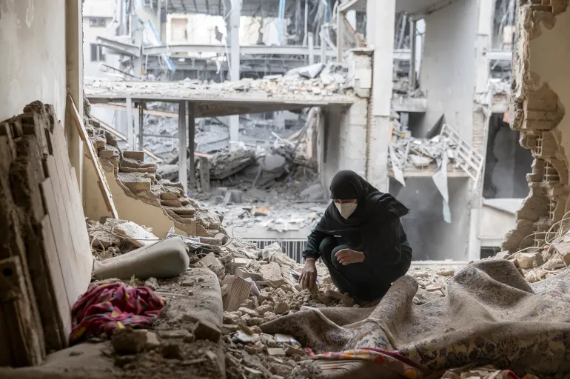
As a Nigerian and a proud Christian, I can testify that the insecurity is real, but it’s deeper than religion. Nigeria’s security challenges are severe. From banditry in the northwest to insurgency in the northeast and herder-farmer violence in the Middle Belt, violence has spiked and shows no signs of letting up.
But the blunt truth is that Trump’s religious framing mischaracterized the complexity of the crisis. While some attacks do target Christians, the violence is not exclusively religious: many incidents stem from economic desperation, resource competition, weak governance from the previous administration, and porous borders.
The issue is not neatly sectarian — it’s deeply political and socioeconomic. Groups like Boko Haram and the Islamic State in West Africa Province (ISWAP) do have ideological underpinnings, but banditry and kidnappings often have more in common with criminal networks exploiting state weakness than with religious war.
There’s a clear political undertone on all fronts to what is happening in Nigeria.
Diplomatic coercion under guise of human rights
Critics argue that Trump’s threat is less about protecting persecuted Christians than about exerting political leverage. By casting Nigeria as a ‘Country of Particular Concern’ on religious freedom, he amplifies pressure on the Tinubu government.
It’s observed that this might be a negotiating tactic — a way to force Nigeria into concessions while projecting moral high ground.
Beyond past experiences with foreign intervention on the continent, there is fear that such threats could unravel the country’s fragile stability.
There is also concern that military action — even threatened — could lead to escalated conflict, incentivising armed groups to act more aggressively or provocatively.
Insecurity has long roots in local governance failures: corruption, inadequate policing, an underfunded security apparatus, and political neglect of violence-prone regions.
By framing the issue as “terrorism against Christians,” Trump may be simplifying a far messier problem — one that the Nigerian government can solve, and the Tinubu-led Government is solving.
Beyond security, Nigeria is a major oil-producing nation. Some critics speculate about ulterior motives: is this moral outrage, or an opportunity for increased leverage in geopolitical and resource-based negotiations? Only time shall tell.
Tinubu inherited a nation weighed down by decades of neglect — A federation battling imbalance across regions. And crucially, he inherited a security landscape fractured by years of terror attacks, banditry, mass kidnappings, and the gruesome killing of Christians and other innocent citizens — the very crisis Trump referenced in his warning. Instead of pretending the problems were small or temporary, Tinubu did something unfamiliar in Nigerian politics: he confronted them head-on. That is what makes him the man of particular concern — not because he triggered the crisis, but because he is the first leader in a long time courageous enough to dismantle it.
Tinubu vows to hunt down enemies of state, reaffirms commitment to national security
One of Tinubu’s earliest and boldest moves was to overhaul the nation’s security architecture. He dissolved the old security hierarchy, appointed new service chiefs with proven field experience, restructured the Defence Headquarters, and insisted on accountability and measurable results. Under his directives, joint task forces were revived, air-ground synergy improved, and intelligence collaboration tightened. In just months, thousands of terrorists, kidnappers, and insurgents were neutralised or captured.
From the moment he assumed office, Tinubu made it clear that he was not interested in cosmetic leadership. Subsidy removal was not a political decision; it was a patriotic one. A country cannot move forward while financing a multi-billion-dollar black hole that empowers cartels and impoverished citizens. Tinubu took the risk. He chose truth over comfort. He knew the backlash would come, but he also knew Nigeria could no longer afford to live on economic lies. Today, the fiscal space created by that bold step is what states are using to pay salaries, fund projects, and revive governance.
Tinubu is cherished today not because he makes easy decisions, but because he makes necessary ones. He is a president who chooses responsibility over populism, honesty over deception, and long-term stability over short-term applause. Nigeria needed painful surgery; Tinubu did not shy away from the operating room. And that includes the security theatre — where he boldly dismantled lethargy, empowered the military with new equipment, restored morale, and demanded measurable victories against terrorists and criminals, and in the economic theatre, where he is redefining Nigeria’s investment climate. And in the national theatre, where he is stitching together a stronger, more united, more equitable republic.
This is why Tinubu is the man of particular concern — the leader bold enough to take Nigeria from warning to awakening, from discomfort to direction, and from concern to confidence.
Nigeria is an independent nation, and we don’t need any foreign Interference in our democracy.
The more reason why this issue of insecurity in Nigeria is more political than religious is that Trump made this statement at a time we were recovering from regular kidnapping, insurgency and bandits’ attacks. Immediately, Trump made the statements, and everything escalated again.
It is clear there is a political coup against our democracy and President Bola Tinubu-led government because it is expected that after Trump spoke of bringing military support, crime and kidnapping should decrease.
Instead of bandits being scared and running for their lives or reducing crime, it became worse; it clearly shows there is a conspiracy somewhere against the Tinubu-led Government and our democracy.
What made it more political than religious is that after Trump emphasised Christian genocide, the recent attacks and happenings are now only on the Christian schools and churches.
Most of the Northern politicians are not saying anything about all the recent killings and abductions because of their political pursuit. Most of them understand that Tinubu is very courageous, patriotic and very responsible. The only way is to destabilise and weaken him and want him to manage the situation as a politician and not tackle it as a leader, so it continues to be their bargaining strength politically after Tinubu leaves office.
Insecurity is a global challenge , even in countries like America, the United Kingdom, France, etc., they still have insecurity challenges.
I hereby charge all Nigerians not to be ignorant of the devices of the enemies of our democracy and the Tinubu-led government.
Nigerians should stand firmly by President Bola Tinubu; we should give him every needed support so he does not go down, as the enemies of our country continue to undermine him.
The world must acknowledge that Tinubu’s leadership is turning Nigeria into a country of particular interest- a country the world must watch, understand and finally respect, because what the enemies of Nigeria intended is becoming Tinubu’s opportunity to showcase Nigeria’s resilience under real reforms.
And in the grand irony of both local and global politics, the label that once signalled weakness is now the stage Nigeria’s strength is emerging.
Trump cannot call a man ‘Particular Concern,’ when the same man is the one turning concern into opportunity.
*Allison Abanum writes from Orogun, Delta State.