
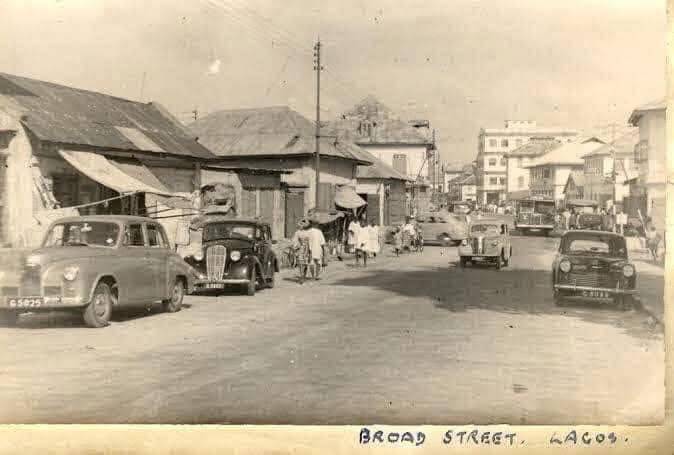
Lagos, originally known as Eko, was founded by the Awori, a subgroup of the Yoruba people who migrated from Isheri along the Ogun River. The name “Lagos,” meaning “Lakes” in Portuguese, was introduced in the 15th century by Portuguese explorer Rui de Sequeira, who referred to the area as Lago de Curamo. Some historians suggest it was named after Lagos, a maritime city in Portugal.
In the precolonial period, the Benin Empire extended its influence over the area, installing rulers and integrating the settlement into its political sphere. Over time, Lagos developed into a significant center of trade.
During the 19th century, Lagos became a major port in the transatlantic slave trade, particularly under Oba Kosoko. In 1851, following conflicts with local authorities, the British navy bombarded Lagos, removed Kosoko, and reinstated Oba Akitoye, who signed a treaty with Britain in 1852. This event marked the beginning of increasing British influence.
On August 6, 1861, Oba Dosunmu signed the Treaty of Cession under pressure, formally making Lagos a British colony. Lagos thus became the first part of present-day Nigeria to come under colonial rule.
The city later attracted returnee freed slaves from Sierra Leone, Brazil, and the West Indies, known collectively as the Creoles or Aguda. These groups contributed significantly to the cultural and architectural landscape of Lagos, introducing Brazilian-style houses, Christianity, and Western education.
By 1898, Lagos had electric street lighting, making it one of the first cities in Africa to achieve this development.
When the Colony and Protectorate of Nigeria was formally established in 1914, Lagos became the capital. It remained both the federal and state capital until 1976, when the Lagos State capital was moved to Ikeja. In 1991, the national capital was officially relocated to Abuja.
Today, Lagos is no longer Nigeria’s political capital, but it remains the country’s economic and cultural hub. It is currently the most populous city in Africa, reflecting its continued importance in Nigeria’s history and development.
Credit: Historical Nigeria