
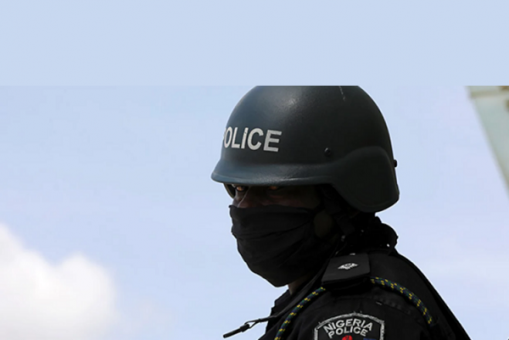
Interestingly, the Nigeria Police Force (NPF) likes to indulge in fantasies about its performance, particularly concerning the fight against insecurity. While trying to demonstrate their relevance, the police often end up exposing a lack of credibility.
A recent kidnapping in Edo State further exposed police untruthfulness. The Deputy Public Relations Officer, Edo State Police Command, ASP Eno Ikoedem, in a statement, said the police had rescued seven kidnappees in the Ewohimi area of Esan South-East Local Government Area of the state. He stated that the command, on November 1, had received a distress report from one Enoch Omozokpia, whose father, William Omozokpia, was abducted on his farm by armed men.
Ikoedem said: “Acting swiftly on the report, the Divisional Police Officer, Ewohimi, led a team of operatives in a joint rescue mission with the Nigerian Army and local vigilante groups. The team stormed the forest in a well-coordinated operation, engaging in an intense bush-combing effort that forced the abductors to abandon their captives and flee.
“All seven victims were rescued unhurt and have since been reunited with their families.”
According to him, the rescued victims are William Akhabue, Innocent Ebarekor, Rachel Ebarekor, Efuah Ebarekor, Winner Ebarekor, William Omozokpia, and Lucky Igiese (popularly known as Bulala).
He continued: “The Commissioner of Police, Edo State Command, Monday Agbonika, commended the gallantry and professionalism displayed by the police operatives, soldiers, and vigilantes who participated in the rescue operation. He reaffirmed the command’s unwavering commitment to the safety of all residents and assured that efforts are ongoing to track down the fleeing suspects and bring them to justice.”
However, the police narrative, which was shared on the command’s Facebook page, was punctured by users who reacted in the comment section.
Ken Mulla, who claimed that one of the victims was his uncle, wrote: “How and when? When did the Edo State Police rescue them? Is this how the Edo State Police want to tackle the insecurity in Esan land? My uncle is Omozokpia William.
“The family and the entire community paid the sum of N6.5m for their release. The police did not even know when they (the victims) came back from the hands of the kidnappers. Why are the Edo State Police lying to the citizens of Edo State? Who put us in this mess?”
Akhabue Williams Mathew, who claimed that his father was one of the victims, also wrote: “My father was one of the victims who was kidnapped. We personally paid N6.5m for their release, and you are here taking the credit. Is this how you intend to tackle insecurity in Edo State?”
Glory William wrote: “My daddy is among those who were kidnapped, and N6.5m was paid before they were released. Police, why all these lies?”
Cosmos Osunde wrote: “This write-up is completely false, a lie from the pit of hell. The good people of Ewohimi paid a huge ransom to secure the release of these individuals from the hands of the kidnappers. Why all these lies? The Edo State Police should do better.”
Mc Deputy Yuan wrote: “This is my community precisely. The Edo State Police didn’t rescue anything. The family paid N6.5 million to the kidnappers before they released them. Which one is Edo State Police rescuing seven people? Mr PPRO, this is not what happened, please.”
It is thought-provoking that the police have not responded to these claims against the official account. Is it true that the victims were freed after payment of N6.5m ransom to the kidnappers? Why did the police claim that the victims were rescued by security agents?
Rescue or ransom payment? This question comes up regularly regarding the resolution of kidnap cases in the country. Official narratives claiming kidnap victims were “rescued” by security personnel are often not credible.
Strikingly, another kidnapping in July highlighted the police credibility problem. Six Nigerian Law School (NLS) students travelling in a public vehicle from Onitsha, Anambra State, to resume studies at NLS Yola campus in Adamawa State, were kidnapped on July 26. Five of them regained freedom on July 31 after paying a ransom of N10 million each, according to one of the victims, David Obiora.
“We were kidnapped about 9pm on July 26. The incident happened between Zakibiam and Mukari, near a town called Jootar. We were taken 20 kilometres into the bush by about 10 armed men, four wielding AK-47 rifles, the others with machetes and daggers.
“We were held for six days before we were released after each of us paid N10 million in ransom,” he narrated.
Obiora stated: “Let the record be clear, the Nigeria Police did not rescue us. The Law School did not rescue us. The Council of Legal Education did not rescue us. We were released after our families and friends raised and paid the ransom.”
It was significant that his account had contradicted the statement issued by Benue Police Command spokesperson Udeme Edet, who said the police had “successfully rescued” six law students and they had been “safely released and united with their families” on the morning of August 1. The statement added: “Police authorities confirmed the rescue, assuring the public of their commitment to ensuring the safety of lives and property.”
The regular disconnection between police accounts and narratives of kidnap victims and their families is disturbingly obvious. Whenever the police announce the rescue of kidnap victims, giving the impression that no ransom was paid, and such victims contradict the official account, it further dents the image of the police.
A rescue suggests physical action on the part of the rescuers. If the abductors released the captives, possibly after the payment of ransom, that can’t be strictly described as a rescue.
Also, when the announcement of a rescue is accompanied by silence about the kidnappers, it suggests that the kidnappers are free and may well strike again. That’s dangerous.
It is concerning that kidnappings not only continue in the country but are also on the rise. More than 3, 600 people were kidnapped in Nigeria last year, according to Armed Conflict Location and Event Data figures; this was described as “the most ever” recorded.
The police must raise their game, and stop presenting a false reality about their performance against kidnappers to hoodwink the public.