
Minister of Defence, Gen. Christopher Musa, said on Wednesday there should be no negotiation with or payment of ransom to terrorists in the country.
He also said Nigeria’s fight against insecurity would remain ineffective until the country established a unified national database that captured every citizen and linked all security, banking and identity systems together.
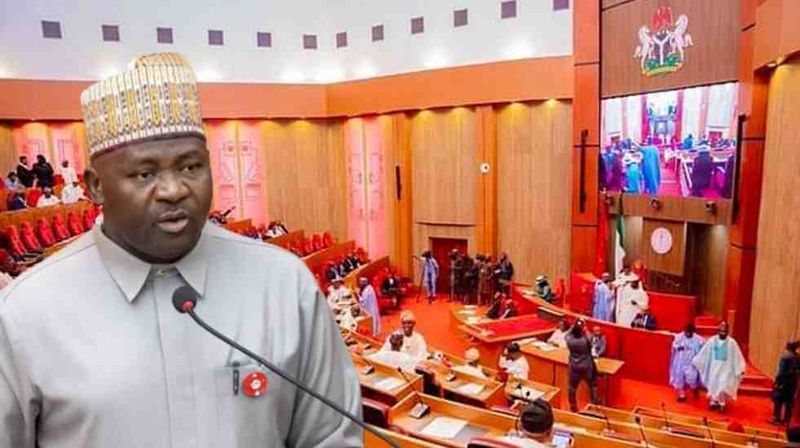
General Musa stated these during his screening as minister by the Senate.
Musa’s screening happened on a day the House of Representatives sought open and transparent prosecution of all terrorism-related cases as an effective way of combating the high rate of violent crimes in Nigeria.
This is even as the Senate yesterday moved to tighten Nigeria’s anti-kidnapping laws by pushing for the death penalty for kidnappers and anyone financing, enabling or providing information to terrorists and kidnappers, as lawmakers debated amendments to the 2022 Terrorism (Prevention and Prohibition) Act.
No negotiation with terrorists
Speaking during his ministerial screening in Abuja, General Musa maintained a firm stance that government at all levels must enforce a total ban on ransom payments and negotiations with terrorists, warning that such actions only empower criminals.
“There is no negotiation with any criminal. When people pay ransoms, it buys terrorists time to regroup, re-arm and plan new attacks. Communities that negotiated still got attacked later,” he said.
He added that ransom money could be digitally monitored, insisting that Nigeria’s banking system had the capability to trace financial flows connected to crime if fully activated.
‘Kinetic efforts alone cannot win the war’
The retired general stressed that military operations represented only 25–30 per cent of the counter-insurgency effort, adding that poverty, illiteracy, poor governance and weak local government structures continued to feed criminal activities.
He challenged state and local government administrators to take responsibility for community-level intelligence and early intervention, noting that security agencies alone could hardly shoulder the entire national burden.
Musa criticised Nigeria’s slow justice system, especially the prolonged trials for terrorism and kidnapping, saying the delays weakened morale within the armed forces.
“In some countries, terrorism cases are handled decisively. Here, cases drag for years. It discourages security forces who risk their lives to make arrests,” he said.
He recommended urgent legal reforms, including special terrorism courts, stronger penalties and accelerated hearings.
Maritime crime, cultism, illegal mining heightening threats
He raised alarm over renewed criminal activities across the maritime corridors linking Akwa Ibom to Cameroon, warning that sea robbery, piracy and coastal kidnappings were resurfacing.
He confirmed that Operation Delta Safe had been expanded to cover previously quiet zones now experiencing infiltration.
Musa also called for a total ban on illegal mining, which he described as a major financing stream for armed groups operating in forest belts across the country.
Military checkpoints to reduce as troops return to the field
He revealed plans to withdraw soldiers from routine checkpoints nationwide to free forces for targeted operations inside forests and ungoverned spaces.
He emphasised that restoring safe access to farmlands remained a top priority, and described food security as a critical pillar of national stability.
“A hungry man is an angry man. Protecting farmers means protecting the nation,” he said.
Recruitment challenges, national expectations
Musa disclosed that while over 70,000 Nigerians apply to join the military annually, many recruits resist deployment to conflict zones.
He insisted that a unified national database would help the military verify applicants’ identities and eliminate fraud in recruitment.
On the rising public expectations following his nomination, Musa said: “I cannot afford to fail my nation or my family. Nigerians want peace, and we must deliver it.’’
Speaking further, Musa described Nigeria’s fragmented data architecture as one of the biggest obstacles to tracking criminals, dismantling networks, and preventing repeat offenders from operating freely across states.
According to him, the nation’s multiple data sitting in silos, operated separately by immigration, quarantine services and other agencies, have created dangerous gaps exploited by terrorists, kidnappers, bandits, cyber-criminals and illegal mining syndicates.
He said: “Something as simple as a unified database for all citizens is urgently needed. Not a situation where immigration has one, quarantine has another. Once you commit a crime, it should be easy to track and trace you. Other countries can instantly deactivate bank accounts or digital access; we must get to that point.”
Musa noted that integrating ICT into the security architecture would revolutionise investigations, allowing agencies to trace ransom payments, monitor suspicious transactions and profile criminal networks in real time.
Credit: Vanguard