
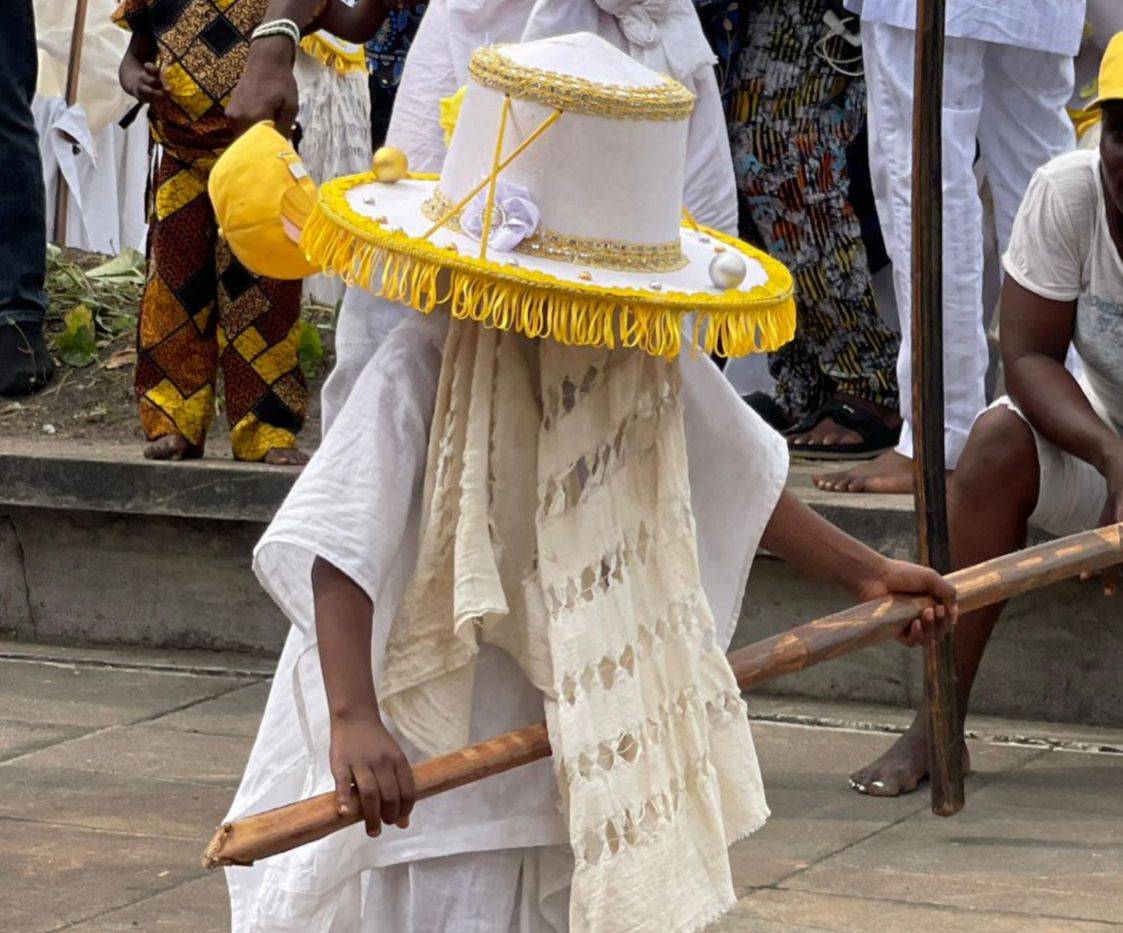

Ẹ̀yọ̀ oooo, aiyé ‘le Ẹ̀yọ̀ ooo.
Ẹ̀yọ̀ baba ntàwa, tó ń fi góolù ń ṣeré…..🎵🎶🎵
My first experience of the Ẹ̀yọ̀ festival came alive through the enchanting melodies of King Wasiu Ayinde Marshall. In the ’90s, KWAM-1 transformed the essence of the Eyo festival into a musical masterpiece with his expressive fuji style.
KWAM-1’s captivating Oríkì tribute for the Eyo festival brilliantly highlights the rich cultural shade of Yoruba traditions. The enchanting dance of the Eyo and the singers harmonizing with them create a mesmerizing spectacle during this age-old celebration.
This monumental day of the Ẹ̀yọ̀ festival draws together society’s elites and everyday folks alike, uniting them from all corners to honor one of the cultural symbols of the Eko people and Yorùbáland at large. Yet, the distressing incident making waves on social media from Lagos Island is a disheartening blot on our rich heritage.
I have an inclination, which I could be mistaken about, that the incident in Lagos Island today might carry politically motivated with ugly undertones meant to tarnish the image of the performing Lagos state government. There is also a shared responsibility on the shoulders of Governor Babajide Sanwó-Olu’s administration for failing to implement sufficient security measures and safeguards to avert such an avoidable chaos. Until Nigeria’s authorities take decisive action against wrongdoing, much like in our storied past, we risk watching Nigeria descend into a state of cultural abyss and despair.
Where are we heading as a nation? Why don’t the birds of Nigeria harmonize with the same joy as they once did in those good old days? Why is the cry of the animals not as poignant as before? Why has humanity morphed into religious predators cloaked in human guise? These are vital questions tethered to our culture, yet the answers seem elusive! As crime increasingly replaces the vibrancy of Owambe party celebrations, religious gatherings, and cultural events in Nigeria, we are witnessing a troubling shift in our cultural inheritance.
The stark contrast to the delightful days immortalized by King Wasiu Ayinde Marshall in his timeless songs is unfolding right before our eyes. What legacy are we crafting for the generations to come? The Yoruba culture is in urgent need of revitalization and reevaluation.
Yahaya Balogun wrote from Arizona, United States of America.