
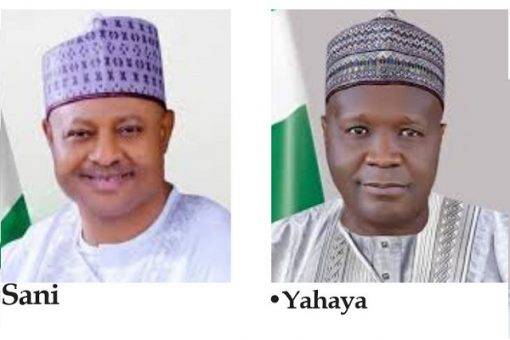
To demonstrate their earnestness in resolving the troubling matter of insecurity bedeviling the North, 19 northern governors and traditional rulers council met in Kaduna last week to determine what to do. The meeting, also attended by some security chiefs, was not short on the whys of insecurity. But, despite not been far-reaching enough, the communiqué was cryptic and perhaps epochal on solutions. Compared to previous meetings convened to deliberate on issues affecting the region, last week’s communiqué was neither long nor tedious as past communiqués. It may not be deep or wide-ranging enough, but the solution the governors and rulers suggest is anchored on three major pillars: Immediate suspension of all mining activities for six months; Establishment of a Northern Regional Security Trust Fund; and Full backing for state police.
The governors argue that illegal mining has been a major driver for insecurity, which a temporary halt to operations in that sector and a carefully managed revalidation process could help realign with national security needs. They also believe that a monthly one billion naira contribution by the states deducted at source into a security trust fund might help ameliorate the frenzied drive towards apocalypse. They admit they have not worked out the details or the framework. One billion naira per month from each of the 19 states in the region should release N114bn for six months or N228bn for one year to the fund. That is substantial; assuming the framework for its spending can be trusted to be adequate. The third leg of the communiqué involves the region intensifying constitutional amendment efforts to create state police. If all the states buy this suggestion, it should give fillip to the national drive to decentralise policing and make governors more accountable on security.
But the crisis in the North is much direr than the communiqué appears to suggest. The region is confronted by a plethora of other significant but deeply troubling and cataclysmic challenges which nothing they have suggested appears capable of dealing with fundamentally and substantially. What the governors and the traditional rulers have done is to scratch the problem on the surface and also probably demonstrate their unwillingness to grapple with the ugly face of the problem confronting them. They rightly see the problem as an existential challenge capable of causing the North to unravel, but they need far more courage, depth and readiness in dealing with it than they have shown so far. They are familiar with the rampant poverty in their region, the lack of access or low budgetary allocations to education and health sectors, and why they should urgently design policies to remake their society. They are also familiar with the debilitating consequences of climate change and creeping desertification, and are keenly aware that they could not afford to surrender to nature. Yes, they are right, but much more needs to be done.
Indeed, there are other major factors predisposing the North to conflict and insecurity. If these factors are not tackled bravely they could make other measures such as the ones contained in the communiqué ineffective or redundant. The governors and traditional rulers must first come to grip with these other factors before they can proceed. The first factor is their inattentiveness to the issue of terror financiers, powerful but extremely wealthy individuals who have the North, if not the entire country, by the jugular. If the North cannot collectively press the federal government to deal with these well-known individuals and financiers who now clearly control militias and small armies, little will be achieved by the newfangled measures the governors have propounded in their communiqué. The terror financiers whose identities had been made public in 2017 after the United Arab Emirate (UAE) arrested six Northern Nigerians among dozens of other foreign terror suspects, and tried and convicted them in 2019, and upheld their convictions in 2020, still constitute an open wound. Linked to the six northerners were some other 40 individuals and entities in Nigeria implicated in the crime but who have not been prosecuted. What is evident is that both the North and the federal government are undecided what to do, even as terrorism has intensified and morphed into a multi-billion naira criminal kidnapping enterprise.
The North also needs to deal with the second but closely related factor of redefining and refining their criminal justice system. The system is so messed up in the region that injustice in many instances has become normalised and unfortunately dichotomised between the faiths. Once the signal filters out that justice depends on a person’s class, faith and ethnicity, as is currently the norm in some areas of the region, impunity and exceptionalism will reign and spawn lawless groups, entities and individuals. This may at bottom explain why terror financiers have been left unpunished, why bandits and insurgents have become cult heroes, why insurgents are rehabilitated and reintegrated ahead of their victims, and why incredibly members of the regional elite have sought to draw a comparison between bandits/insurgents in the North and Niger Delta resource control activists. There is a deliberate and orchestrated plan to succour and appease northern insurgents and bandits.
The third factor, sometimes regarded as an intangible for obvious reasons, relates to the indecision of the region to make a choice between modernism or moving into the embrace of religious conservatism. The region can’t have its cake and eat it. The fast developing countries of the Middle East, much more than North Africa, have seemed to make their choice between conservatism and progressivism. UAE, Saudi Arabia under Crown Prince Mohammed bin Salman, surprisingly Syria which is just emerging from al-Qaeda-led revolt against the more secularist Bashar al-Assad, and, until a few decades ago, Turkey, Iran, and Iraq, all demonstrate that balancing faith and development is neither anathema nor impossible. On the contrary, northern Nigeria has gone in the opposite direction, seemingly insisting that development appears to be anathema when it comes to issues of faith. This is not just conservatism; it is reactionary. Not only has the North lived in denial for years regarding the true identity and objectives of insurgents and bandits, they have extenuated the mindless savagery of the criminals.
Pooling N114bn or N228bn to tackle the crisis in the North, support state police and reestablish firm control over legal mining or curbing illegal mining altogether are excellent ideas. But until the North defines who they are and properly frame their existential goals, particularly relating to the future of the region and what that future holds for generations to come, they will be tilting at windmills. The region is wracked by too many contradictions that do not lend themselves to the kind of solutions they have stated in their communiqué. Consequently, they must accept responsibility for the breakdown of law and order in their region and find courage to deal with the problems their inexpert approach to complex issues and probably cowardly refusal to grapple with the shifting dynamics of their region have inflicted upon the country. They have militarily and financially encumbered the rest of Nigeria with homegrown terrorism, and until last Monday have sometimes given the impression that the crisis in the region is a collective problem.
There is nothing collective about the crisis. The northern elite need to repair the damage by themselves. They should make up their mind what they want: a progressive and secular society where justice and self-actualisation are not predicted on ethnicity or faith, or a theocracy as they seem unrepentantly enamoured of that dooms them into the embrace of international terrorists who see Nigeria as fertile ground for foolish hallucinations and endless bloodletting.