
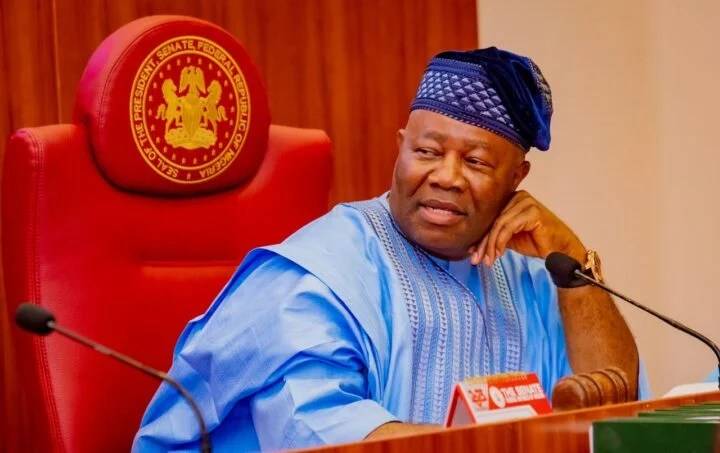

On a day that marks more than the turning of a personal calendar, Nigeria pauses to reflect on a political journey that has become inseparable from the broader story of the Republic.
Senator Godswill Akpabio’s 63rd birthday arrives at a moment when the country is asking itself difficult questions about leadership, unity, security, and the kind of character required to hold together a complex, impatient yet hopeful nation.
Like all great leaders before him, Akpabio has had moments when his character has been tested, when decisions demanded courage over comfort and long-range vision overshort-term applause. Those moments, rather than weakening his public life, now provide the clearest window into the substance of the man.
To be clear, the man did not arrive at this moment by accident.
Long before he became president of the 10th Senate, Akpabio built a political identity anchored in action. As Governor of Akwa Ibom State, he did not trade in theories. He traded in roads, bridges, classrooms, hospitals, water systems, airports, and stadiums.
His declaration of “Uncommon Transformation” was not a campaign flourish. It was a governing philosophy that insisted that public office must produce visible, measurable change in the lives of ordinary people. His administration altered the skyline of Uyo, expanded access to education, widened healthcare coverage, and turned a previously unremarkable state capital into a reference point for subnational governance.
This period shaped the psychology of his leadership. He came to believe and said publicly, that “with political will, you can achieve anything.” This belief is not romantic. It is operational.
Yet, the most demanding phase of leadership is not building. It is balancing. It is not commanding. It is consensus.
The move from executive office to presiding over a diverse, competitive, opinionated National Assembly is not merely a symbolic promotion. It is a reinvention. As President of the Senate, Akpabio sits not as a governor giving directives but as a moderator shaping outcomes. His role is not to dominate the room but to make the room work.
At his inauguration on 13 June 2023, he captured this shift with clarity that has become a reference point for his leadership. He pledged that “the Senate under my watch will be a Senate for all Nigerians, regardless of political affiliation, ethnicity or creed… Our diversity is not a weakness to be managed, but a strength to be harnessed.” Those were not decorative words. They became the organising principle of his tenure.
This is why he has consistently framed the legislature as a thinking institution, not a rubber stamp. His publicly documented remark that “we are not here to be a rubber stamp Senate, but a Senate that will work for Nigeria,” made during plenary, sits at the heart of his leadership philosophy. It explains his determination to stabilise relations between the executive and the legislature without weakening institutional independence. He understands that democracy is not theatre. It is architecture. That architecture, however, is never built without controversy.
Without a doubt, his tenure as Minister of Niger Delta Affairs was the most politically volatile chapter of his career. It was a season of forensic audits, halted contracts, institutional disruption, and relentless public scrutiny. In that moment, he chose disruption over denial. He chose to confront a culture of decay rather than manage it politely.
His position was stated clearly and publicly before the National Assembly. Appearing before the Senate ad hoc committee investigating the NDDC on 20 July 2020, he stated: “My focus was and is to help the commission to achieve its core mandate… I have insisted on due process, and that is why we have a lot of friction.” He maintained that boldness was required to reset a broken system. Those statements are not whispers attributed to friends. They are part of the public parliamentary record.
That decision came at a cost. It attracted criticism, suspicion, and political injury. It also showed something deeper. Akpabio was willing to absorb damage rather than preserve a comfortable silence. That is the texture of serious leadership. It is not the absence of controversy but the willingness to endure it in pursuit of long-term correction.
Observers across political, traditional, and international spaces have noted this dual capacity in him. Senator Orji Uzor Kalu, speaking on “Inside Sources with Laolu Akande” on Channels Television in March 2024, stated: “Akpabio is one of the best politicians we have in this country… He’s very strategic.”
The Commonwealth Parliamentary Association, in a communiqué following its 66th General Assembly in Accra, Ghana, in October 2023, commended the “strong and constructive participation” of the Nigerian delegation led by Senator Akpabio.
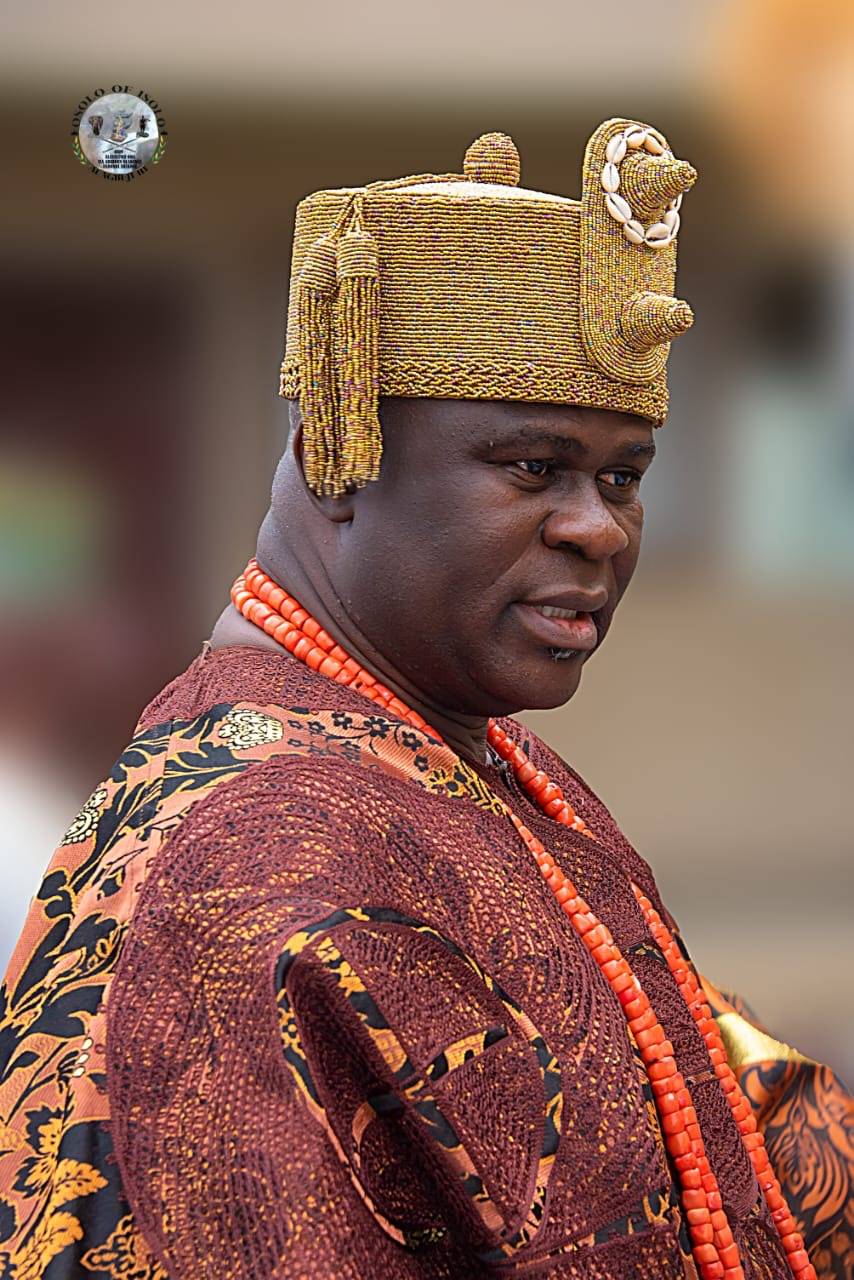
The Ooni of Ife, Oba Adeyeye Enitan Ogunwusi, during a visit to the Senate President in August 2023, described him as “a unifier and a bridge builder,” urging him to continue fostering national cohesion. These are not anonymous admirers. They are visible voices placing their reputations behind their assessments.
At the centre of Akpabio’s politics is a stubborn optimism about Nigeria itself. He has described himself openly as “an incurable optimist” in the Nigerian project. In a keynote address at the “This Nigeria Annual Lecture and Gold Prize Awards” in Abuja on 12 June 2022, he argued that “Nigeria is not a poor country but a rich country that is not yet well organised.” He has insisted, in words preserved in public speeches, that unity of purpose, discipline of execution, and collective will are the raw materials of national greatness.
This optimism is not naive. It is disciplined. It acknowledges wounds without surrendering to despair.
As his birthday is marked, the work before him is unfinished. Budgets must stimulate growth rather than entrench weakness. Laws must respond to hunger, insecurity, restlessness, and opportunity. The constitution itself stands in need of careful, courageous attention. The Senate remains a chamber that must grow not just in productivity but in public trust.
This is the weight of the office he now holds.
His own publicly stated ambition for this season is not power for its own sake. It is memory in its noblest form. In his inaugural speech, he expressed the desire that the 10th Senate would “be remembered as a Senate that restored the hopes of Nigerians… and revitalised the economy.” That is an ambition not easily achieved. It demands restraint when provoked, firmness when tempted, patience under pressure, and courage when solitude would be the safer option.
So, on this birthday, this tribute is an acknowledgement: Nigeria has in Godswill Akpabio a political figure shaped by action, refined by controversy, and steadied by a belief in the possibility of national coherence.
Like all serious leaders before him, he has faced moments where character mattered more than convenience. Those moments remain his true biography.
And they are still being written.
As we mark his birthday, we are reminded that nations are often shaped not only by leaders who dream of new frontiers but also by those who possess the courage to mend broken foundations. Akpabio has demonstrated that he not only has that courage but that he also has the foresight to build for tomorrow.
So happy birthday, Mr. Senate President. The nation watches, and history awaits.
■ Sufuyan Ojeifo, MNGE, ANIPR, ACArb, is the publisher and editor-in-chief of THE CONCLAVE online newspaper. www.theconclaveng.com