
By Segun Ayobolu
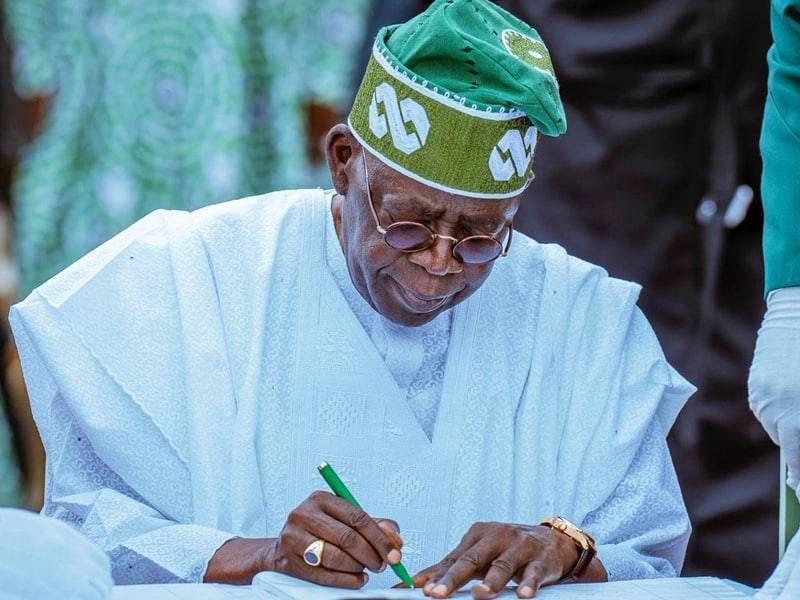
In recent days there have been vehement denunciations and criticisms by members of the public particularly on the social media of what had been described as frivolous and wasteful spending by state governments. The mood of the country is understandably tense, febrile and easily combustible. Ever since the announcement of the removal of the fuel subsidy regime by President Bola Tinubu during his inauguration on May 29, the implications for the economy and an already overburdened citizenry have been punishing and excruciating. Inflation has spiraled considerably as prices of essential commodities such as food, basic drugs, housing and transportation costs among others have more than quadrupled.
Unfortunately, although a few state governments are effectively and efficiently managing the distribution of palliatives to cushion the hardships of their people, these are a stark minority. At times of acute economic crisis such as we are in today, it is only natural that perceived acts of frivolity and waste in the expenditure of public resources will meet with intense censure and public disapproval. The inequitable material conditions between the haves, including those lucky to hold public office and the have nots, will be a source of disenchantment and class-induced tensions.
It is thus understandable that there has in recent weeks been critical focus on the expenditure of state level governments with their budgetary provisions under line-by-line scrutiny by both individuals and civil society groups. Among the various data sources available online is, for example, the website of the Open Budget System (OBS), a budget foundation initiative dedicated to promoting openness and transparency in budgeting and spending by governments at all levels. According to information on its website, the OBS found that all the 36 state governments of the federation spent, cumulatively, N4.59 trillion comprising debt payments as well as capital and recurrent expenditures from January to September 2023. Out of the N4.59 trillion combined budget, the 36 states spent N2.52 trillion on recurrent expenditure with civil servants and political office holders’ salaries and allowances amounting to N892.43 billion, which is approximately one-third of the total recurrent expenditure.
The OBS website indicates that spending on other items by the state governments including those on entertainment, food and honorariums, domestic and foreign trips by government officials, internet access fees, operational and luxury vehicles, sitting allowances, electricity and telephone bills, aircraft maintenance, toiletries and stationeries among others cost N1.71 trillion. 30 out of the 36 states reportedly disbursed N87.45 billion as security votes in the period under review while the state governments increased their borrowing to N988.48 billion with 29 of the 36 states presently owing financial institutions and other government enterprises about N536.01 billion.
Perhaps because she is the country’s frontline state, the country’s centre of commerce, business and industry, a cultural melting pot where residents drawn from all over the country make a living as well as the seat of the media, traditional and social, Lagos has understandably been under intense focus as regards the expenditure of public resources by the governor Babajide Sanwo-Olu administration in the state. Following an open letter to governor Sanwo-Olu by the governorship candidate of the African Democratic Congress (ADC) in the last governorship election, Mr Funsho Doherty, on the administration’s budgetary provisions, there was not inconsiderable debate on social media, many motivated by partisan considerations, on the administration’s expenditure patterns.
It was reported , for instance, that over N400 million was allocated for the procurement of a luxury vehicle for use in the vehicle pool of the Chief of Staff (COS); that items such as rechargeable lights, fans and fridges were supplied to the Office of the Deputy Governor, Dr Obafemi Hamzat, for the sum of over N2 billion; that the Office of the Deputy Governor was allocated N30 million monthly for outreach to indigent citizens by his wife; that provision was made for sundry consultancy services ranging from between N2 billion and N7 billion; that N7.45 million was reportedly allocated for the replacement of the liquid fragrance in the governor’s office while provision of about N400 million was made for flying hours expenses charged by charter planes. It was also reported that the state government paid from the public purse for the service of lawyers who defended the governor’s victory in the post-election litigations after the March 18 governorship election.
In a swift reaction, the Deputy Governor corrected the error in the figures being bandied about pointing out that the supply items to his office cost over two million Naira and not two billion. He also noted that the amount voted to his office for outreach to indigent citizens was N30 million annually amounting to about N2.5 million per month and not N30 million monthly. There is certainly no way this expenditure can be considered frivolous or exorbitant. It would appear that this error emanated from the Lagos State Office of Public Procurement (OPP) which readily admitted its mistake and effected necessary corrections.
According to the Director General (DG) of the Office, Mr Fatai Idowu Onofowote, in a statement, “We regret that specific details, particularly concerning the descriptions of government dealings, may have inadvertently led to confusion impacting both government entities and corporate partners providing services to the state. This arose largely from the lack of detailed descriptions in the project information which has inadvertently led to confusion in the public space”.
To remedy the situation, the DG of the Lagos State Office of Public Procurement noted that “To address these concerns thoroughly, the agency has taken immediate steps. Line-by-Line explanations of the contracts in question are attached herewith, aiming to provide absolute clarity and dispel any lingering misconceptions. The agency continues to improve its internal processes and communication methods as our commitment as a government is to offer clearer and more accessible information to the public”.
The point is that if the Lagos State government had wanted to run an opaque and inaccessible budgetary and financial management system, it would not have bothered to establish a Public Procurement Agency with an obligation to publish on its website details of government financial transactions for easy tracking by the public. Despite the hard times, the business of government must continue apace and there is no way that certain inevitable costs including those for domestic and foreign travels, air charter flights, stationeries and toiletries, training, entertainment and feeding costs during government functions, accommodation for visiting dignitaries and sundry allowances for public officials will not be incurred.
The cost of over seven million Naira to replace the liquid fragrance that serves the sprawling edifice that is the governor’s office is certainly not out of place if we do not want to play politics and be deliberately mischievous. In the same vein, the Lagos State Commissioner for Information and Strategy, Mr Gbenga Omotosho has strongly debunked the allegation that state funds were utilized to pay lawyers who defended the governor in the aftermath of the last governorship election pointing out that the sheet of paper purportedly indicating such payment had no state government emblem on it nor was it signed by any authorized person.
The commitment of the Sanwo-Olu administration to maintaining the highest standards of accountability and transparency in the handling of public finances was indicated early in its tenure when it scrupulously accounted for every donation in cash and kind made to the state during the unfortunate #EndSars protests of 2020 when public and private property estimated at over two trillion Naira were destroyed in the state. Even though there have been allegations of frivolous and wasteful spending against many other state governments in the country, Sanwo-Olu is the only governor as far as I know who has come out frontally and personally to address the issue not relying only on statements by his aides.
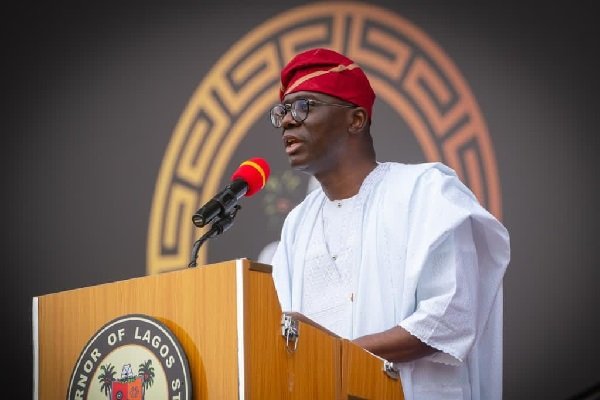
Speaking at the commissioning of the newly built Headquarters of the Lagos State Building Control Agency (LASBCA), the governor admitted that the state government may have made mistakes on some of the line items in the records released by the Lagos State Public Procurement Agency. He welcomed the open letter by the ADC governorship candidate stressing that his administration remains firmly committed to ensuring utmost transparency in its financial transactions. It is also instructive that despite the clarifications made by the executive arm of the Lagos State government on the issues, the Lagos State House of Assembly has summoned officials of the Lagos State Public Procurement Agency over the alleged frivolous spendings.
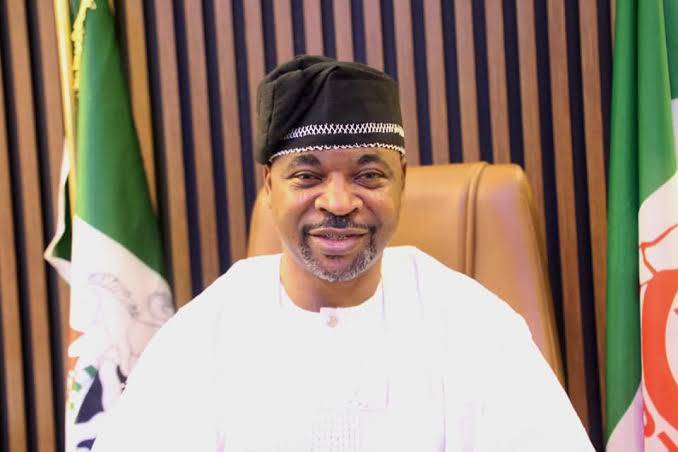
According to the Speaker, Honourable Mudashiru Obasa, “We call on the committee in charge of procurement to invite the agency and others mentioned and do a thorough job on this in order to establish facts concerning the publications”. This is certainly a model of governmental checks and balances as well as accountability at work in the Centre of Excellence.
What is good about the Lagos State government making its budgetary line items available online for public scrutiny is that most of the items are provisional and necessary expenditures have not yet been incurred on them. This makes it possible for the government to go back to the drawing board to reorder its priorities and modify some of its budgetary projections where necessary in the light of prevalent public mood and perceptions.
Culled from The Nation