
By Segun Ayobolu
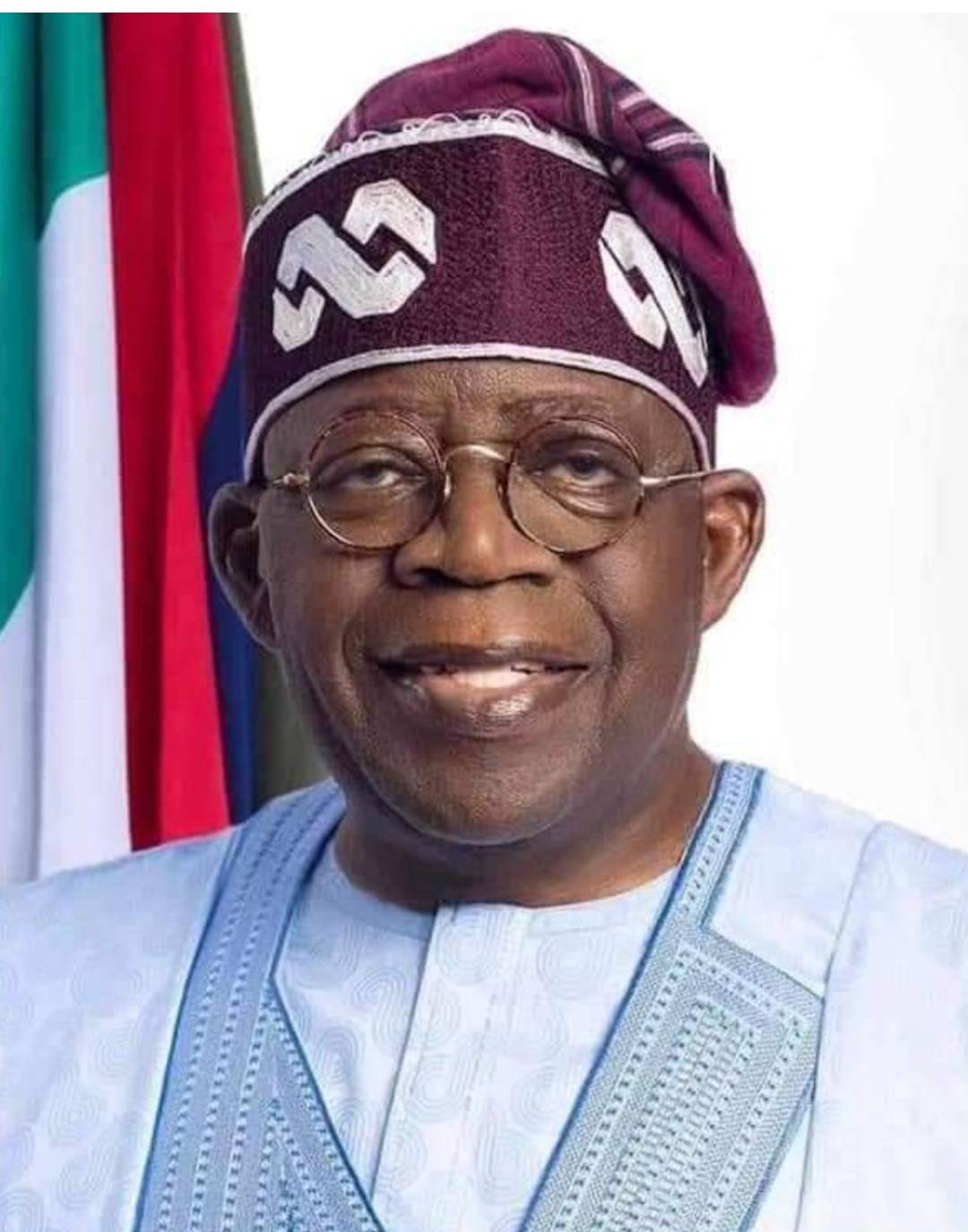
Right from the day of his inauguration as the 16th President of Nigeria on May 29th, President Bola Ahmed Tinubu sent a positive signal that his would be a season of bold, courageous and decisive leadership. A well known mantra of leadership is that it is more critical for a leader to take a decision, right or wrong, than to be indecisive and irresolute. In consonance with a key plank of his ‘Renewed Hope’ agenda, the President in his inauguration address announced that fuel subsidy had become history; the contentious policy that over the years gulped ever increasing humongous amounts of financial resources had no budgetary provision by the immediate past President Muhammadu Buhari administration beyond June.
Previous administrations since 1999 simply lacked the courage to do away with a supposed subsidy introduced to elevate the living standards of a vast majority of Nigerians but had become a source of massive illicit accumulation of wealth by a few unscrupulous importers of refined fuel. Everything from the actual size of the subsidy to the amount of fuel consumed daily by Nigerians was shrouded in suspicion and crookery.
It is so easy to take for granted the boldness and decisiveness of the new President to tackle the fuel subsidy conundrum from day one of his administration. A less bold and purposeful leadership could have pushed this difficult but inevitable policy decision further down the line. It would have been tempting and far easier to pander to populist notions and emotions on the issue even when the fuel subsidy had become a veritable drain pipe and a cog in the wheel of the country’s economic progress. Expectedly, organized Labour has expressed strong opposition to the removal of the fuel subsidy. In the short run, steep rise in the pump price of fuel will affect transportation and food costs among others. While the new pricing template announced by the Nigerian National Petroleum Company Limited (NNPCL) fixes new prices within a broad range of between N488 and N557 per litre, it is difficult to reconcile the deregulation of the sector and dependence on market forces to determine prices with fixing of the latter by the regulatory authority. Thus, it is not surprising that many filling stations with the exception of those owned by the NNPCL are reportedly selling the commodity at between N600 and N700 per litre. It is expected that the new pricing, reflective of market forces, will be an incentive for new investment in the sector with the strong probability of substantial reduction in prices in the long run as a result of competition.
The Nigerian Labour Congress (NLC) has demanded a reversion to the former price per litre but this is hardly a feasible option. As the Chief Executive Officer of the NNPCL, Mr Mele Kyari, remarked in a media chat, “This is exactly where we are today. So we no longer can bear it because of liquidity. If we continue we will run into defaults and the defaults of NNPCL are the defaults of Nigeria. Once NNPCL goes into defaults and illiquidity, it affects every borrowing done by the country. Even the sub-nationals. Your lenders will come back to you and say your country can no longer pay. The only way you can stop this is to stop this conversation around subsidy as done by Mr President on May 29. We saw that within 24 hours after the announcement, the bond market appreciated. It is nothing else other than the statement around subsidy and balancing of the apex market”. For organized Labour, however, the masses must not be made to suffer the consequences of what it perceives to be the incompetence of government which is responsible for the reliance on imported refined petroleum products due to non-functional domestic refineries.
According to the NLC President, Comrade Joe Ajaero, “As the pressure continues to mount from the outcry of the citizenry for a quick mitigation of the increasing hardship which this has become for Nigerians, we are worried that patience may run thin and may snap leading to actions that may no longer be controlled. We therefore call on the government to obey the 2023 Appropriation Act and call the NNPCL to order”. Continuing, said “Encouraging local refining of our crude to meet domestic demands is the surest way to resolve the subsidy impasse and stave off its negative consequences on the nation. Insisting on the devil’s pricing template of the NNPCL which is import driven will never work for Nigeria and we will not accept it”. But are the masses of Nigerians the real beneficiaries of the fuel subsidy? It is doubtful.
As Mr Mele Kyari pointed out in his chat with reporters, the elite are the main beneficiaries of the subsidy with 38% of fuel supplies going to the Federal Capital Territory (FCT), Lagos, Port Harcourt and Kano. He explained that “Very many of us here have at least two cars in our houses. When you buy 100 litres of fuel, the government is subsidizing every three litres with N100. Even consumption itself is skewed in locations and states where the level of economic activities are higher than others. It is very understandable and that is why people can afford it in Abuja, Lagos, Port Harcourt and Kano. So, over 38% of the total fuel distributed in this country ends up in these places. All the other parts of the country suffer”. Rather than calling for a well neigh impossible reversion to the old pricing template, the organized Labour should endeavor to ensure that a substantial proportion of savings from the subsidy are utilized for policies, programmes and initiatives that will be of concrete benefits to the vast majority of Nigerians. Luckily, the contemplated coming on stream of the newly commissioned Dangote refinery latest by August will considerably boost local refining with salutary effects on prices of fuel.
Of course, the removal of the subsidy is not by itself a magic wand that will automatically propel the nation to economic success and prosperity. It is a necessary but not a sufficient condition for economic recovery, growth and development. No less critical is the need to tackle the current substantial resource leakage and rampant corruption that may prevent the huge amounts saved from the subsidy removal being translated into effective palliatives that will cushion the harsh effects of the consequent initial sharp increase in the price of fuel on the populace.
Right now, the level of sheer wastage of resources and criminal privatization of public resources by unscrupulous official functionaries is unacceptable and unsustainable. In his inauguration address, President Tinubu promised to proactively tackle corruption by introducing a viable credit culture as well as taking measures to strengthen the autonomy and efficacy of the anti-corruption agencies. As he explained at several fora during his campaign, the propensity to seek to criminally appropriate public resources will be reduced if, for instance, government functionaries have access to credit such as mortgage facilities to purchase houses with payment spread over the long term at convenient rates. If, however, officials in custody of public funds have to amass humongous amounts to build houses or purchase vehicles among other necessities, they will be under pressure to misappropriate public resources.
As governor of Lagos State between 1999 and 2007, the President had introduced the Oracle software application that considerably reduced resource leakages and was critical to the massive increase in the state’s Internally Generated Revenue (IGR) that characterized the administration and has continued to be improved upon by successive governors of the state after him. His administration was the first to introduce the equivalent of the Treasury Single Account (TSA) later adopted by the federal and many other state governments; an initiative which streamlined and facilitated better monitoring of the state’s revenue accounts. It is noteworthy that the Managing Director of the Lagos State Internal Revenue Service (LIRS), Mr Babatunde Fowler, was appointed in the same capacity at the Federal Internal Revenue Service (FIRS) during the first term of the Buhari administration.
Just as he did in Lagos, the Tinubu administration must device strategies to widen the tax net to encompass the large number of individuals and entities currently dodging their tax payment obligations without necessarily increasing tax rates. In this regard, it is noteworthy that the President has promised to deal with the issue of multiple taxes that businesses have repeatedly claimed inhibit their financial viability and profitability.
During the campaigns, the President promised to revisit the report of the Oransanye Report on the rationalization of government parastatals and agencies with a view to eliminating duplication of functions and substantially cutting governance costs. This is another challenge which will require as much boldness and courage as that exhibited by the President in announcing the end of the fuel subsidy regime. The 800-page Oransanye Report, which had been prepared as far back as 2012 during the administration of President Goodluck Jonathan had recommended the scrapping of agencies which duplicated functions of others, the merging of some others and the winding down of those whose mandates had since been fulfilled and which had thus become redundant.
Successive administrations had, however, lacked the political will to implement recommendations of the Report. There is need for bold and decisive action by President Tinubu on this score. The example of the Joint Admissions and Matriculation Board (JAMB) which, under the leadership of Professor Ishaq Oloyede, has in the last five years remitted over N5 billion into the Federation Account should be an eye opener to the Tinubu administration on the untapped revenue generation possibilities of several other government agencies. Prior to Professor Oloyede’s tenure, no one envisaged the vast revenue yielding potentials of JAMB, which annually remitted only a pittance to the federal coffers.
Another tough challenge that the Tinubu administration must tackle with regard to public revenue and governance costs is the widely condemned unjustified allowances and perks that members of the National Assembly appropriate to themselves. In addition to these huge allowances said to be in the range of N13 million to N15 million monthly, the implementation of purported Constituency Projects is widely perceived as another source of considerable resource leakage by the legislature. Again, this is an area where successive administrations have been unable to curb the excesses of the legislators. Of course, it follows that if the executive arm is to have the moral right to do this with regard to the legislature, it must of necessity cut governance costs on its own part and exhibit prudence in the management of public funds.
Another indication of the decisive style that will most likely characterize the Tinubu presidency was the directive by the President to the Department of State Services (DSS) to immediately quit the premises of the Ikoyi office of the Economic and Financial Crimes Commission (EFCC) which the former had invaded and barricaded. There had reportedly been a lingering dispute between the two agencies on the ownership of the facility.
As the Vanguard newspaper aptly put it in its editorial yesterday, “Nigerians may be in for a new era of prompt and proactive attention to important governance issues if what happened on Thursday, May 30, 2023, was anything to go by. President Bola Ahmed Tinubu instructed men of the Directorate of State Services (DSS) to “immediately” vacate offices of the Economic and Financial Crimes Commission, (EFCC), on Awolowo Road, Ikoyi, which it had invaded. Thus ended what could have degenerated into a breach of law and order between the two arms-bearing security agencies if the EFCC had imprudently responded to the blockade of its premises. What just happened was a regular nonsense tolerated by the regime of the out-gone President, Muhammadu Buhari. Inter-agency rivalries were the order of the day. Some of them dragged on interminably, and many were never resolved by the Commander-In-Chief”.
It is noteworthy in this regard that one of the first actions of President Tinubu in office was his meeting on Thursday with the Security chiefs. This is of course not surprising given the gross deterioration of the country’s security situation under the last administration. Here again, it is instructive that the President stressed to the security chiefs that he would not tolerate their operating at cross purposes as happened all too often in the past. Briefing newsmen after the meeting, the National Security Adviser (NSA), General Babagana Monguno, said “ The President has made it clear that he will not accept a situation in which our fortunes keep declining. His own trajectory is that security has to be coordinated, whether it is a basket situation, it must be a clearing house. All agencies must work together to achieve one purpose. Working at cross purposes and colliding with each other is not something that he will condone. He has made it clear all the security agencies must comply with the demands of coordination, the demand of frequent consultation and also timely reports, which must be acted on”.
Continuing, General Monguno said “He is going to embark on a lot of reforms in terms of our security architecture; he will take a closer look at our misfortunes in the maritime domain, focusing particularly on the issues of oil theft, which he is not going to tolerate. Wherever the problem is coming from, it must be crushed as soon as possible. He has already mandated the security agencies to come up with a blueprint. As far as he knows, he doesn’t have the luxury of time and whatever changes will be made have to be done as soon as possible”. There is no doubt that millions of Nigerians are waiting in keen anticipation for the reforms that President Tinubu has promised in the country’s security architecture and the innovations he will introduce to tame banditry, kidnapping, terrorism, herdsmen violence and other challenges to the safety of lives and property across the country.
The President must certainly be keenly aware of the great expectations of Nigerians from his administration. Some misguided commentators have mischievously described his administration as a minority government since he had about 8.7 million votes relative to the over 14 million votes recorded by his opponents combined. Some claim that over 8 million votes is a minuscule proportion of a total population of over 200 million Nigerians. The reality is that President Tinubu was the candidate with the highest number of votes in the February 25 presidential election and also with the constitutionally required spread of scoring 25% of the votes in each of at least two-thirds of the 36 states and the Federal Capital Territory (FCT). In a democracy, it is the votes of whatever percentage of the population that choose to exercise their franchise that counts and is binding.
Part of the great expectations of Nigerians with regard to the new administration stems from President Tinubu’s superlative performance as governor of Lagos State. But even in Lagos, it took some time for him to stabilize his administration, deal with opposition to some of the tough but necessary decisions he had to take and begin delivering dividends of democracy to the people. The trajectory will most likely be no different in his current tour of duty at the national level. President Tinubu will surely be motivated to meet the anticipations of millions of his countrymen and women knowing fully well that the gap between great expectations and increasing frustrations as witnessed under the President Muhammadu Buhari administration breeds a speedy squandering of goodwill.
Culled from The Nation