
Emmanuel Oladesu
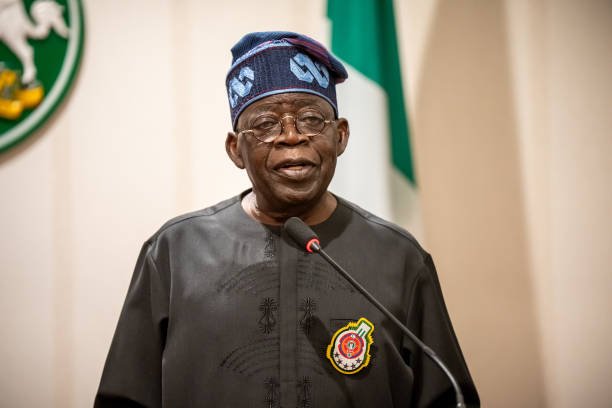
Nigerians have chosen wisely. A democrat and statesman has been elected to succeed President Muhammadu Buhari on May 29. It is a turning point in national history; the beginning of a new dawn.
Power, which is never served a la carte, did not land on Asiwaju Bola Ahmed Tinubu‘s palm on a platter of gold.
The election has been won and lost. For now, two things are very important. The first is the lesson of the titanic struggle for power and how the President-elect triumphed over many obstacles to breast the tape. The second is the soaring public expectation from a tested and trusted progressive leader who will be assuming political control at a most challenging time.
Tinubu’s victory underscores the audacity of hope and power of courage. He was focused. He planned well and teamed up with the right people across the six geo-political zones to realise his life-long ambition for higher service to his fatherland.
At Abeokuta, the Ogun State capital, he said it was important that the kingmaker should also become king to avoid being a footnote of history that will be derided by this and future generations.
Although he was the best among the aspirants ahead of the primaries, and he had the best blueprint, he had to cross many hurdles.
In eight years, the pact on zoning was almost forgotten. The labours of the past, particularly the spade work that led to the fusion of like-minded parties, groups and individuals that gave birth to the All Progressives Congress (APC) were almost ignored. Those who hailed Tinubu’s pivotal roles at the beginning, including close associates he had mentored, ironically, turned against him.
Politics is characterised by competition, strife and antagonism. The real war started after the former Lagos State governor stormed Aso Villa to declare his ambition to President Buhari. But, he was unstoppable. Deserted by some associates, he quickly put the betrayal behind him and made more friends across the country. Many perceived his bid in a positive light; a payback time for a colossus who has groomed countless loyalists for leadership, built vast networks and spread tentacles of cooperation with progressive forces nationwide.
While other APC contenders who appeared before the John Odigie-Oyegun Committee said they would step down for a consensus candidate, Tinubu canvassed the beauty of a democratic, transparent and credible primary.
Many aspirants crashed before the shadow poll. Others later mounted the podium during the ‘Manifesto Night’ to step down for their National Leader. In a free and fair primary, Tinubu became the candidate.
After the primary came the second phase of the war. Attention focused on Tinubu more than Atiku Abubakar of the Peoples Democratic Party (PDP), whose party was crashing; Peter Obi, a PDP defector who ran on the borrowed platform of Labour Party (LP), and Rabiu Kwankwaso, the strongman of Kano politics in post-Rimi era and candidate of the little known New Nigerian Peoples Party (NNPP). The choice of choosing a running mate was challenging. In a divided country, some people mounted pressure on Tinubu to make a mistake of picking a Christian from the Muslim-dominated North. But, the former governor, a realist with a deep knowledge about Nigeria, strategically chose a Muslim; a cerebral, loyal Kanuri and man of integrity from the Northeast. Self-acclaimed Christian leaders, who sought to exploit religion as a tool of divisive politics and destabilisation, cried foul against what they described as a ‘Muslim-Muslim’ gang. Lies were fabricated that Tinubu would Islamise Nigeria.
His response was logical and reassuring. He said if he, as a Muslim, could not Islamise his nuclear family where his beloved wife, Senator Oluremi Tinubu, is a Christian priest, the allegation of planning the Islamisation of the country was a figment of some people’s hyperactive imagination.
The third stage of the conflict was the electioneering campaign. Social media crooks set to work, to malign and damage reputation through malicious lies, fabrication and propaganda. No candidate endured unwarranted insults more than Tinubu, who had prepared for the worst embarrassment.
He was portrayed as being unfit for the job, terminally ill, and lacking the strength to withstand the rigour of the highest office. Derisive videos were made of him and taunting songs were composed about him to give the wrong impression that the APC candidate was unfit. Some manipulated social media portrayals conveyed the impression of a man who cannot stand alone for five minutes; someone who could not walk without being assisted; an old man of over 80 years whose first daughter is over 60 years. The mischief makers were all over town with crude jests and blatant mockery. They depicted the image of a corrupt person, although he was never indicted by any court.
The detractors knew that Tinubu would win. Therefore, they mounted numerous roadblocks. The hurdles motivated the APC team to work harder. Tinubu campaigned more than his rivals across the nooks and crannies of the country. He held more town hall and other important meetings. There was no fatigue and diminishing strength, unlike what was noticeable among his rivals who looked gaunt and languorous by the telltales of hectic campaign engagements. While they displayed emaciated physique and croaky voices, Asiwaju appeared to have put on more weight and gained more strength with every electioneering outing. The dancing and the tireless voice clearly showed a different man from what the propagandists had portrayed to the gullible.
Also, pro-zoning APC governors were on the same page with the standard bearer, unlike their PDP colleagues who were locked in protracted rift with Atiku and the PDP National Chairman, Senator Iyorchia Ayu. While Tinubu enjoyed the active support of vocal, determined, committed, principled and resilient APC governors, G5 distanced itself from the main opposition party while LP state chairmen ditched Obi on the eve of the poll.
At Abeokuta again, Tinubu took his case to Nigerians. He was able to convince many that he had no hand in the protracted fuel scarcity and Naira crunch, which had imposed hardship on them. Rather, he explained that the ill-timed policy was meant to incite them against him on poll day.
As the twin challenges of fuel scarcity and Naira crunch bit harder, unscrupulous elements started pushing for election postponement and an interim government.
The coast was clear on February 25. Bubbling with confidence and optimism, Tinubu predicted victory for himself in the spirit of Emilokan, and through the grace of God and the will of majority of Nigerians, he made history. It underscored the power of positive thinking.
Knowing that one year of the Tinubu presidency would dwarf his eight years in office, veteran letter writer, former President and grand patron of “Obidients”, Gen. Olusegun Obasanjo, who supervised the flawed poll of 2007 which the beneficiary, President Umaru Yar’Adua, even decried, hurriedly dispatched a dubious letter that was apparently meant to incite Nigerians against the outcome of a credible poll. He improved on his record of bitterness against Yoruba icons, the late sage, Obafemi Awolowo, the best material not fit for president, and Moshood Abiola, the messiah Nigeria did not deserve.
Ask the ‘Glo’ man about his experience. The power that be ran him out of town. Let Gen. Olufemi Olutoye, now an oba, relate his premature retirement. What about Osoba’s ordeal and travails of his colleague-governors in 2003 poll?; a fallout of the political earthquake that swept across Southwest?
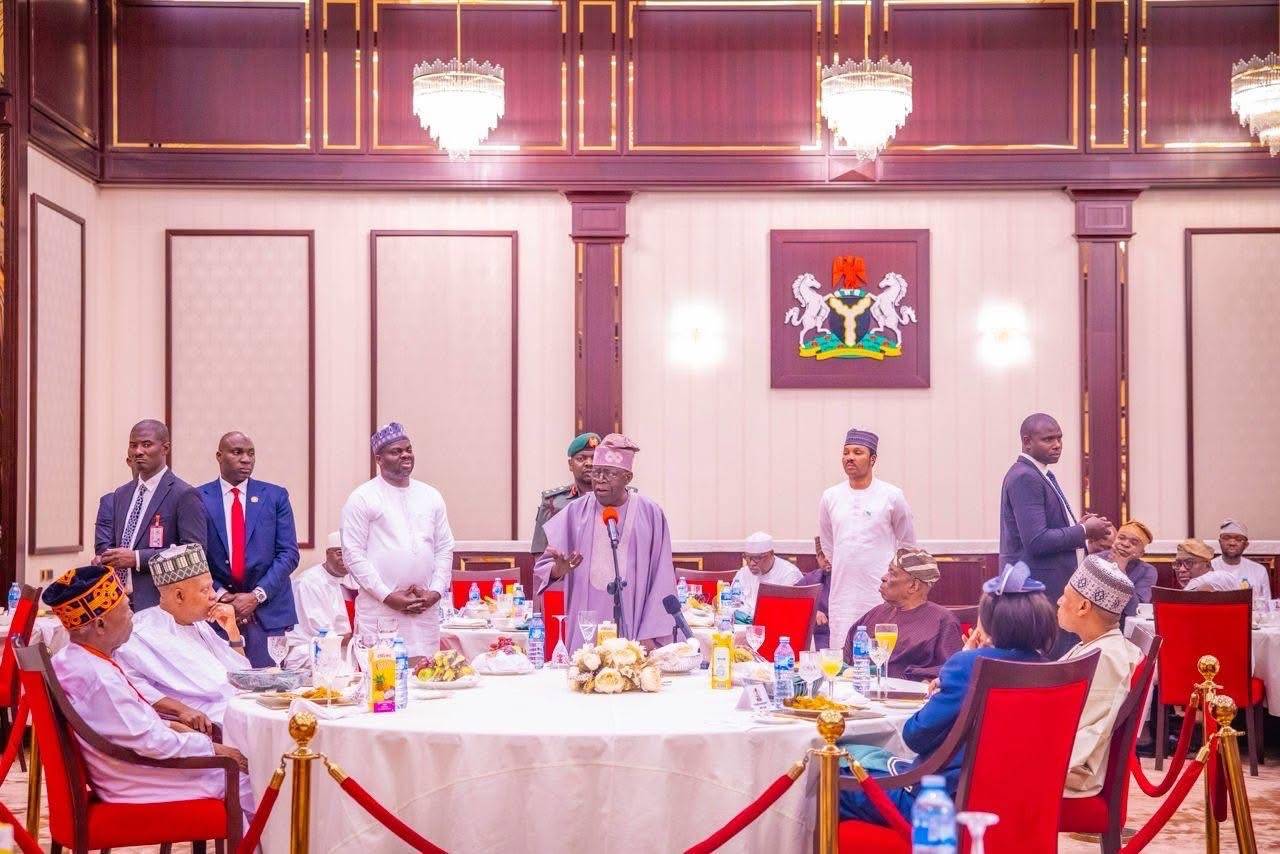
However, that the kingmaker has become king is not the end of the matter. Much needs to be accomplished for Nigeria by Tinubu, a democrat, bridge builder and visionary. The voting spread he achieved on February 25 is the baseline for renewal of fidelity to national unity. It is gratifying that he has waved the olive branch and promised a government of national unity. This makes him the real unifier.
The economy is on crutches. It is now Tinubu’s headache. Graduate unemployment, insecurity and epileptic power supply are among Nigeria’s major challenges. It is noteworthy that the President-elect has acknowledged that if electricity is fully resolved, the nation’s problems would be half-solved and all would start to be well.
The greatest task is the resolution of the national question through restructuring. Nigeria also expects reforms across the various sectors.
Predictably, the President-elect will set up a cabinet of talents; an inclusive, goal-oriented, accountable, and responsible administration.
Tinubu said his victory would make him the party leader. APC needs to be reorganised. Vital organs, including the National Caucus, should be reactivated. The Board of Trustees (BoT) should be restored. Outstanding conflicts in some state chapters should be resolved very urgently. It is not too late to think about the restoration of ideological politics. Without an ideology, a political party is either empty or incomplete.
In another four years, the incoming administration will be assessed. Nigeria will not remain the same.
Culled from The Nation