

Although this piece attempts to kill two birds with one stone, it touches on two of the fundamental problems bedeviling the NPF
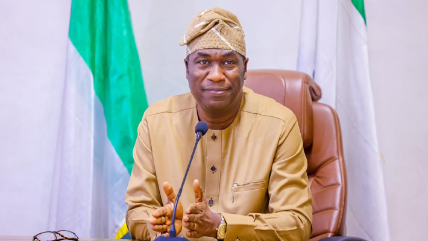
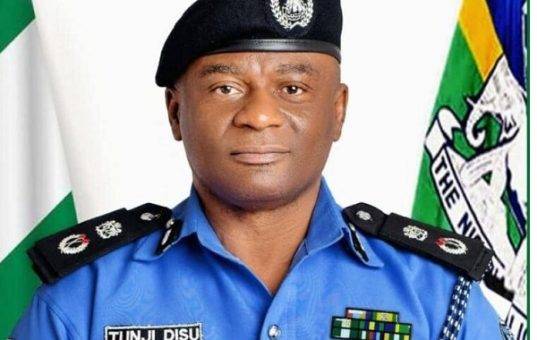
I can’t remember having met Mr Tunji Disu personally. But I am happy to inform him that many of my colleagues who spoke about him when he was appointed Inspector-General of Police (IGP) by President Bola Ahmed Tinubu on February 24, to succeed Mr Kayode Egbetokun, had kind words about him. As a matter of fact, and at the risk of being accused of flattering him, Disu would be one of such rare IGPs to be so commended by many senior journalists.
But you don’t need to meet someone personally to form an impression of the person, especially in these days of information technology when virtually everything is in the public domain, as they say.
Disu joined the Nigeria Police Force on May 18, 1992. The 59-year-old officer born in Lagos has had extensive operational experience in the force. He is the 23rd indigenous Inspector-General of Police. He at a time commanded the Lagos Rapid Response Squad (RRS); he is former Head of the Police Intelligence Response Team (IRT), and former Commissioner of Police in Rivers State and the Federal Capital Territory (FCT), among others.
In each of these capacities, he left his mark. He had led operations against high-profile kidnappers and cross-border crimes.
But this is not about regaling us with Disu’s past. We are now going to be more interested in how he performs as IGP.
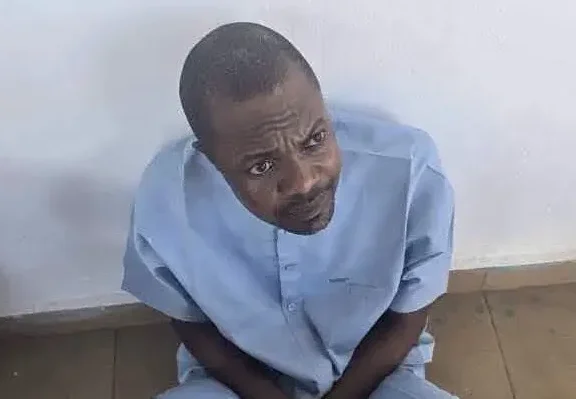
And, one area I would like to begin with is his handling of the case of the young man who was killed extra- judicially by a policeman in Effurun, Delta State, on April 26. I am here talking about 28-year-old Mene Ogidi. A lot has been said about the details of the story; the different versions. So, I won’t want to dissipate energy on those.
But what happened was that, last week Tuesday, a video trended on social media showing the shooting of Ogidi, who was arrested by a police team in the Delta State Police Command over a suspected crime. The policemen tied his hand to the back apparently so he would not escape. Right in the open along the Warri-Sapele Expressway in Effurun, one ASP Nuhu Usman shot the man at close range to the delight of his colleagues. The video expectedly generated widespread public outrage, with calls for the prosecution of the officers involved and justice for the victim.
Many people wondered why the policemen had to kill the suspect after tying his hands. The fear of his escaping or harming the policemen could not have arisen since his hands were already tied. The big question was why were the policemen so much in a hurry to kill him? The rest is history.
This was probably Disu’s own baptism of fire, coming barely 61 days after his appointment as IGP. Mercifully, Disu has not disappointed many Nigerians; he handled the case in what not a few have described as one of the most decisive responses from the police authorities in recent times. The police set up their internal administrative mechanisms and in about three days, the result was out. The Force Disciplinary Committee (FDC) recommended the dismissal and prosecution of Usman and other officers over the killing.
According to Anthony Placid, the force public relations officer (PPRO), in a statement, the FDC, alongside other internal disciplinary processes, had concluded its review of the incident and established that the police officer ‘’acted in gross violation of Force Order 237 and other extant regulations governing the use of firearms.”
“Consequently, the FDC has recommended the immediate dismissal of ASP Nuhu Usman and other officers found culpable. The Inspector-General of Police has approved the recommendations and forwarded same to the Police Service Commission (PSC) for ratification in line with due process,” the statement reads.
It is good that the process did not go through any time-wasting rigmarole. He promptly approved the recommendations and forwarded same to the PSC for ratification, in line with due process.
But, in approving the recommendations, the IGP made a very germane point: that no amount of suspicion of criminality could warrant such an extra-judicial killing. As the IGP observed, the police were meant to protect, not intimidate or kill Nigerians. “The Inspector-General of Police reiterates, in the strongest terms, that the Nigeria Police Force maintains a zero-tolerance stance on extra-judicial actions and abuse of power,” Placid said. He added that “No uniform confers the right to take life outside the provisions of the law. Any officer who violates this fundamental principle will face the full weight of disciplinary and legal consequences.’’
For me, that must have struck the right chord because it is not unusual seeing some of our policemen cocking their guns menacingly in an attempt to apprehend a driver without vehicle particulars and may even release the trigger, killing innocent passers-by in the process.
Nigerians are interested in this case because this would not be the first time such killings are perpetrated by some trigger-happy policemen. As a matter of fact, someone observed, Ogidi’s murder by Usman extra-judicially could not have been the first, given the manner he cocked the gun and fired at the poor man at close range, with his colleagues cheering. Even if he was a sharp shooter, he would have been more helpful to the police force and the country at large if he had deployed such expertise or dexterity against hardened criminals.
One of the things that bother me was Usman’s dressing on the day. Looking at the video, how could anyone have thought that an officer of the NPF could have dressed the way ASP Usman dressed at the time of the murder? Just about two weeks ago, the Lagos State Commissioner of Police, Tijani Fatai, invited religious leaders and other leaders of thought and told them to take the message back to their respective places of worship, among others, that the state police command would not condone any act of criminality and that people should admonish their wards to dress decently. Decent dressing is not about wearing expensive clothes; it is about dressing well.
The way ASP Usman dressed in the viral video qualified him for arrest in Lagos because he was not different from a tout. That was why some Nigerians said they would not have stopped if such a man flagged them down at a police checkpoint because he could easily pass for a criminal.
Yet, we see many of our policemen in motor-park dresses brandishing their weapons in the most offensive manner. IGP Disu has to see to this indecent dressing among some of the police officers. Even if they must be in mufti for some undercover activity, they could still afford to look decent.
The other matter I would want the IGP to work on has to do with police pension. The IGP should please permit me to use the case of Late CSP Adesoji Kehinde Idowu (CSP, AP No. 50822) as case study. Indeed, I prefer using real stories instead of generalising in a matter like this. While it may help solve the case of the particular person concerned, it would also open the eyes of the authorities concerned to things happening in their establishment that they may not be aware of.
CSP Idowu joined the police force in 1992. He rose to the rank of Chief Superintendent of Police (CSP) in 2013. Unfortunately, he died on September 30, 2019, during a brief illness, a few days after the list of those promoted to Assistant Commissioner of Police (ACP) was released. His name was said to be on the list only to be yanked off probably after they learnt he had died. The family said they were told his name was yanked off because he did not fill one ‘APPA Form’, or whatever.
This would only be the beginning of his ordeal, even in the grave. His pension contribution has been enmeshed in controversy, with the National Pension Commission (PENCOM) allegedly giving the beneficiaries problems. Various discrepancies were said to have been discovered in the pension record, such that only a part of the pension has been paid to the beneficiaries, leaving a substantial part hanging wherever. To date, the matter remains unresolved. Similarly, CSP Idowu’s Group Insurance is said to be pending.
The implication is that it is the widow that is now trainig the children, including the ones in the university. Even when the man was around, this was not easy.
It becomes the more pathetic when it is realised that the said CSP Idowu was the one who led the extradition of the Nyanya blast suspect, Aminu Ogwuche, from Sudan in July 2014 (his photograph was published on the cover page of ‘The Punch’ newspaper of Wednesday, July 16, 2014, with the suspect on arrival in the country).
I have other details to make available if this story touches the heart of Mr Disu enough; and I think it should. Indeed, the former IGP was petitioned on this matter even as I sent a message to the immediate past PPRO, Benjamin Hundeyin, unfortunately, he was redeployed a few days later.
My point is that if we are calling for sanctions for police officers who ran afoul of the law, we should also know how to honour those who did well, whether in service or retirement, living or dead. The police may say the problem is with the pension and outside of their jurisdiction. I don’t think this should be so. The force should be concerned when beneficiaries of such entitlements are having issues having access to their entitlements. It gives a bad signal to those in service that that is the fate that awaits them after service or when they die. Ultimately, it is the police force and the country at large, that suffer.
We have had so many reforms about police pensions such that a thing like this should not be possible again. Policing is not one of those easy jobs. Dogs should not be seen to be eating dogs, because that is what happens when people still in service at whatever level decide to treat their retired or fallen colleagues contemptuously.
In all, IGP Disu has done well in the Ogidi matter. What Usman did was beyond administrative process; it was blue murder committed in broad daylight. He should be made to face the consequence in court. It is difficult to pacify Ogidi’s mother; a widow who had lost two sons in questionable circumstances. The first also allegedly in the hands of policemen! The least she deserves is justice, at least for the murder in question. This would not necessarily bring back Ogidi, but it would at least serve as a deterrent to other trigger-happy policemen that the new IGP would not shield them from the law if they go beyond their rules of engagement, particularly if they kill extra-judicially.
I know it is not easy to be IGP. But then, the job is made easier when matters like the ones in question are regularly acted upon as soon as attention is brought to them.
Congratulations to Mr Disu on his appointment.