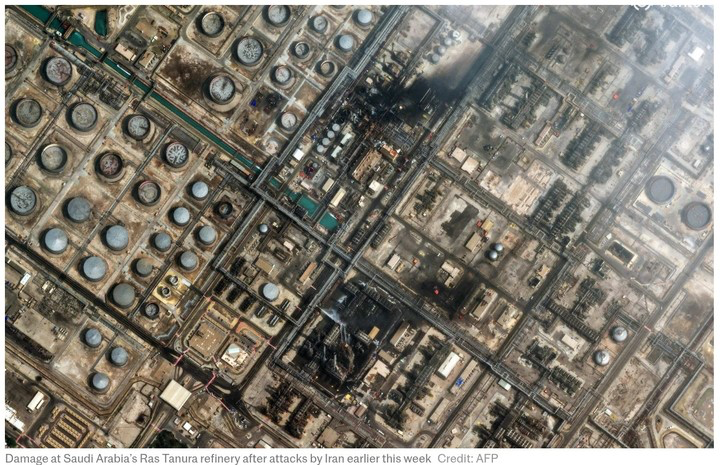

The joint United States and Israeli air attacks on Iran begun on February 28 will either end in a stalemate or end in regime change, or chaos. Many Iranians are ambivalent about the ongoing war, a sequel to the 12-day June 2025 war. In brief, the war is not going well for Iran’s theocratic leaders for a number of reasons. They are losing the war mainly because their adversaries are much stronger than they are, and also failing in their imperial ambitions because they were unable to concisely conceptualise their national goals and ambitions within the context and circumscription of Persian history. Firstly, the theocracy is led by a group of overly optimistic and sentimental leaders whose assumptions about their country are either inflexibly skewed towards religion without any elbow room for other faiths, or whose knowledge of Iranian/Persian history and its millennial-old dynamics has proved insufficient or pedantic. Secondly, they surprisingly let their ambition to become a regional power overwhelm their judgement. This led them to show their hands too early before they could muster the structural ingenuity needed to firstly stabilise and prosper their nation and secondly to procure the weaponry to deter external pressures and attacks.
The current Iranian tragedy had been incubating for a long time, predating the February 1979 Islamic Revolution. Iran, or Persia as it was known before Reza Shah Pahlavi renamed the country in 1935, is a multi-ethnic society with only about 51 percent Persians, 24 percent Azerbaijanis, seven percent Kurds, and three percent Arabs, among a few other ethnic minorities. Like Nigeria, which may one day unravel due to its many unrealistic assumptions of nationhood, the Ayatollahs projected their country’s religious homogeneity (99 percent are Muslims and 90 percent of these are Shiites) as sufficient reason for the brutal defence of their theocratic government for nearly five decades. That predilection harks back to the 16th Century when the Safavids imposed Shi’a Islam on Persia thereby allowing little elbow room for the remaining 49 percent Iranians to luxuriate in their cultural differences. Like Nigeria, Iran has since the revolution failed to develop a political structure that truly accommodates minorities. The consequence is that dissent had seethed below the surface, while the Ayatollahs schooled in religious doctrines and dogmas struggled to conceive systems germane to unity and stability. Force was, therefore, needed to command obedience and conformity.
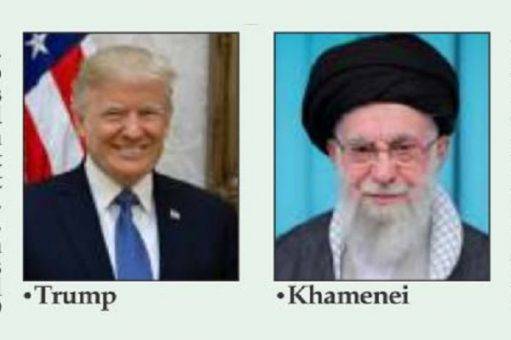
It was unavoidable that Persia’s imperial DNA would continue to run in Iranians, particularly in their ambitious leaders. Persia was the first real global empire when Cyrus the Great founded the Achaemenid Empire in 550 BC after defeating the Median Empire. By 480 BC an unprecedented and staggering 44 percent of the global population at the time lived under Persia. The empire, however, began to shrink under relentless Greek pressures until 334 BC when Alexander the Great defeated the last Achaemenid emperor, Darius III. Thereafter, the Seleucid, Parthian and Sassanid Empires ruled the region until the 7th Century AD when it fell to the Arab-Islamic forces led by the Rashidun caliphs who imposed Islamic rule. From that time till the 20th Century, Islam dominated the region and left deep and lasting impact on Persian culture, society and government. Before Ayatollah Ruhollah Khomeini led the 1979 revolution that overthrew the Pahlavi dynasty, Iran was occupied in turn by the British and the Soviet Union until 1953 when the US inspired a coup d’etat against Prime Minister Mohammad Mossadeq. President Trump’s obsession with Iran is, therefore, not without antecedents. Apart from the politics and economics of crude oil, there is also the historical precedent of intervening in the domestic affairs of Iran by foreign forces, including the US.
The Ayatollahs assumed that the religious ideology factor was enough to bind the society together, and that once a theocracy was established Iran was poised to regain its historical dominance. They did not take into consideration the shifting dynamics of the Middle East, the continuing and deepening influence of the US in the region, complete with military bases, and the centrality of oil in global and particularly Western economies. After consolidating their rule, but shockingly incapable of deciphering the shifting regional and global power dynamics in their largely Arab neighbourhood, they began rebuilding their ancient sphere of influence. They may have consolidated their rule for decades after 1979, but they had not consolidated their military power on a scale capable of deterring attacks by global powers. They launched out into the region arming proxies like the Hezbollah in Lebanon, Hamas in Gaza, and instigating rebellions and even daringly fighting proxy wars in Syria and Yemen. Their militarily weak and unideological Arab neighbours, turned to the US for succour and found the needed help and backing. Still not armed well enough with the kind of sophisticated weapons needed to fend off great power attacks, they nevertheless took on Israel, dished out inflammatory propaganda, advocated for the destruction of the Jewish State which they knew the US backed to the hilt, and fomented crises everywhere.
The region had in short become combustible. All it needed was one crazy enemy of Iran to light the fuse. In the circumstance, two crazy enemies were found who were willing to combine forces to bell the cat against the Persians. The October 7, 2023 Hamas attack on Israel provided the casus belli, and Israel responded with fury. Not only did Iran again mismanage that war, it waded in, not minding who backed Israel. While former president Joe Biden was a little restrained in responding to the Iranian provocation, in 2025, Mr Trump, who lacked the deliberateness, moderation and calculation many other US presidents were sometimes famous for, was sworn in as US president. All hell was soon let loose, culminating in the defanging of Iran last June and its complete decapitation in the past few days. The Americans began with the agenda of defeating Iran and forcing its economic and political compliance; that agenda has now grown to one of regime change, a tantalising prospect for many Iranians, and Iran has suddenly found itself on the cusp of total annihilation. There are no indications the Ayatollahs will survive this onslaught.
While there is nothing to suggest that both the US and Israel have mastered the art of diplomacy enough to guarantee post-war stability in Iran and the entire region, they seem willing to take the risk, regardless of the consequences. What appears certain, however, is that neither the US nor Israel has seemed to calculate, or prepare for, how to handle the forces at Iran’s disposal in the weeks and months ahead. Iran is estimated to rank 16 in global military strength out of 145 countries, with an Army of about 350,000, Reserves of about 350,000, a Basij Force (Paramilitary) of some hundreds of thousands, and a Quds Force of some 15,000. To destroy these forces will take much more than airstrikes, as Vietnam and Afghanistan showed at different times against US, Russian, and Chinese forces. The Ayatollahs’ nostalgic return to their Persian past has now come spectacularly unstuck before the crude and uncalculating invasion of American forces. The Iranian leaders clearly lacked the guile, knowledge, wisdom, and resources to recreate their past. The narcissistic Mr Trump may be keen on sating his megalomania, and by his greed expanding the wealth of America, and Israel may shortsightedly assume that destroying Iran guarantees the safety of the Jewish state. But ultimately the Ayatollahs bear total responsibility for the fate that has befallen Iran due to their superficial theocracy, lack of imagination, foolish nostalgia, undue haste, and serial miscalculations.