


By Mobolaji Sanusi
“Readiness is not just a state of preparation—it is a powerful force that shapes our destiny.”—Anonymous
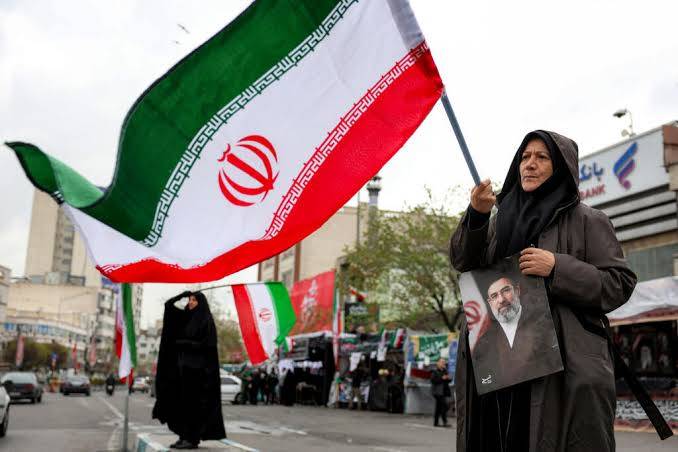
The United States and Israel’s war binoculars are putting the world on edge of ruins and stifling economic abyss. The globe is groaning while entities are gnashing teeth. Leadership of countries are scrambling for ideas on how to navigate President Donald Trump’s sordid war infliction on Iran that had put several countries on the verge of social upheavals.
Since February 28, 2026, the powerful United States and its Israeli ally have piled misery and anguish on Iran. With the consequent infliction of devastation on the now closed Strait of Hormuz, owned by Iran but being the water route for a reasonable chunk of global oil exports, this has put serious strain on world oil distribution, causing an inexorable heightening of crude oil prices.
The Strait of Hormuz’ closure has compelled the world to know that we’re more interconnected than we think. A huge percentage of world oil, liquefied natural gas, fertilizer exports and Europe’s jet fuel pass through that corridor on a daily basis. Also, China, the manufacturing and production capital of the world has 38 percent of its critical exports’ pass through the Strait of Hormuz. Global economic crisis of immeasurable magnitude is looming except Trump realises the harsh consequences of US/Israel’s contentiously destructive actions on the general wellbeing of the world.
Nigerians living in their country, unlike their ‘JAPA’ counterparts, are already feeling the unmitigated brunt of the unleashed war of attrition on Iran and the closure of the Strait of Hormuz by Iran. Any back-up plans by the government? This is doubtful! With four forex-gulping dysfunctional refineries in a generator-economy like Nigeria’s, and with weak institutions, the pains and negative effects of this US/Israeli v. Iran war, can be better imagined.
The ongoing bombardment in Iran with its negative impact on the economic well-being of countries should be a serious source of worries to right-thinking citizens across the globe. Again, Nigeria is particularly affected because of her poor preparations for emergencies’ fallouts of the kind emanating from the gulf region’s impasse.
This brings to the fore the need for entrenching the culture of effective institutional reserves—be it for refined petroleum products or agricultural harvests, amongst others. With the escalating costs of, especially, petroleum products linked to the consequences of this US/Israeli’s continuing decimation of Iran, our planners in government need to go back to their drawing boards. At no time has this become inevitable than now.
We need to ask ourselves this pertinent questions: How prepared is Nigeria in this regard? Why is it that within days of the war being unleashed on Iran, Nigerians, in the midst of plenty, are already groaning from the excruciating high costs of especially petroleum products produced from crude oil that is essentially our God-given resource endowment.
Petrol prices, like in other countries of the world, have gone up drastically. In Nigeria, it has gone above N1,200, while diesel prices are astronomically going up to as high as N1,500 currently. Obviously, commuters will continue to suffer in the same vein as private car owners who will groan at the fast depletion of money in their pockets and petrol in their vehicles’ tanks. Industries and other service providers relying on generators to provide electricity for their production/manufacturing mandates will have their budget projections for the year shattered. Of course, it is the consuming public that will bear the brunt because the costs’ increment will be passed on to them.
Millions of households that use generators because of the unreliability of electricity supply in the country will pay through their noses for survival. The logistics of food transportation will shoot up and if care is not taken, prices of food items will further become an unbearable burden on an already financially distressed households. Again, how prepared is the country for this kind of emergencies? What contingency plans are in place to cushion its effects on industrial/corporate entities, households and other citizens? Our government needs to ponder over this, going forward.
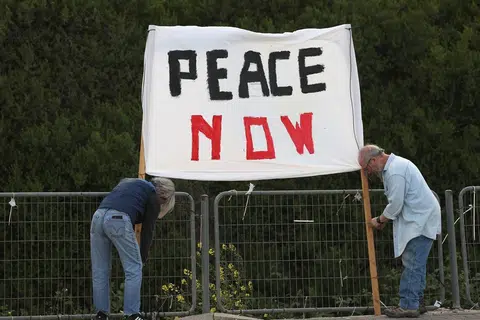
No country prays for war but powerful countries like the United States and Russia have become conquest-seeking-countries because of their awesome military strength, access to nuclear weapons, and inordinate ambition to broaden jurisdictional economic interests. They adduced lies as raison d’être for their destructive encroachments into other sovereign countries. The case of US’ invasion of weaker countries as typified by the ruins it turned Iraq into, decades ago, remains a classical example.
This is why reasonable global citizens are restrained from applauding the lies being peddled as reasons for the ongoing invasion of Iran by the US/Israeli coalition. Because of this conquest moves, citizens of the world are battling with avoidable high costs of living amongst other negative socio-economic occurrences.
Why’s Nigeria affected despite its reportedly holding about thirty-eight billion barrels of proven oil reserves, ranking tenth globally. The country also reportedly has the largest gas reserves in Africa that is estimated at 210 Tscf. The big question at this juncture is: What is the joy in the country’s oil and gas reserves projected to have the tenured fluidity of another sixty-four years when our fellow countrymen could hardly enjoy the benefits of these God given resource endowments, whether in normal times or during emergencies?
The answer to above poser is not far fetched. Nigeria is a country of enormous resources but has overtime been bereft of the leadership that could make things work. This point is well illustrated by the wobbling history of the government-owned four non-functional refineries that could have built the necessary oil and gas reserves for the country; but failed woefully in achieving this goal due to bad institutional influence and corruption. It is still mystical to imagine that with these enormous oil resources, Nigeria still import refined petroleum products.
To start with: Kaduna Refinery with refining capacity of 50,000 bpd, was established in 1980 at a cost of $525 million, to cater for Northern Nigeria. A second 50,000bpd crude unit was added to it in 1983 specifically for producing lubricating oils thereby doubling the capacity to 100,000 bpd. By 1986, the capacity of the initial crude unit was further increased to 60,000bpd, raising the refinery’s current maximum capacity to 110,000 bpd. Yet, this refinery despite billions of dollars spent on its turn-around-maintenance and the development of its human capital resources remains epileptic.
The 60,000bpd capacity old Port Harcourt refinery was equally built in 1965. Shell BP invested around £12 million in its construction. At inception, the refinery operated at over 50 percent of its installed capacity, but since the 1990s till date, its output has become nil compared to the resources expended on it.
Also, the new Port-Harcourt refinery with a refining capacity of 150,000bpd was built at a cost of $850,000 in 1985. Till date, this refinery has continued to gulp the nation’s hard-earned forex without any significant impact to its refined petroleum reserves. This is despite the fact that the two refineries in Port Harcourt have a total refining capacity of 210,000bpd with a redundant workforce that get retired with pensions after thirty-five statutory retirement age.
Furthermore, the Warri Refinery located at Warri in present day Delta State was built in 1978. Being a complex conversion refinery, it has a nameplate distillation capacity of 125,000 bpd. Its petro-chemicals plant was commissioned in 1988 with production capacities of 13,000 million tons per annum (MTA) of polypropylene and 18,000 MA of carbon black. Yet, corruption and leadership question have made it a shadow of its old self, decades down the line. What a shame! The Nigerian National Petroleum Company Limited that oversees crude oil/petroleum affairs in the land is nothing but a cesspit of corruption.
Further from above enumeration is the discouraging reports that our strategic food reserves are inadequate to sustain the food supply needs of the country should there be an emergency. The estimated 100,000 MT of food in storage currently is just 7.6% of the 1.3 million MT required for minimum food security requirements of Nigeria.
Yet, this can be boosted if there is deliberate and sincere government efforts to increase capacity and halt the trend of avoidable official poor management.
The country currently has thirty-three grain silos with 1.3 million MT capacity. And it is sad to note that many of the silos are poorly maintained or grossly underutilized: Also for the few in use in most cases, their actual stock is considerably far below emergency needs. Sadly too, only six of these government owned silos are fully operational with the others facing challenges due to underfunding, poor maintenance and also insecurity. Can any serious nation be truly self-sufficient in food production or be able to meet its food supply requirement needs during emergencies under this kind of inept institutional style?
The country needs capacity to galvanize efficiently dependable storage facilities but again, this can be achieved through currently lacking, conscious and deliberate efforts on the part of the federal government. States and local governments across the country, with the huge allocations running into billions of naira they now share every month, should key into this critical culture of creating food and petroleum products reserves, as well. Governments at all levels should also note that developing of our reserves’ capacity is not enough as this should be complemented with calculated cultivation of the right maintenance attitude and culture of constructed silos so as to guarantee the proper preservation of our strategic grain reserves. Issues bothering on insecurity that have made most farmlands in farming communities become ghosts of their old functional selves should be tackled. Without a running farmlands, food reserves automatically become a waste since there won’t be anything to preserve there.
Lessons from the ongoing US/Israel v. Iran war: The federal government especially, and the 36 states plus Abuja; and the 774 local government councils across the country must henceforth commence the process of building functional reserves for food and petroleum products in case there’s the unfurling, in future, of emergencies or even sometimes prolonged scarcity. Sincerely, Nigerians demand, and truly deserve a better deals from our governments at all levels.
•Sanusi, former MD/CEO of Lagos State Signage & Advertisement Agency, is currently managing partner at AMS RELIABLE SOLICITORS. (sms/whatsapp-07011117777)