

Ever since President Donald Trump‘s threat, late last year, to unleash his troops, ‘guns ablazing’ in response to what he was obviously misled into misperceiving as ‘Christian genocide’ in Nigeria, this column has focused severally on what should be the appropriate response to what I have described as the American leader’s ‘wake-up call’. I had chosen to refuse to read Trump’s seeming contemptuous disposition toward weak and poor African countries like Nigeria as being prompted by racism. Rather, we ought to be grateful for his frank and non-hypocritical nature that enables him to call a spade by its name and offer us a realistic picture of our precarious position as a much despised black race in a world that is rapidly regressing to a feral past before our very eyes.
The brutal truth is that occupying poorly governed, disease-ridden, poverty- stricken, perennially unstable and helplessly dependent spaces like most African countries do is becoming increasingly intolerable in our contemporary world. This is particularly so when our countries sit atop some of the richest mineral and natural resources on earth, and these are complemented mostly by a largely clement climate and arable land. The democratic deficits in Africa that sabotage qualitative governance, breed mass cynicism and alienation, deepen material deprivation and worsen inequality force mass migrations, particularly on the part of youths, that put undue pressure on and cause social dislocations in the advanced countries to which they are attracted.
Doing everything to transform African economies, improve governance, reduce dependency and fundamentally enhance military capabilities in the face of ever worsening internal and external threats have thus become imperative on the continent. A necessary condition for attaining these objectives is a high degree of elite consensus. It should be clear to our fractious elite, from the recent example of Venezuela, that foreign intervention to effect regime change or reshuffling of governance personnel can hardly ever be guaranteed to be motivated by altruism or a benign disposition. The entire political class and the country as a whole may end up as the ultimate losers in the practice of politics as a zero-sum game in which power is fought for by all means and at all costs.
Another key condition for accelerating the development process and attaining a power status that will make African countries less vulnerable to external threats is the mobilisation and motivation of the entirety of their indigenous intellectual resources to aid the process of national transformation. In breaking the protracted stalemate between the country’s intellectual class, as represented by the Academic Staff Union of Universities (ASUU) and successive governments over the last one and a half decades, the President Bola Tinubu administration has taken a major step in realising this objective.
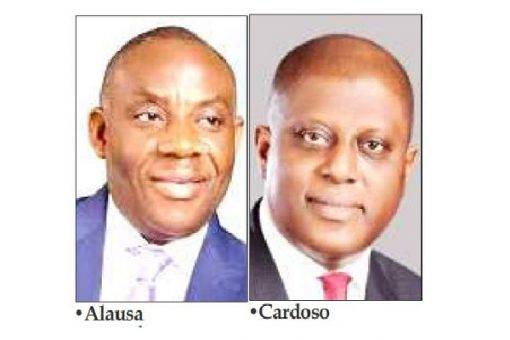
The significantly improved remuneration and package of allowances for public University academics, as announced by the Minister of Education, Dr Tunji Alausa, and Professor Chris Piwuna- led ASUU, should mark the beginning of a determined effort to maximise and actualise the potentials of our indigenous brain power. Of course, it is critical that the implementation of the new agreement commences forthwith and is sustained; that immediate steps be taken to carry along non-academic staff of public universities and that the right environment be created in these institutions for intellectual work to thrive. But given the demonstrated sincerity and dynamism of Dr Tunji Alausa thus far, there is no reason why these should be unattainable goals.
As was stressed last week in the first part of this piece, the objectives of the administration’s economic reforms are evidently being met through stable and continuously improving exchange rates, sustained trade surpluses across quarters, declining inflation rates and a huge boost in foreign reserves. Addressing the just concluded second edition of the National Economic Council (NEC) Conference, the governor of the Central Bank of Nigeria (CNN), Mr Olayemi Cardoso, copiously referenced these gains. As this newspaper reported the event, “Cardoso said recent economic data shows signs of stability, pointing to GDP growth of 3.98 per cent, a strong current account position, and a $3.42 billion surplus recorded in the third quarter of 2025. He said: “We haven’t had this kind of current account strength in a long time”.
However, even as short-term economic reform gains are strengthened and made sustainable, the more challenging task is to lay the foundation for overcoming underdevelopment and achieving autochthonous development in the long run. Even through his unapologetic manipulation of tariffs to achieve the economic objectives of the US aimed at putting America first, Trump is showing that a country’s economic destiny cannot be abandoned to the unpredictable gods of market forces. It cannot be any different with us. As far back as three decades ago, some of our most eminent economists made this point at the first Obafemi Awolowo Foundation Dialogue.
On that occasion at the Nigerian Institute of International Affairs (NIIA) in Lagos, the late Professor Pius Okigbo had observed that “Our type of economies are less responsive to monetary policy measures; there is therefore a stronger and more urgent need for prudent fiscal policies. We cannot rely on monetary measures to correct the damage caused by inappropriate fiscal regimes”. Speaking in a similar vein, Professor Sam Aluko had asserted that “Clearly, the solution of what are commonly termed economic problems – inflation, sluggish growth in output and unemployment – goes beyond the manipulation of economic variables. It requires the active intervention of the government and its understanding of how the economy works”.
Incidentally, Mr Cardoso made the same point at the NEC Conference when he stressed that “Monetary policy is necessary, but it is not enough on its own. No Central Bank can sustainably deliver low inflation where issues like food supply shocks, high energy costs, and poor infrastructure continue to push prices up…Monetary stability requires fiscal discipline and credibility. Policy coherence is a strong anchor for stability”. The thrust of this piece is that in our quest for solutions to our problems of adequate food supply, improved electricity, domestic Petroleum refining, efficient transportation, including roads and rail networks, we must begin to look to our indigenous knowledge, skills and expertise. There must be a closer linkage between public policy formulation, infrastructure projects and our domestic intellectual base.
Interestingly, Dr Alausa had shown the light in this direction last year with regard to our higher education policy in agriculture. In an initiative supported by the Tertiary Education Trust Fund (TETFUND), the Minister announced that a provision had been made for the allocation of N1 billion each to 18 universities of agriculture and universities with agricultural faculties to boost mechanised farming, food security and livestock production. The objective was to facilitate the establishment of institutions receiving the grants to establish commercial farms, enhance food production and feed their surrounding communities.
In a similar vein, Alausa stated that N17 billion would be allocated to 18 medical schools across the country to strengthen the training of doctors, dentists, pharmacists and nurses and enhance the country’s medical workforce. According to him, “This funding aims to strengthen Nigeria’s medical workforce, focusing on high-impact projects for medical education”. It is important that the Minister give an update to the public on the stage of implementation of these desirable policies. If budgetary release has proven a hindrance, he should persist in insisting that the actualisation of these initiatives cannot be compromised.
No less notable is the attention that the administration has paid to technical and vocational education and training. Speaking in an interview last year, the Executive Director of the National Board for Technical Education (NBTE), Idris Bugaje, described the period of the Tinubu administration so far as the best for Technical and vocational education and training in Nigeria since the civil war. In his words, “Before the civil war, there were many innovations in our TVET sector, and they received considerable attention. But since the oil boom of the 1970s, TVET was largely neglected. That is why the number of technical colleges has dropped, from 129 at the moment, compared to 15,000 secondary schools in Nigeria. It is only now that the federal government is giving it the attention it deserves”.
Bugaje explained that the introduction by the Tinubu administration of a monthly payment of N45,000 to students in technical colleges in the country was to accelerate growth in the TVET sector and get more students to enroll in technical colleges. In addition to this stipend, he said “The government will pay school fees, give money to industry-based supervisors (called master class instructors), and cover the cost of skill acquisition. With this, young people will find it more attractive to come to a technical college, acquire skills qualifications, get jobs locally and even beyond the borders of Nigeria. This way, way, the whole sector is being repositioned. We are at the moment facing what you may call either a resurrection or a rebirth of TVET”.
All of these are complemented by the ‘Nigeria First’ policy, which is meant to prioritize the patronage of local resources, raw materials and expertise in industrial and infrastructural procurement and production processes. But the ultimate level of success of these policies will necessitate the re-orientation of the citizens, not excluding the political class in particular, to patronize locally made goods and artifacts as well as utilize locally -based services. There is a chronic inferiority complex especially as regards the ability of Nigerians to master modern science and technology that can only be broken the more we begin to utilize and optimize our unduly underappreciated local manpower.
Stressing the urgent desirability of a fundamental change in the character and course of political discourse in Nigeria from sharing of public offices and allocation/distribution of resources, the noted political economist, Professor Okwudiba Nnoli, during the country’s 50th anniversary celebration, had asked, “Is it not the responsibility of politics and the state to assist the people in the rural areas and elsewhere in the country to apply science, technology and creativity in the production of food to satisfy their needs and traditional consumption habits at increasing levels of modernity; using local and, therefore, available resources; construction of shelters for self and family, using local and, therefore, affordable resources; and the creation of modern health products, again using local and, therefore, affordable resources?”.
To achieve this radically redefined notion of development, Nnoli stressed “the need for economic enterprises at all levels, all sectors and irrespective of whether they are public or private, to possess research and development (R and D) divisions. Their job is to create new products using local resources. Such products must be geared towards the satisfaction of the basic needs and consumption habits of the people, ensuring that exports are the excess of local consumption, while imports are predominantly items which satisfy their needs and traditional consumption patterns but are not produced within the country or are more efficiently produced abroad.”