

By Folorunso Fatai Adisa
“In youth we learn; in age we understand”. — Marie von Ebner-Eschenbach.
The world has quietly shifted beneath our feet. The Reuters Institute Digital News Report 2025 shows that social media has now surpassed television as the primary source of news for Americans, with 54 percent relying on social platforms compared to 50 percent for television. Researchers recorded a six-percentage-point surge in just one year, marking a decisive turning point in how information travels and how minds are shaped. The implication is palpable. News is no longer something we wait for; it is something that finds us, floods us, and often forms us. Across societies, particularly among older and less media-literate populations, what appears on a screen is too often received as unquestionable truth.
In many homes, a familiar ritual plays out almost daily. Parents forward videos, warnings, and prophecies to their children, convinced they are sharing vital wisdom or protection. You have likely experienced this, just as I have. Social media has therefore become more than a platform; it is a powerful sphere of influence. In Nigeria especially, those who command attention online increasingly shape thought, behaviour, and even belief, sometimes leading minds, sometimes misleading them.
From Facebook to Instagram to X, the youth stand at the centre of this digital marketplace. They produce, perform, innovate, and circulate ideas, while older generations often consume and react. Social media has become the modern village square, noisy yet potent, chaotic yet consequential, a place where reputations rise, narratives are forged, and identities are negotiated like commodities.
The destiny of any nation is written partly in the character of its youth. A society dominated by trivial spectacle risks projecting itself as unserious, while one driven by innovation, creativity, and disciplined ambition announces a different future. Youthful energy is raw power. In developed societies, that energy is channelled into science, technology, enterprise, and public service. In Nigeria, although sparks of brilliance abound, youthful vigour is too often diverted into political noise, where many become cheerleaders rather than change-makers.
However, the Nigerian youth story is not entirely one of despair. Across technology, innovation, and creative enterprise, young Nigerians continue to carve a continental and global presence. The growth of tech ecosystems, the rise of digital entrepreneurship, and the audacity of creative expression have projected a new African dynamism that the world can neither ignore nor dismiss.
Culturally, the influence is self-evident. Nigerian music, dance, and popular culture travel across borders, shaping global rhythms and connecting continents. From film to fashion, from sound to sport, young Nigerians continue to carry the nation’s name into international arenas, creating bridges where politics often builds walls.
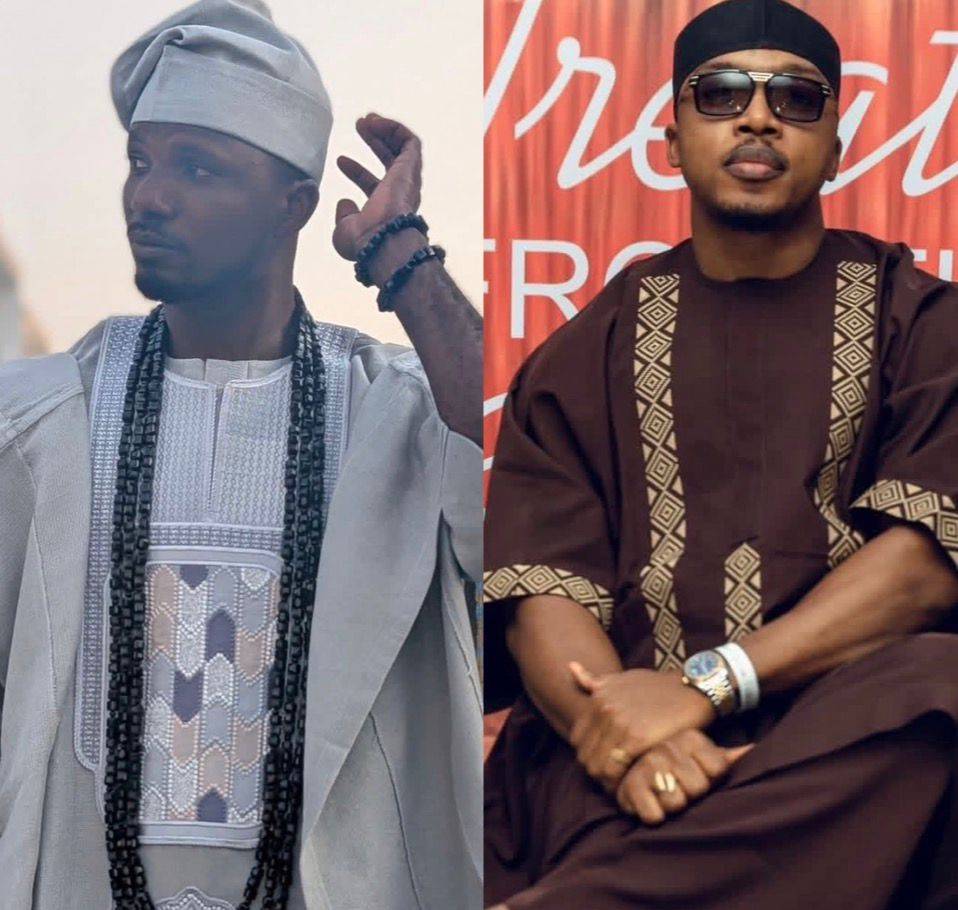
It is, even more, noteworthy that beyond entertainment and sports, however, are young professionals such as Egemba Chinonso Fidelis, popularly known as Aproko Doctor, and Mustapha Iskil Gbolahan, otherwise known as Arojinle, whose quiet labour saves lives, reforms behaviour, and challenges dangerous norms. Their work may not trend as loudly as celebrity drama, yet its impact runs deeper like the taproots of Ọsẹpotu (Wireweed/Sida acuta). Through persistent public education, health advocacy, and social awareness, they perform duties many government institutions struggle to execute effectively.
Commendably, they have used, and continue to use, sustained campaigns against misinformation, harmful practices, and dangerous health myths to prevent tragedies, correct false beliefs, and empower ordinary citizens with practical knowledge. Their communication is simple, accessible, and grounded in evidence, helping many abandon self-destructive habits and embrace informed choices about health, safety, and wellbeing.
I am particularly moved by the recent public education by Aproko Doctor and Arojinle on snakebite first aid, which revealed the depth of their impact. By explaining both what to do and what to avoid, they dismantled long-held but dangerous traditional assumptions that have historically cost lives. When I watched those video clips repeatedly, I saw medical clarity meet practical realism, and knowledge replace fear. In moments like these, their influence becomes service to humanity, communication that rescues people from ignorance and harmful inherited misconceptions. This ought to be the responsibility of the National Orientation Agency, Nigeria., healthcare authorities, and the media, yet it was this duo who effectively championed the cause at no cost.
Austrian writer Marie von Ebner-Eschenbach wrote that “in youth we learn”, and indeed we continue to learn from those young minds who choose construction over destruction, enlightenment over exploitation. Their example stands as a mirror to others who wander in the shadows of social vice, lecturing us that personal conduct is the architect of collective identity.
Taken together, these truths suggest that rather than relying on grand gestures, real change begins with the quiet, repeated habits of a nation’s citizens. The moral compass of a country resets when a commitment to truth replaces empty optics and personal responsibility rises above the noise. This inner rebuilding of a people is what ultimately restores a nation’s strength. Like Aproko Doctor and Arojinle, we each have a vital part to play in the profound work of developing the Nigeria we deserve.
The conversation does not end here. You can continue it with me on X via @folorunso_adisa, LinkedIn: Folorunso Fatai Adisa, or on Facebook at Folorunso Fatai Adisa.
Folorunso Fatai Adisa is a communication strategist and columnist. He holds a Master’s degree in Media and Communication from the University of Strathclyde, Glasgow, and writes from the United Kingdom. Email: folorunsofatai03@gmail.com
Culled from TheCable