

By Palladium
Sometime in 2010, on BBC HARDtalk programme, former president Olusegun Obasanjo argued that the People’s Democratic Party (PDP) could not control 28 states out of 36 states and still lose the presidential election of 2007. Asked whether such dominance was ethical, he shot back: “Should the PDP go and tell the electorate not to vote for the ruling party? Asked again whether it was not tantamount to turning Nigeria into a one-party state, the former president deadpanned: “What is wrong with that?” So far, Chief Obasanjo has restrained himself from condemning the dominance of the current ruling party, the All Progressives Congress (APC), and has not said a word, at least publicly, on whether the 27 states controlled by the APC after some defections risked turning Nigeria into a one-party state. He is unlikely to say anything in that regard, lest they prosecutorially play the tape of his interview to him. He may be sanctimonious; but it is uncertain he is also hypocritical.
By the last count, the ruling All Progressives Congress boasts of ruling 27 states, with a distinct possibility of bagging a few more, perhaps two or three in the weeks ahead. And so the once dominant PDP of yesteryears has become the Lilliputian of today: diminished, battered, disoriented and, for the first time since 1999 when it first won high office, in danger of asphyxiation. It had weathered many storms, most of them self-inflicted, and fought many battles with the stoutheartedness befitting a Leviathan. But victory after victory had dulled its senses of anticipation and awareness of danger. Proud, irascible and inured to reality, its muscles beginning to atrophy, it has now lost both the skill and will to fight. And when its complacency made it vulnerable to dangers of all kinds and predators of all hues, the adaptability needed to save it from destruction was sadly lacking. It is now left with only six states, but is likely to lose two to the APC in the coming weeks.
The PDP never acquired the skill to respond imaginatively to adversity. It was always dilatory. In 2007 when it sensed its hold on the polity weakening, it made recourse to a rigged election unequalled in the annals of Nigerian elections. Nevertheless it tenaciously held on to power for another eight uneventful and crippling years. At the end, assailed on every side by the opposition and buffeted by economic downturn, and with no one in their leadership able to marshal the troops and imbue them with the right tactics, it collapsed under the weight of its own contradictions in 2015. If in 16 years since 1999 it could not produce a generation of brilliant and imaginative leaders to slow its attenuation, it has fared much worse since it lost office in producing tactical fighters who could imagine the future and respond to it adequately. Their loss in 2015 led them to desperate and tactless measures instead of the measured and patient response that should lead them to sacrifice one next election in order to gain many elections thereafter, not to talk of inspiring them to rebuild and reform their party instead of the mindless preoccupation with the present that led them to ruin.
Gluttons for punishment, and unwilling to learn from history, they again approached the 2019 electoral debacle with hired gunfighters, chief among whom was the redoubtable former vice president Atiku Abubakar, a man so obsessed with today that he heartily cursed tomorrow. There would be no reforms and no rebuilding, and there was to be no real introspection to discover what part of their electoral culture made them susceptible to constant failures. They, therefore, staggered into the 2023 presidential poll hiring the same inflexible champion; only this time, he was even more desperate, less discerning, and more prone to simple but costly mistakes. The war of attrition had taken its toll on the former behemoth, and it had become shorn of tacticians, philosophers, and the kind of roughnecks like former Rivers governor Nyesom Wike guilefully adapted to Nigeria’s bare-knuckle electoral fights. Now effectively split into two main factions, and degraded by the APC, political circumstances and self-induced crises, it has completely lost its composure and has been reduced into making plaintive appeals to the United States and the European Union to save Nigerian democracy.
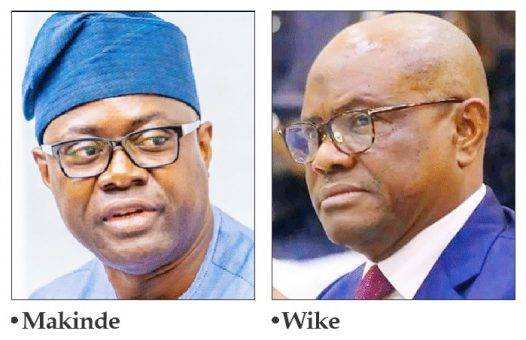
For the PDP, the 2027 election is lost. It should reconcile itself with that sombre reality. It will be lucky, if not foolish, to try to present a presidential candidate when it cannot even legally present a governorship candidate. For there is clearly no consensus between the two factions of the party regarding which camp has the legitimate right in the eyes of the law to sign a candidate’s election forms. It is unlikely that in the next few weeks it can reach that consensus or unite its warring factions. After it officially lost Rivers State to the APC last week, one of its factional chairmen, Abdurahman Tukur, sarcastically and despondently wished Governor Siminalayi Fubara good luck. It has reached such depths of despair today that it has lost the will to fight. As they lose more states and lawmakers to the ruling party, their economic fortunes will continue to dwindle until they are drained of every pint of blood in their veins. Oyo State’s governor Seyi Makinde had tried a last-ditch attempt to rally the troops in the November 15 Ibadan convention. As predicted, that rally miscarried, and with it the party’s last hope. With no messiah left to rally anyone, and with nearly all its troops deserting to the enemy, the PDP may be shouting its last hurrah.
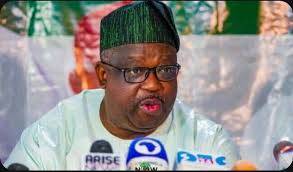
After the 2019 election debacle, the party still had the services of Mr Wike to carry the party’s burden and soldier on. Today, there is no one to carry the burden or even think for the party. Mr Wike is too triumphant and vindicated to care what happens to the party, despite his rhetorical feints and dribbles about principles and practices of partisan politics. Ensconced in the ruling APC where he is treated with Byzantine splendour, he cannot be of any help to the sinking PDP. After Mr Makinde organised the Ibadan PDP convention by sheer will and humongous resources, he has become so deflated and exhausted that no air is left in his lungs, let alone be able to exhale about the future or romanticise the past. Former party chairman Umar Damagum is relieved that he had passed the poisoned chalice to the luckless Kabiru Turaki before the party imploded. He will make sermons and offer prayers for the party on the sidelines, and will resist every attempt to drag him back into a fight he neither chose nor had the skills to fight. Bauchi’s previously talkative governor and chair of the PDP Governors’ Forum, Bala Mohammed, now speak in dulcet tones. The frenetic pace of events in the party was too much for him to cope with, and has lost interest in taming the fractious factions and leaders of the party.
The PDP’s only hope is to come to terms with the task it had avoided for so long when signs of distress began manifesting in the party in 2013-2014. News of its impending demise may be exaggerated, but it will likely go extinct if it persists in its fooleries, or if, like former Osun State governor Olagunsoye Oyinlola, it continues to blame President Tinubu and the APC for its troubles. While it really needs to demonstrate a willingness to fight for its survival, it should beware of reposing hope in messianic intervention to vivify their party. Unfortunately, nature rarely gifts the indolent the reward which PDP leaders expect. After all, the APC is unlikely to implode now, regardless of how much the PDP wishes it. So, if the PDP can get a trusted and gifted organiser in their ranks, they may yet find a straw to clutch. That unusual leader must focus on nothing else for the next few years but reform, and rebuilding and remaking the party. At his command, they will not only refine their platform and reinvigorate the party with the right and inspiring philosophy, they will perhaps give themselves time to heal.