

When United States President Donald Trump launched the war on Iran on February 28, he expected a quick victory, perhaps in one or two weeks, especially with the additional firepower provided by Israel. But unlike Israel’s Prime Minister Benjamin Netanyahu, his goals were indeterminate, an indication that neither he nor his war cabinet had reached a consensus on why the war should be waged. Boasting of the invincibility of US military, the like of which he claimed the world had never seen, he wanted Iran’s capacity to build nuclear weapons and produce ballistic missiles completely annihilated. If necessary, he added tentatively, perhaps a regime change in Teheran would not be a bad idea. By the time a ceasefire was declared on April 8, more at the prompting of the US than Iran, the US had lost a significant portion of its military invincibility in the estimation of the world, sowed doubts in the minds of its Gulf allies as a security partner and guarantor, elevated the strategic importance and advantage of the Strait of Hormuz to Iran, and by its relentless and indiscriminate attack on civilian infrastructure in Iran helped entrench the theocracy in Teheran. The cost of the war had become prohibitive to the US.
Two or three members of the US president’s war council outrightly backed the war. Most other members backed it with reservations, and a few, like Vice President JD Vance thought it was fraught with great difficulties, and would be counterproductive. But the opponents of the war lost the argument because Israel more persuasively argued for war to resolve its own existential crisis and to massage President Trump’s massive ego. Had the war gone as planned, lasting two or three weeks, the US president’s image would have been considerably bolstered weeks ahead of Britain’s King Charles’ state visit later this month, the summit in May with Chinese leader Xi Jinping, and the quizzical American public who would have binged on Iranian oil, as promised by Mr Trump, in addition to Venezuelan oil. In fact, buoyed by the early indications of the war, after the US and Israel had achieved complete naval and aerial superiority over Iran, Mr Trump had begun to boast that the anticipated Iranian regime change could not be consummated without American approval. He exulted too quickly.
To make double sure that the Iranians continue to wilt under American and Israeli firepower, the US president dispatched contingents of US Marines to the Middle East, announced bad-temperedly and with abominable cuss words that he was set to wipe out Iranian/Persian civilisation and destroy its oil economy completely. But shockingly to the Americans, the Iranian theocratic regime dug its heels in, acquired more resilience in the face of horrendous punishment, intensified attacks on US Gulf allies, and increased its chokehold on the Strait of Hormuz, waterways it did not control or close before the war. Mr Trump was, however, still full of bluster. He publicised a 15-point ceasefire plan that was all but an invitation to Iran to surrender, to which the Iranians responded with a 10-point plan that was haughty and equally maximalist. Both countries have finally walked away from the war, relieved, shaken, bruised, and perplexed, the US more so. Clearly, as many analysts have suggested, Mr Trump, who was never capable of any introspection, had surrendered to his instincts and failed to fully analyse or comprehend the history and politics of Iran/Persia or the intricate dynamics of Middle Eastern politics.
While geographic and other circumstances seemed to have favoured Iran in this war, its theocratic leaders are also famous for their excesses, and may yet snatch defeat from the jaws of victory by their insistence on controlling and tolling the Strait of Hormuz as well as linking peace in Lebanon with the ceasefire in the Gulf. Pakistan, which is midwifing the talks between the US and Iran, may yet, together with Turkey and Egypt, prevail on Iran to take the wind; but Ayatollah Mojtaba Khamenei, son of the slain Ayatollah Ali Khamenei, is a hardliner. Will he recognise the wind when it blows, let alone take it? The massive global economic disruptions the war has caused have disadvantaged the US, and are reshaping the Middle East in ways neither Mr Trump nor even the ayatollahs had predicted. Now, the Gulf States are caught in a quandary: they know that no country matches the US in military strength; but they also now realise that putting all their security needs and interests in US military protection has become anachronistic. Mr Trump had hoped the war would reinforce and forge that dependence; now that dependence has been denuded. The US also hoped that its greed for Iranian oil, 90 percent of which is sold to China in currency that threatens the petrodollar upon which the US economy rests, would be met. Instead, in consequence of the outcome of the war, the world may have begun to feel the stirrings of a global economy being weaned off the dollar. Past American presidents knew these calculations and permutations; Mr Trump, however, lacked the depth to appreciate the complexities of Middle Eastern politics and economy, and has risked everything for so little.
It is not surprising that Iran believes its hands have been strengthened by the seemingly stalemated outcome of the war. Put simply: Iran proved its people and heavily sanctioned economy could absorb more punishment than the US could outlast the beleaguered and even unpopular Iranian regime. Had Mr Trump set his objectives to be nothing grander than decimating Iranian military capabilities, he would have succeeded in his aims far more than he calculated. But he left his private, narcissistic wishes morph as the war lasted, and his objectives to remain open-ended. His capacity for miscalculations is legendary. But whatever victory the Ayatollahs have secured has been pyrrhic. One more massive decapitation of the Iranian leadership, especially one that lasts for a few more months, would leave Iran ungovernable. After all, it was suspected that before the ceasefire, the Americans and Israelis had Ayatollah Mojtaba in their crosshairs. That they did not take him out might be because they recognised the futility of continuous leadership decapitation, especially in the face of increasing and worsening global economic disruptions and hardship.
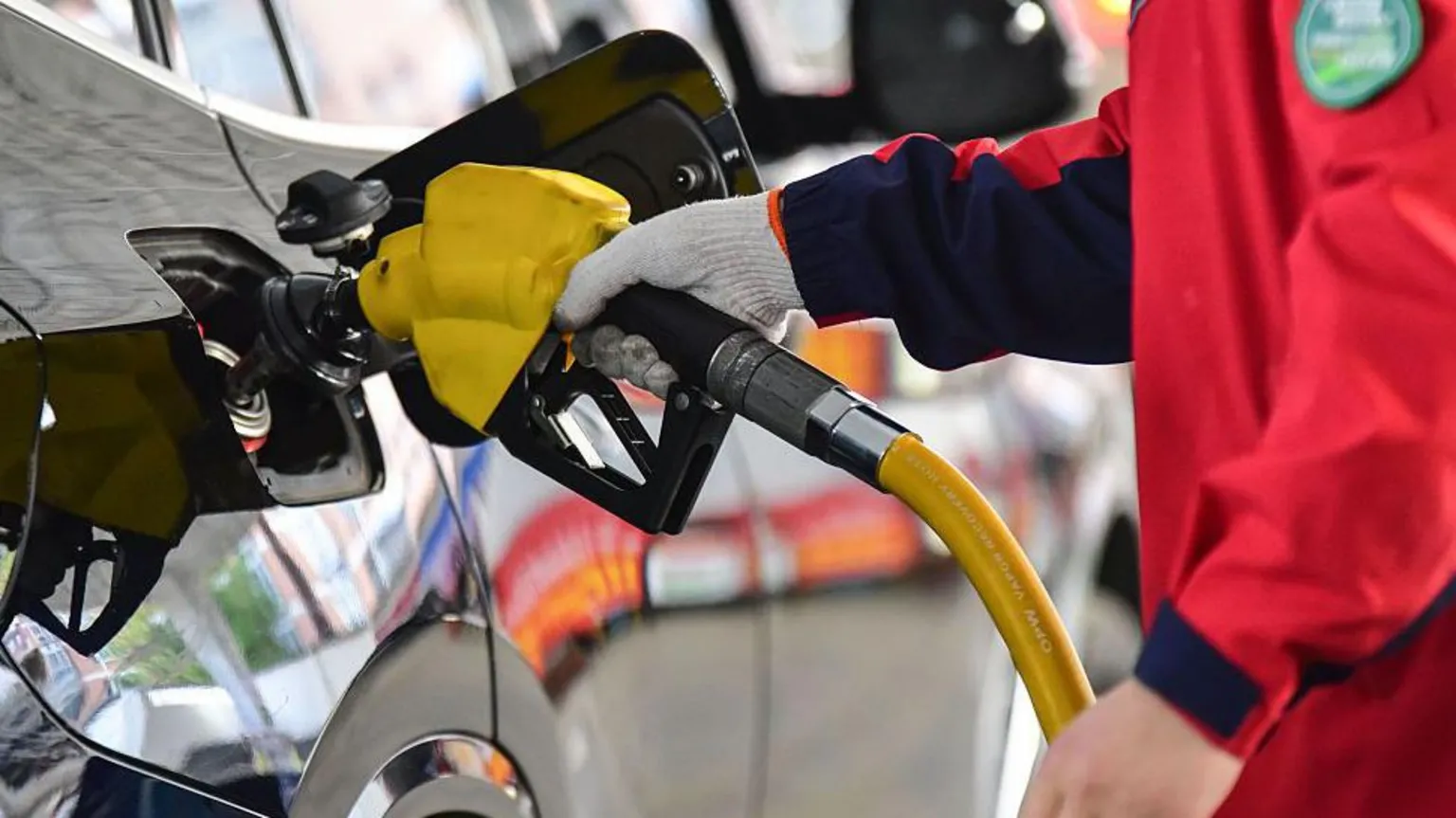
The peacemakers as well as the rest of the world are dealing with three mercurial leaders determining the direction of the war on Iran. What prospects of peace exist will be a function of the narcissism of Messrs Trump and Netanyahu, and the defiance and brinkmanship of Ayatollah Mojtaba as well as the principal and hawkish commanders of the Iranian Revolutionary Guard Corps (IRGC) standing in the gap for the severely injured ayatollah. The three leaders are warmongers whose hands are temporarily stayed or weakened for now because of the global economic consequences of the war. There are no guarantees they would forge a peace; but there are also no indications they have the stomach for another round of war whose far-reaching implications for regime stability in the three countries are difficult to gauge. While it is clear that the US is in a precarious economic state because of rising prices of fuel products globally, not to say the rising threat against petrodollar as the global reserve currency greatly valued by America to sustain and stabilise its financial system, Iran and the Gulf states are also perching delicately on the precipice as a result of the massive disruptions to either their leadership or their economies. Overall, the US has emerged from this round of war looking much worse than Iran, and with lesser appetite to rekindle the conflagration should negotiations fail to deliver enduring truce.
Importantly, too, there are lessons for Nigeria and other African countries. While Nigerian commentators have lauded the Gulf monarchies for turning their countries into tourism and business hubs, including air travels, and many Nigerians swoon over the dizzying transformation that has taken place in the UAE and Qatar, the war on Iran has shattered conceptions and jeopardised the fortunes and stability of those small monarchies, perhaps irreparably. Where no one thought a war was imminent, wars broke out on a scale that unexpectedly redrew and transmogrified their developmental paradigms. The consequences may not be immediate, but they will manifest, perhaps incrementally in the uncertain years ahead. It is a lesson for Nigerian leaders, politicians, and the electorate to appreciate the peace and stability they have enjoyed for the past few decades. The Dubai and Abu Dhabi they junket to had suddenly become inaccessible. On the contrary, the hard economic measures and reforms Nigeria undertook in the past two years and more have shielded the country from the global shocks and disruptions, or at least considerably lessened them. Yet, some political leaders and commentators had, before the war on Iran, attempted to derail or even abort the Nigerian reforms, and campaigned for either military takeover or revolution. The consequences of aborting those reforms would have been destabilising and devastating during the Gulf war. Nigeria is in fact in a far better shape and position than previously imagined. But it is unclear, given the untempered political rhetoric of the past few weeks, whether anyone in Nigeria is listening to counsels or appreciating just how close the country came to catastrophe.