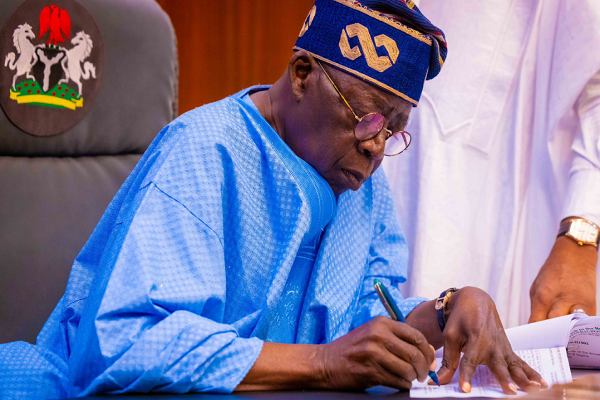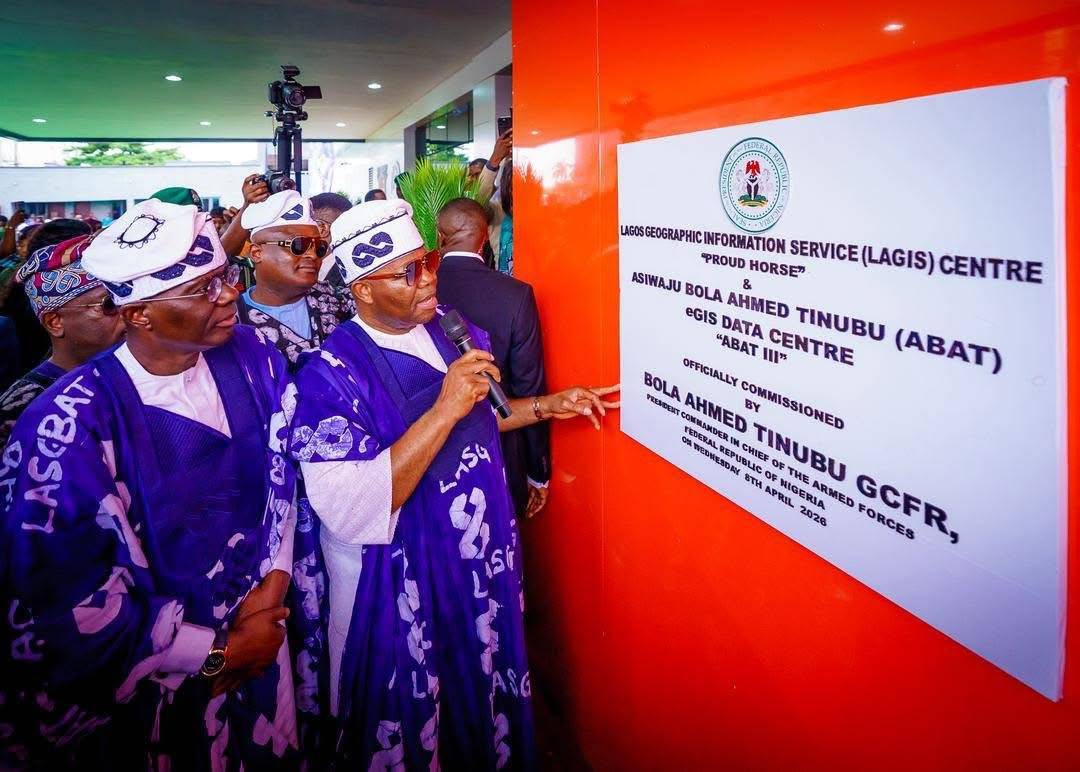

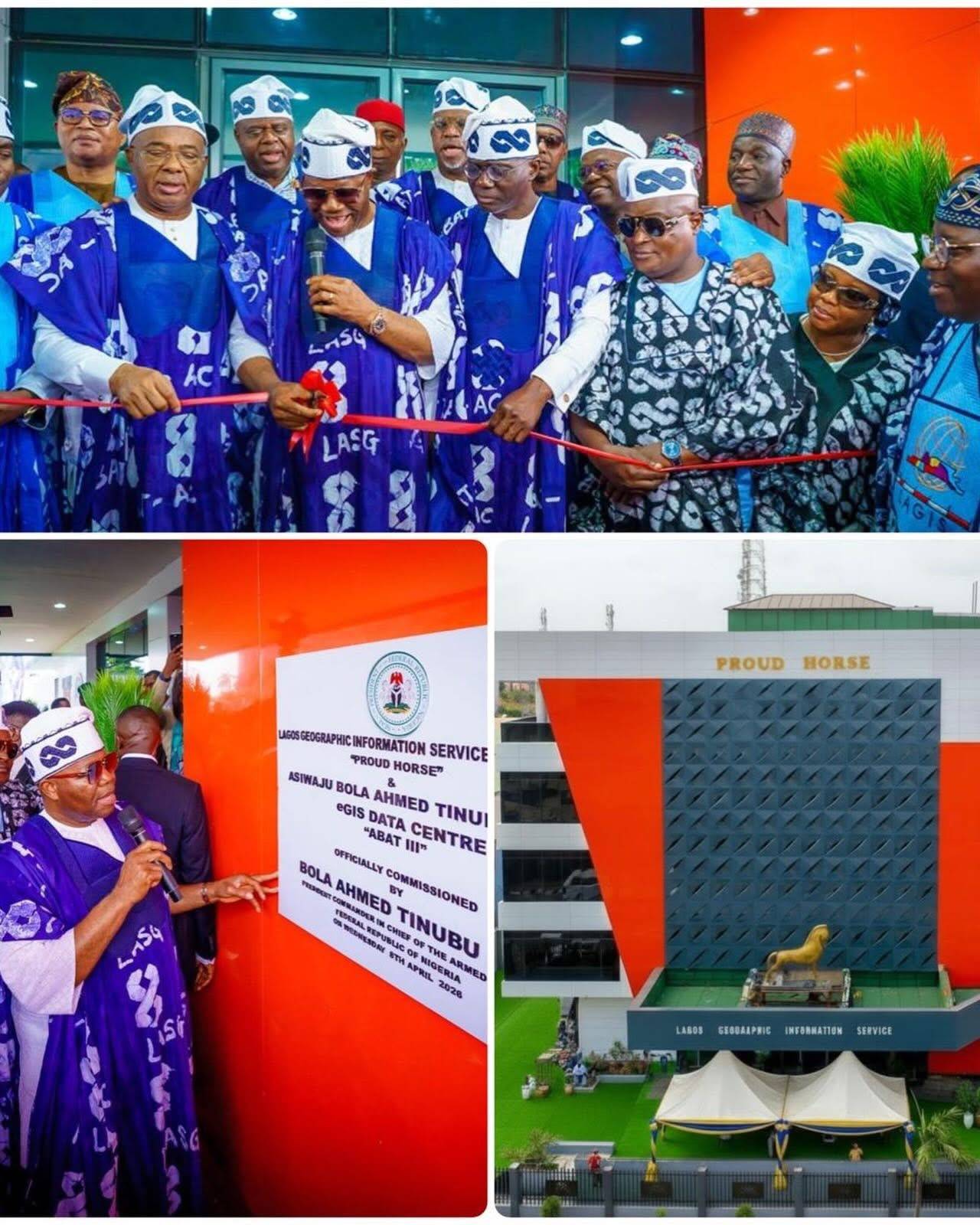

President Bola Ahmed Tinubu on Wednesday commissioned some landmark projects delivered by the administration of Governor Babajide Sanwo-Olu.
President Tinubu, represented by the President of the Senate, Godswill Akpabio, described Lagos State as a shining example of purposeful governance and sustainable development, declaring that the state continues to set the pace for national progress.
He said Lagos has distinguished itself through consistent investments in infrastructure, innovation, and institutional growth.
“Lagos is working, Lagos is moving forward, Lagos is setting examples, and Nigeria needs to emulate Lagos,” he said.
Akpabio explained that he attended the event at the President’s directive, despite a prior international engagement, noting that Tinubu’s absence did not diminish his commitment to the state and the nation.
He described the President as a visionary leader whose tenure as Lagos governor laid the foundation for the state’s transformation into one of Africa’s foremost economic hubs, adding that successive administrations have sustained and expanded that vision.
Delivering the President’s message, Akpabio said the newly commissioned projects, including the Ojota–Opebi Link Bridge and the Bola Ahmed Tinubu Administrative Complex, represent more than physical infrastructure.
“They are symbols of purposeful governance. They reflect a government that understands that development must be seen, felt, and experienced by the people,” he stated.
He emphasised that in a megacity like Lagos, strategic infrastructure investments are critical to reducing travel time, improving productivity, and stimulating economic growth, while aligning with the Federal Government’s broader vision of a modern, digitally driven economy.
The Senate President also commended the Lagos State Government for fiscal discipline and efficient service delivery, while acknowledging the contributions of engineers and contractors behind the projects.
He urged residents to safeguard the infrastructure, describing them as long-term investments in the state’s future.
Also in his address, Governor Sanwo-Olu reaffirmed his administration’s commitment to sustainable development, institutional reform, and improved quality of life for residents.
He described the projects as strategic interventions across transportation, urban planning, and public service delivery, designed to position Lagos as a globally competitive megacity.
According to the governor, the presence and influence of President Tinubu remain central to Lagos’ development trajectory.
“At its most effective, governance is about building institutions, systems, and opportunities for people to thrive,” Sanwo-Olu said, crediting Tinubu’s administration for laying the structural foundation for the state’s continued growth.
Sanwo-Olu identified three key projects as pillars of the administration’s development agenda:
Ojota–Opebi Link Bridge: A 5.04-kilometre corridor designed to ease congestion along the Ikeja–Maryland–Ojota axis by creating an alternative route linking Opebi/Allen to Ikorodu Road. The project features modern engineering solutions tailored to Lagos’ terrain, including pedestrian walkways, bicycle lanes, solar-powered lighting, and advanced drainage systems.
Lagos State Geographical Information System (LAGIS) Building: A major step toward digitised land administration, aimed at eliminating manual processes, strengthening property rights, and enhancing the ease of doing business by unlocking land-based economic value.
Bola Ahmed Tinubu Administrative Complex: A multi-agency facility within the Alausa Secretariat designed to improve inter-agency coordination and service efficiency through modern infrastructure and integrated systems.
The governor noted that the naming of the complex after the President reflects recognition of his enduring contributions to Lagos’ institutional development.
With just over a year left in his tenure, Sanwo-Olu said his administration remains focused on delivering tangible outcomes under its THEMES+ agenda.
“The true measure of governance is not in plans but in results,” he said, pledging to sustain development momentum until the end of his administration.
He also highlighted improved federal-state collaboration under Tinubu’s leadership, citing ongoing national infrastructure projects such as the coastal highway and upgrades to key transport and port facilities.
The event underscored Lagos’ role as a testing ground for governance innovations and large-scale infrastructure delivery in Nigeria.
Formally commissioning the projects on behalf of the President, Akpabio described the occasion as a testament to effective leadership and collaborative development.
As Lagos continues to expand its infrastructure base and institutional capacity, both federal and state leaders expressed optimism that the state’s model could serve as a blueprint for broader national transformation.