

In spite of a public profile which cast him as some sort of superhuman, President Olusegun Obasanjo availed himself of help from his aides at various levels whenever the need arose.
His capacity for work, mental and physical, remains legendary. He pores through documents with the thoroughness of an examiner, often inputting comments and markings in green ink.
He continues to play his favourite sport of squash at almost 90. But he also listened to those engaged to support him, despite the facade of all-knowingness.
They were not mere ornamental figures. They were a part of his holistic official and operational machinery. Manning a schedule which placed me at close proximity to the President, an amalgam of special duties and media management, I observed for instance that there were times I had to slip notes to the President during his official engagements, to guide his thoughts and pronouncements.
It required utmost attentiveness, creativity and proactiveness from me, to keep pace with every strand and segment of the President’s functions. I did brisk bullet points of what he needed to speak to and what to skip, which added pointedness, quality and better public appreciation of his pronouncements. Obasanjo was indeed compelled to adapt to my occasionally scrawny handwriting which would wave and wind as I tried to capture as much information as possible in my notepad and scribble same at jet-speed. Indeed, as Obasanjo wielded his scalpel on the eve of his inauguration for a second term in May 2003, on the list of his aides who would continue with him, my name survived. A government official who was privy to the development before it was made public congratulated me privately and said Obasanjo found me indispensable. He said in Yoruba: *Ti a ba bi eni, ka tun ara eni bi.*
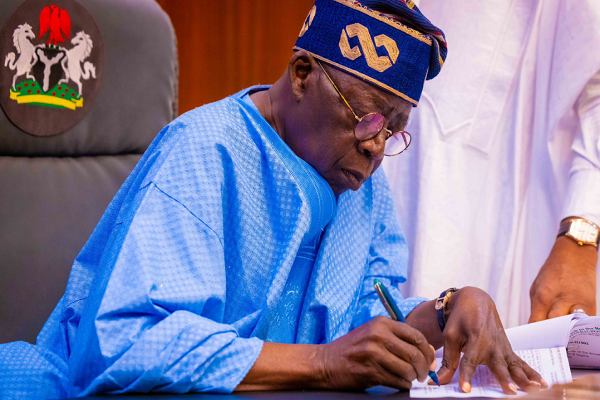
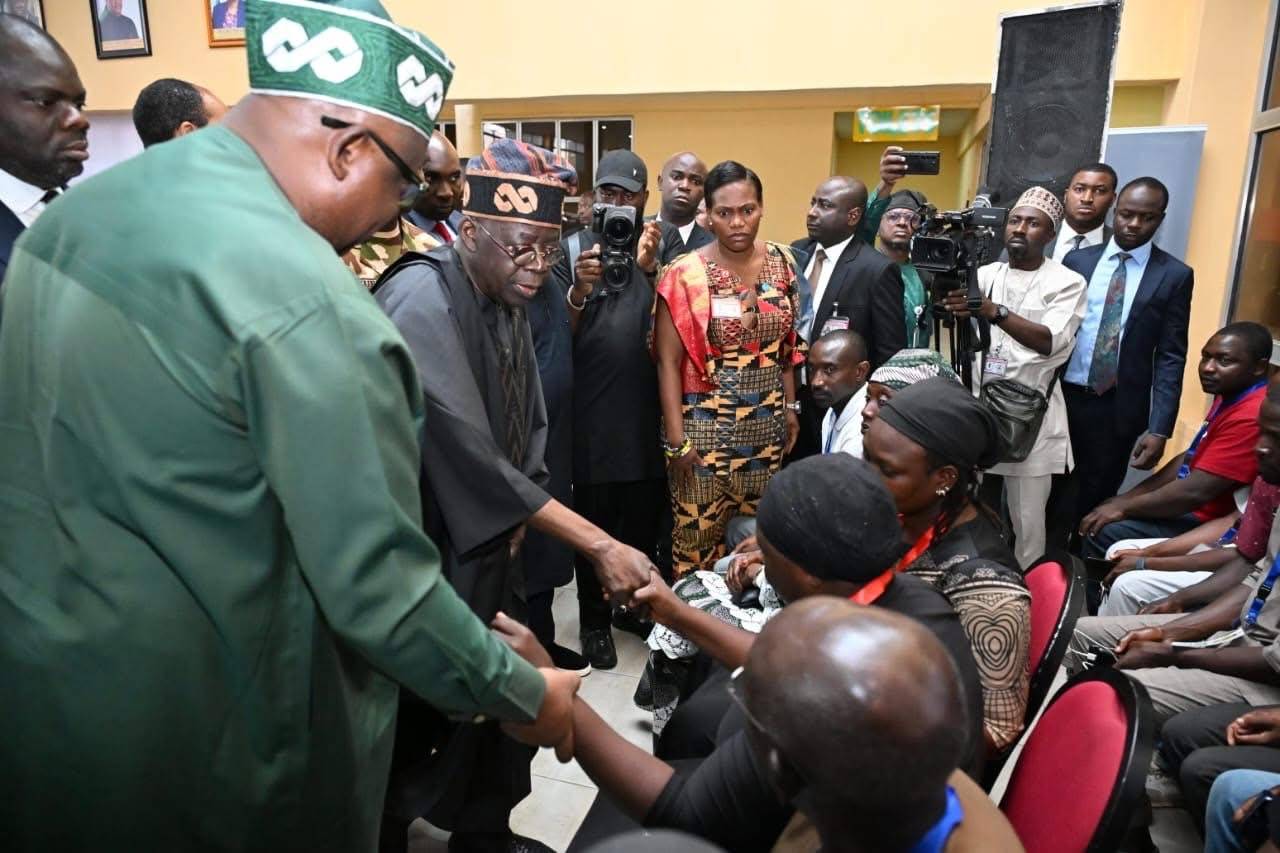
President Bola Tinubu has drawn tremendous flak for the manner of the handling of his visit to the troubled capital of Plateau State, Jos, Thursday April 2, 2026. The “Palm Sunday” bloodbath of March 29, 2026, which claimed about 40 lives and accentuated insecurity in the state, necessitated Tinubu’s visit. For many observers, it was bad enough that it took a whooping 84 hours for the President to visit a state which is less than a three-hour (now about four hours because of the deplorable road) drive from his office in Abuja, after such a tragedy. Eventually, what was supposed to be a sombre condolence, however, turned hugely controversially cacophonous. This was due largely to utterances by the President which could have been better presented. It heightened public discourse about official insensitivity, and the question of disproportionate prioritisation of presidential programmes.
This is not intended to be a rehash of those avoidable gaffes so as not to stoke public angst afresh. My reading of the incident is that the security and protocol departments who were part of the planning of the visit, were substantially culpable in the Jos fiasco. True, the President had to receive his Chadian colleague, Mahamat Idris Deby Itno, who was on an unscheduled visit to Nigeria. It was for the security and protocol departments to have quickly met and decided if the visit to Jos had to proceed thereafter or not, for it to make any meaning to the bereaved people of Plateau State, and to watching Nigerians. In the circumstances of scheduled project commissioning visits to Ogun, Lagos and Bayelsa states for the President within the next few days, Plateau State had to be prioritised given the grievousness of the killings.
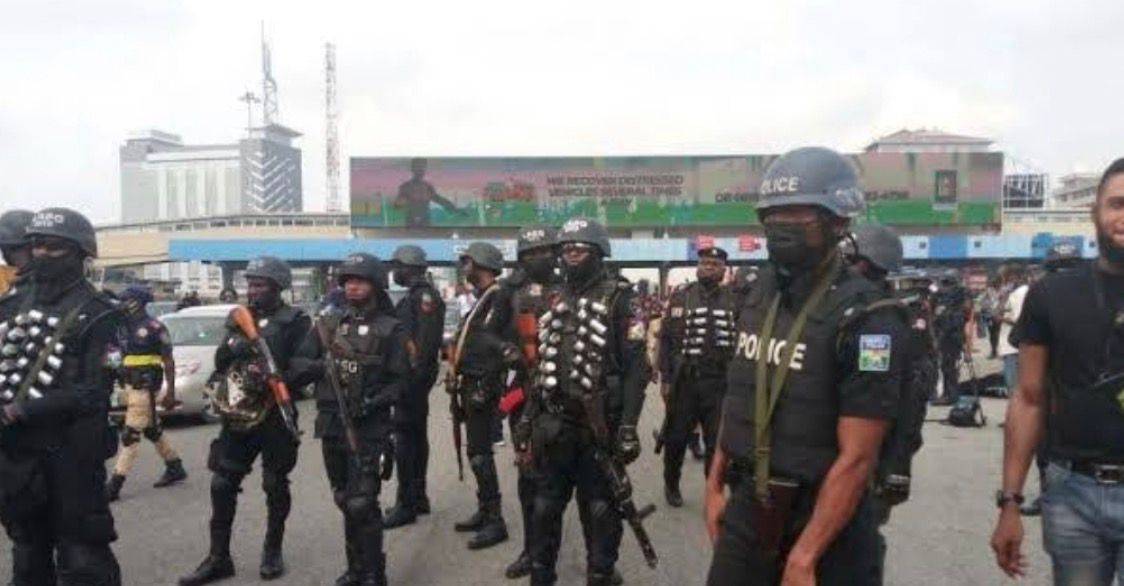
Why wouldn’t the President therefore, have been advised to begin his Friday April 3, 2026, in Jos? That would have allowed for the deployment of security assets to the various locations he intended to visit within Jos city, especially Rukuba, the epicentre of the murderous madness. Roads are typically closed for presidential visits so the question of traffic gridlock would have been a non-issue. What is the job of the Minister for Defence; the Chief of Army Staff, (COAS); the Inspector-General of Police, (IGP) and the Director-General of the Department of State Services, (DG-DSS), if they cannot secure just one state for the duration of a presidential visit? Have our military and security services become so timid and dysfunctional? The President could also have chosen to meet the people at the headquarters of the Third Armoured Division of the Nigerian Army in Jos, where, as Commander-in-Chief of the Armed Forces, he would also have been able to address his troops.
The President could have finished all of these in three well-managed hours in Plateau State and flown to Ijebu-Ode, Ogun State for the commissioning of the new cargo airport, same Friday. The latter is a more high octane event. His hosts will demonstrate understanding and empathy that the President’s schedule had to be tweaked for a very compelling reason. We all are members of the larger Nigerian family and we shouldn’t all lose our humanity in the same fare. This way, he would have covered two critical programmes on his itinerary within the same day, with still plenty of time to retire to Lagos to take other events as prearranged.
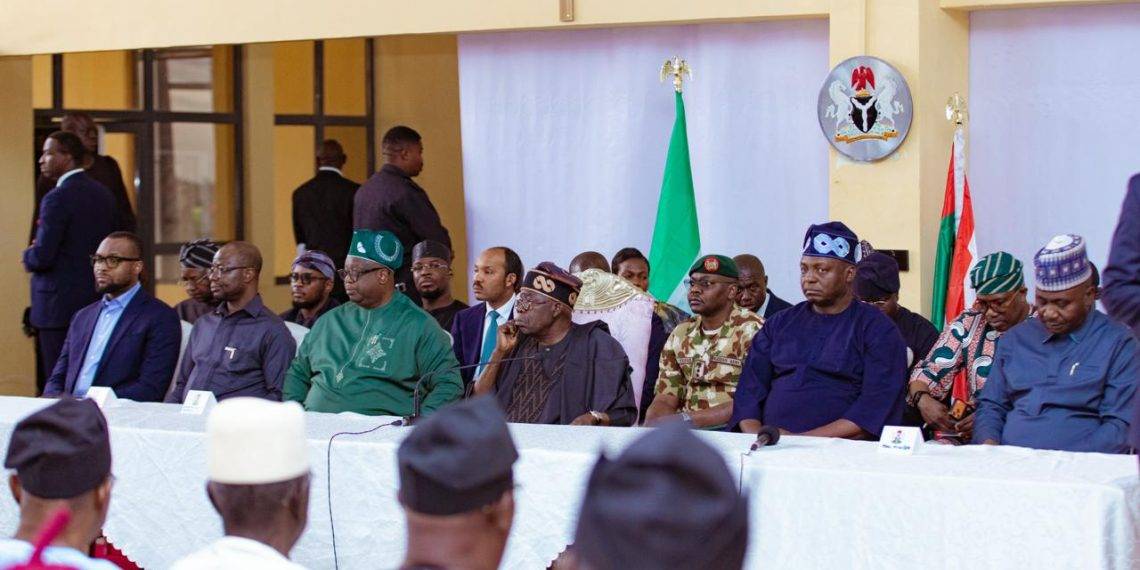
If the President had to have his meeting at the Yakubu Gowon Airport, Heipang, Jos, after seeing off President Deby Itno, that Thursday April 1, the protocol unit should have taken full charge from the very beginning of the meeting. The State Chief of Protocol, (SCOP), with the President’s permission, should have made an announcement at the very beginning of the meeting. He should be a very senior and experienced diplomat at the rank of substantive Ambassador, so he’s high up in the governance scheme. Now I’m nostalgic about Ambassadors Oluwole Coker, OON, and the late Wisdom Baiye, SCOP and Deputy SCOP to Obasanjo in our time. He sets the tone for the solemnity of the visit and moderates proceedings himself. He would have previously, privately enjoined Governor Caleb Muftwang who had already briefed the President in Abuja to help ensure brevity, beginning with cutting off needless elaborate salutations and recognitions which has become the bane of government events.
Thereafter, the SCOP should have manned the microphone himself and mastered the programme. Fully conscious of the shortness of time, he would have guided the microphone round select representatives of the audience who the President needed to hear. The President was in Jos primarily to see the ordinary folks who lost loved ones. His entourage, despite the brevity of the visit, should have had a few women government officials who themselves are mothers, talking of female Ministers, Senators and Heads of Agencies. By so doing, the SCOP would have prioritised speaking opportunities for a few of the bereaved. The women officials would have mingled with their fellow women on behalf of the President, to give them succour. Political bigwigs and traditional rulers would always have opportunities to meet with the President in Abuja. That condolence visit is not their show. All of these could have been effectively compressed into two productive hours.Politics
If the President had to make comments after the purgation of catharsis on that visit, after the release of deep-seated emotions, bullet points should have been drawn up to guide him. The President, by the way, has a tendency to stray off the subject matter when he speaks extempore. That has to be managed. He’s not an encyclopedia.
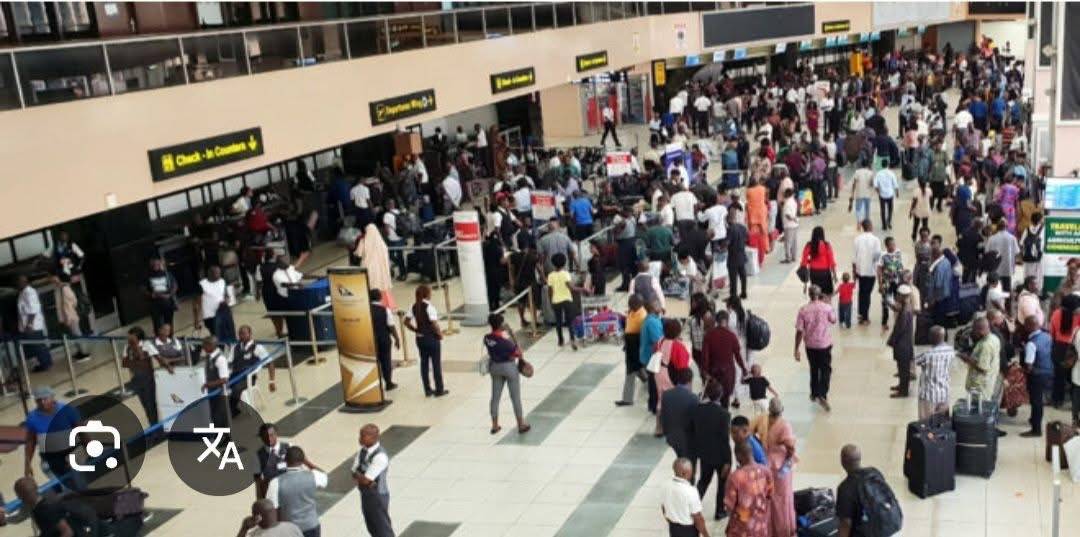
He has to be guided. If that had been done in Jos, he would not have had to indict himself for not living up to his own promise back in 2022, to provide Nigerians electricity, “whichever way.” The responsibility for illuminating our airports remains that of the Federal Airports Authority of Nigeria, (FAAN), whose supervising minister is an appointee of the President, which explains why that verbal slip, boomeranged. Tinubu indeed staked his eligibility for reelection on the fulfilment of his promise to electrify Nigeria. He would have avoided telling a downcast, dejected, despairing people, that he had just “10 minutes” to leave them, as though his visit was perfunctory, not altruistic. That impugned the genuineness of his intentions.
Indeed, if the President’s human resource accompaniment on that trip was a bit more diversified, he would have been quickly reminded that Plateau is not the only state which needs “AI-powered security surveillance gadgets,” among other essentials. On the strength of the reality of Nigeria’s current security situation, the country in its entirety requires nationwide security camera coverage and more. To be sure, the North Central zone where Plateau State is located is almost totally beleaguered through Benue, Nasarawa, Kwara, Kogi and Niger states.
The North West, North East, South West, South South and South East of the country are equally afflicted in peculiar ways. To this extent, we should be talking about global policies, not impulsive and selective panaceas.
President Tinubu will have to surgically rationalise the orchestra of aides across departments floating and following him around, just for self-serving purposes and photo-opportunities. When, for instance, did the position of “Chief of Personal Security,” (COPS), become institutionalised in the State House security organogram? There used to be an unobtrusive “police aide-de-camp,” (ADC), to the President, who was in the background, executing specific briefs. Is the COPS a duplicate of the statutory Chief Security Officer, (CSO) to the President, who has an established chain of colleagues and subordinates guarding the President? There should be “thinking heads,” not flotsam and jetsam around the President. A leader is as good as the quality of those who surround him.
*Tunde Olusunle, PhD, Fellow of the Association of Nigerian Authors, (FANA), teaches Creative Writing at the University of Abuja.