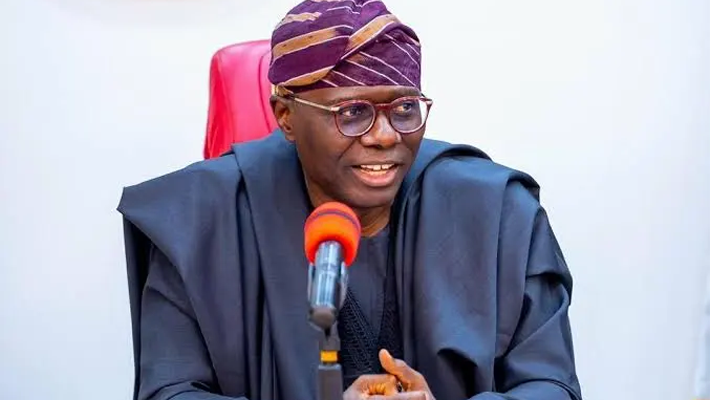

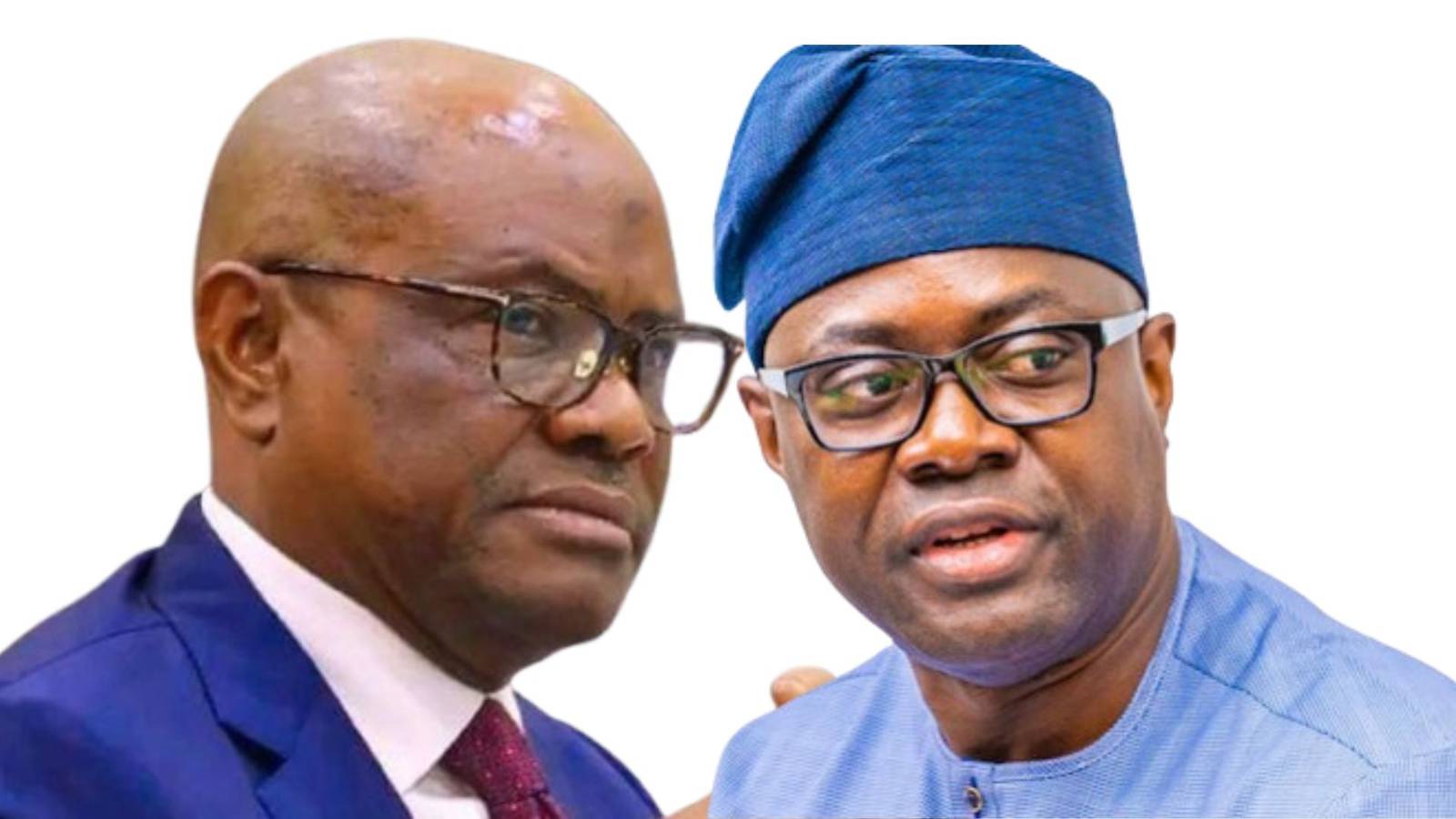

Just when it seemed the multidimensional crises in the opposition Peoples Democratic Party (PDP) were nearing a resolution, and the Donald Trump-loving factional chairman of the party, Tanimu Turaki, had in spite of himself pulled a rabbit from a hat when he suggested that he might reconcile with all warring groups in the party, the combative Governor Seyi Makinde of Oyo State threw a spanner in the works. Anyone who associated with the other factional leader of the party, Federal Capital Territory (FCT) minister Nyesom Wike, was an enemy of democracy, he bellowed. As it turned out, moments before the reconciliation began, Mr Turaki developed cold feet. His faction, which is also the Makinde faction, would appeal the Court of Appeal judgement that invalidated their factions’ November 2025 Ibadan convention.
Last Sunday, the Wike-backed faction successfully conducted the PDP convention. Mr Turaki and some members of his camp eventually declined to participate. This boycott effectively sealed the PDP’s destiny. In 2019, after former vice president Atiku Abubakar lost the presidential election to the All Progressives Congress (APC) and thereafter abandoned his party, Mr Wike succoured the party and gave it hope. Alhaji Atiku replicated the ignoble feat in 2023, beginning with party capture, electoral loss, party abandonment, and finally defection to the African Democratic Congress (ADC). After defecting six times over five electoral cycles, his inconstancy, which he inexplicably sees as strength, was finally proved beyond a shadow of doubt. So, after passing through many treacherous bends in the road, the PDP is again back in the hands of its chief succourer, Mr Wike. He never let go since 2015, not to the big guns like Alhaji Atiku, nor to the latter-day converts like Mr Makinde. In addition to sheltering the battered party, he has continued to suckle it and retain bragging rights to its life and existence.
Last week, the PDP came close to reaching a deal between its feuding factions. The Board of Trustees (BoT) of both factions finally gave the go-ahead for reconciliation, having counseled themselves about the tightness of the electoral schedule, and despite their private and personal misgivings, and notwithstanding the mortification they felt when they bowed to the cantankerous Mr Wike. Mr Turaki recognised when a war was lost, and he came on board the reconciliation train. Mr Wike himself was not averse to a deal if it could be hammered out. Both camps cooed in dulcet tones and readied themselves to pull back from the brink. Suddenly, Mr Makinde snapped his faction back from reality and launched them into the world of fantasy. Though an engineer, he pretended to know jurisprudence more than Mr Turaki, the faction’s chairman and a lawyer. Mr Makinde believed the Supreme Court would find the legal sleight of hand to endorse the Ibadan convention conducted in defiance of two court judgements. It is true that the Supreme Court talks about the sanctity of the internal processes of political parties; but not being a lawyer, and not besotted to great logic, he overlooked the fact that no court anywhere in the world, let alone in Nigeria, would endorse tyranny and the abridgement of members’ rights in a political party.
By ignoring the urgency of reconciliation and putting all his faction’s eggs in one Supreme Court judgement basket, Mr Makinde is indulging in brinkmanship. What if the apex court should rule his faction out of order? At that point, reconciliation would not only be too late, any aspirant in the faction would be hung out to dry, completely forfeiting the possibility of contesting the 2027 polls. This is not only brinkmanship at its worst, Mr Makinde is also clearly not a politician. The real politicians in the party knew when they were beaten, and had signaled that a temporary retreat would not amount to permanent surrender. Not Mr Makinde. While he is standing pat over his detestation of Mr Wike, he has nevertheless begun privately, without taking his faction into confidence, exploring ways of finding accommodation, alliances and shelter in other political parties or with other personalities, particularly Alhaji Atiku’s ADC, Peter Obi, and Rabiu Musa Kwankwaso. Increasingly he has become paranoid in his view of politics and political players, and more intense in his resentment of President Bola Tinubu whom he argued was, together with other state institutions, arrayed against him and his faction.
Hear him expectorate: “I came in the public domain to say that I was in a meeting with Wike and Mr. President, and he promised to hold PDP for Mr. President for the 2027 presidential election. So, anyone dealing with Wike and his group in any guise, what it means is he has also agreed to support President Tinubu for 2027…They have the government behind them. They have the judiciary behind them. They have INEC behind them, but we have the people behind us. We are not calling for any reconciliation with anyone regarding the PDP. We will survive the challenges and participate effectively in the 2027 general election.” These are incendiary statements that appear to completely foreclose any kind of reconciliation. For Mr Makinde, even the very idea and logic of stooping to conquer seems repugnant.
The Oyo governor made those fiery denunciations two Sundays ago when he visited Bauchi State governor Bala Mohammed, the only man and governor with whom he is informally contesting the position of the last man standing. But Mr Mohammed is a political realist. His gentle remonstrations with Mr Makinde over the importance and urgency of reaching some accommodation with the Wike faction so as not to leave many PDP aspirants in the cold, however, fell on deaf ears. Mr Mohammed had countered his visitor: “This issue of reconciliation is not something that we have called for; it is something that is being midwifed as a solution by a competent court of jurisdiction, that’s the Court of Appeal. We are law-abiding, and we believe in the rule of law. So, that opinion by my brother (Seyi Makinde) is his personal opinion, but certainly we believe that there are no irreconcilable issues in Nigeria, especially in the political or national space.” Clearly, Mr Mohammed couldn’t appreciate Mr Makinde personalising his grouse with Mr Wike, to the extent of declaring apocalyptically like President Trump that anyone associated with the Rivers ex-governor had become an enemy of democracy.
Unknown to Mr Makinde, his friends and fellow factional leaders in the PDP had begun to notice some disturbing streaks in him, behaviours eerily similar to those of Mr Wike with whom he is at daggers drawn. They see his inflexibility in hideous colours, his boyish perception of political morality, his inability to take the long-term view of issues, and his domineering politics. They see him characterising politics, like Mr Trump, as one in which a politician is either for him or against him. But who is he? He is but a governor, a self-appointed party leaders and financier like Mr Wike. Nothing more. His brusque disregard for forging peace with dissenting party leaders gives his factional colleagues the jitters. They may find Mr Wike objectionable, but they still see the former Rivers governor as jovial, approachable, happy-go-lucky, if a little flippant. But the less charismatic Mr Makinde, they fear, approaches politics with the puritanical zeal of a cleric forever moaning about hell and damnation, about me versus them, about my way or the highway. No politician or even party likes to be assailed by such gloomy and dualistic worldview.
From all indications, everyone else in the Makinde faction was ready last week to reach a deal with the Wike faction so as not to leave any legislative or executive aspirant for office stranded. They recognised that Mr Wike had run rings round them, and regardless of their distaste for the politics of the other camp, they were unprepared to sacrifice the ambition of their followers, many of whom were just starting out in politics. They appreciated the fact that much sturdier politicians like governors and national lawmakers had had to defect in order to secure a platform to contest the coming polls. And they were alarmed by how occluded Mr Makinde’s reasoning had become, impervious to the fact that after the Court of Appeal annulled the Ibadan convention he had no aces left except mouthing his sophomoric moralisations. They may continue to accuse President Tinubu and the APC of orchestrating trouble in opposition parties and instigating the scores of defections that have taken place, but they privately acknowledge that Mr Makinde not only played the Ibadan convention politics foolishly and amateurishly in defiance of the law and the courts, they also feel uncomfortable with conferring superhuman ability on the president that enables him to dismember the opposition at will.
Now, by failing to stand up to Mr Makinde when they should, and by allowing themselves to be beguiled into expecting favourable judgement at the Supreme Court, a chimera if there was one, they appear prepared to repose faith in one casual and reckless throw of the dice. Last week may have been the last chance of the fearful and discomfited party leaders to pull the PDP’s chestnuts out of the fire. They shirked that fight, and seemed fatalistically eager to perish in what seems like a Homeric but clearly judicial stew pan. They will not get another chance. And if the ADC underperforms in the next polls, a party to which many disgruntled politicians are migrating, the stranded Makinde men will either eat crow and pour libation at Mr Wike’s shrine, or abandon politics altogether, or fragment into other smaller parties. These are indeed galling prospects. Some two weeks ago, every decision by PDP leaders hung on the Court of Appeal judgement. Now, they have unreasonably deferred that tentativeness to the Supreme Court without any indication that the judgement would go their way.
As abrasive and obtrusive as he is, Mr Wike is a natural leader of men. Alas, Mr Makinde is not; yet he seeks to enthrone a successor despite denouncing the tyranny of other political players foisting successors on the people. There are no indications he will succeed in foisting anything on anybody. Should he fail, though he fights valiantly and heroically, he should take solace in securing a place in Valhalla, where many ‘brave’ former governors now lie in anonymous repose. For the straddling Mr Wike, perhaps the only living politician of the Fourth Republic cannily able to run with the hare and hunt with the hounds, he may take delight in vanquishing one more set of enemies. But as long as he proves incapable of refining his politics, not to say his mannerisms, and as long as he continues to play all his aces so defiantly and daringly, it is a question of time before he runs out of luck and elbow room. He cannot be accused of killing or burying the PDP, a reputation reserved for the luckless Mr Makinde. And though he appears indeed to be the party’s saviour every time pillagers savaged it, it is certain that his brand of politics, now barely tolerated by his teeming supporters, can neither sustain the party for much longer nor nurture it into the future.