
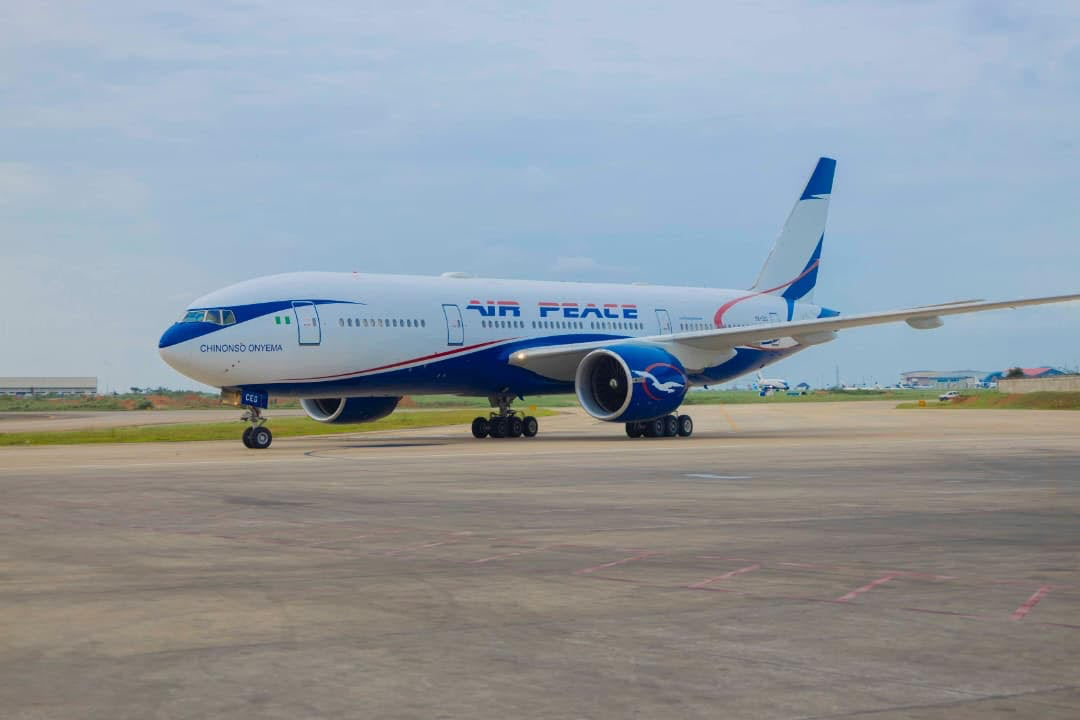

A Lagos-based lawyer, Dr Sheriff Abiodun Adesanya, has initiated a suit against Air Peace Limited before the Federal High Court in Lagos, challenging what he describes as an unlawful “seat-only” business-class upgrade policy allegedly operated by the airline.
The suit, marked FHC/L/CS/364/2026 and pending before Justice Aneke, raises critical questions about airline transparency, passenger rights, and consumer protection within Nigeria’s aviation sector.
At the centre of the case is whether an airline can lawfully sell a business-class upgrade to a passenger, seat the passenger in the premium cabin, yet deny the accompanying services typically associated with that class—without prior disclosure.
Adesanya, who is representing himself in the suit, told the court that he paid for a business-class upgrade during a London–Lagos–London trip but was allegedly served economy-class meals and received what he described as “economy-level service,” despite being seated in the business-class cabin.
According to court filings, the incident first occurred on a London Gatwick to Lagos flight and was allegedly repeated on the return leg, even after the lawyer had issued a pre-action notice to the airline.
The applicant contends that the airline operates a policy under which upgraded passengers are entitled only to premium seating, not the full range of business-class services. He argued that this limitation was neither disclosed before payment nor reflected in any published terms and conditions available to passengers.
In the originating summons, Adesanya is seeking several declaratory reliefs, including a pronouncement that the practice amounts to misrepresentation, unfair treatment, and a breach of statutory consumer protection obligations.
The suit invokes provisions of the Civil Aviation Act 2022, the Nigerian Civil Aviation Regulations 2023, and the Montreal Convention 1999, all of which govern airline obligations and passenger rights.
He is also seeking refunds and damages for the alleged failure of the airline to provide services commensurate with the upgraded class.
In a twist, the applicant relied on what he described as a written admission by Air Peace confirming the existence of the “seat-only upgrade” policy.
The document, tendered as an exhibit before the court, reportedly states that passengers who pay for upgrades retain economy-class entitlements, including meals, while benefiting only from enhanced seating comfort.
The airline, however, maintains that passengers are informed of these limitations prior to payment and that business-class catering is typically pre-ordered.
In response to the suit, Air Peace, through its counsel, Chief Oluwole Afolabi, filed a preliminary objection seeking to strike out the case.
The airline argued that the matter is fact-intensive and involves substantial disputes—particularly regarding what was communicated to the passenger and the nature of the services provided—making it unsuitable for determination by originating summons.
It urged the court to hold that such disputes require oral evidence and cross-examination.
Adesanya, however, has opposed the objection, describing it as misconceived and a deliberate attempt to delay proceedings.
In a counter-affidavit deposed to by a litigation clerk in his law firm, the applicant argued that there are no substantial disputes of fact requiring oral evidence and maintained that the airline had not filed any counter-affidavit to challenge the facts already presented before the court.
Relying on legal authorities, including Inakoju v. Adeleke and Ajomale v. Yaduat, the applicant contended that unchallenged affidavit evidence should be deemed admitted.
He further argued that the central issue before the court is purely a question of law—whether it is lawful for an airline to sell a restricted business-class upgrade without disclosing service limitations beforehand.
The applicant also raised a procedural objection, asserting that the airline’s preliminary objection was filed outside the 31-day period prescribed by the Federal High Court Rules, rendering it incompetent.
The court is expected to first determine the preliminary objection before proceeding to the substantive issues in the suit.
As of the time of filing this report, the matter remains pending before the Federal High Court in Lagos.