

The White House is seeking $200bn (£150bn) more for the war in Iran, with President Donald Trump saying it is needed to replenish ammunition and other supplies depleted by the conflict and previous aid to other countries.
“This is a very volatile world,” Trump said on Thursday. “We want to have vast amounts of ammunition, which we have right now – we have a lot of ammunition, but it was taken down by giving so much to Ukraine.”
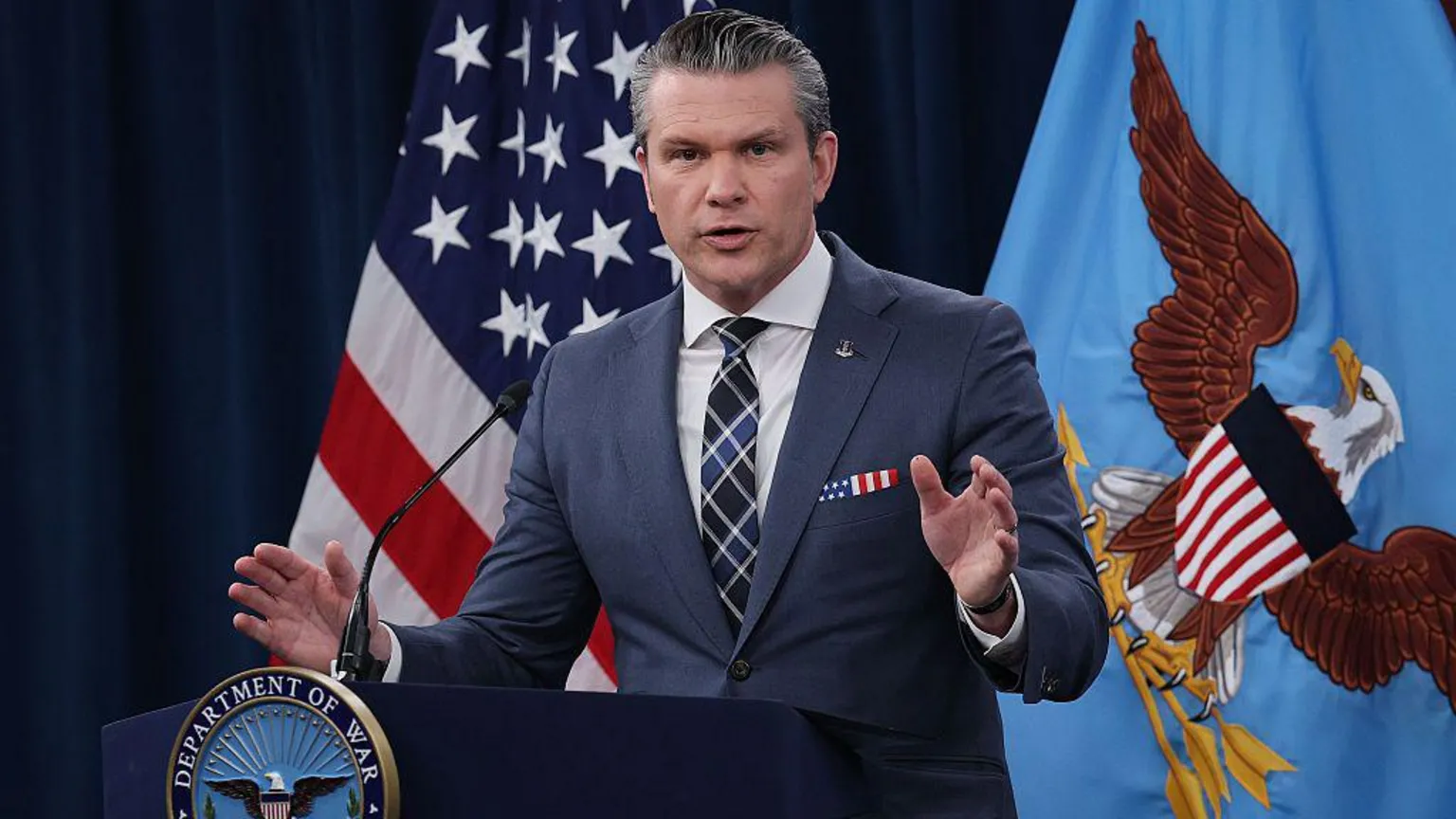
Asked about the extra billions needed for the war, US Defence Secretary Pete Hegseth told reporters: “It takes money to kill bad guys.”
The Pentagon has told lawmakers the war cost the US $11.3bn in the first week alone. The conflict will enter its fourth week on Saturday.
The funding request came as a US F-35 fighter jet had to make an emergency landing at a US air base on Thursday “after flying a combat mission over Iran”, a spokesperson for the US Central Command said.
The jet landed safely and the pilot is in stable condition, the spokesperson said. The F-35 was struck by suspected Iranian fire, US media reported, citing unnamed sources.
The Pentagon estimates each such jet costs up to $77m.
“This incident is under investigation,” the Central Command spokesperson said.
At a news conference on Thursday, Hegseth said the defence department needs more money for “what we may have to do in the future”.
The $200bn request is in addition to the department’s annual budget of $838.7bn, which was approved by Congress in January.
Congress has separately approved $188bn in funding for aid to Ukraine since the Russian invasion in February 2022. About $110bn had been spent as of last December, according to the special inspector general tracking the funding.
Republican House Speaker Mike Johnson said on Thursday that he was sure the $200bn request for the Iran war was “not a random number”.
“Obviously it’s a dangerous time in the world, and we have to adequately fund defence, and we have a commitment to do that,” he said.
The US-Israel war with Iran has had other economic impacts in the US. The associated spike in oil prices has raised economic uncertainty and threatened to drive up inflation.
The US central bank, though, voted this week to hold interest rates steady. Raising them could have been an indication that bankers are worried about inflation and wanted to increase borrowing costs to stem spending and hence slow down price rises.
The administration’s war-funding request will set up a bruising legislative fight with Congress – which must approve funding – less than eight months from November’s midterm congressional elections.
While military funding tends to garner bipartisan support, polls suggest a majority of the US public does not approve of the war in Iran – and politicians will be pressed to justify the massive spending increase being requested.
Some lawmakers suggested that Trump’s decision to begin strikes without consulting Congress may make it difficult to win support to fund the attack now.
Democratic congressman Jim Himes said Hegseth should “remember that old saying”.
“If you want me there for the landing, make sure I’m there at the takeoff.”
Democrats have criticised the size of the military spending request.
They pointed out a one-year extension of health insurance subsidies that they unsuccessfully fought for last year would have cost about $35bn.
The total savings from the Trump administration’s Department of Government Efficiency, or Doge, cuts – which included massive reductions in US foreign aid – totalled $175bn.
Last year, the US government spent $100bn on food aid for lower-income families.
In the end, Republicans in Congress should have the votes to approve the extra funding, but it could come at a steep political price if the war, and the economic disruption that has come with it, drags on.
Pentagon officials have said US action in Iran could last anywhere from four to six weeks. That leaves another one to three weeks to go.
Trump’s administration has been weighing whether to deploy thousands of US troops to the Middle East for the next steps in the conflict, Reuters reported, citing unnamed officials.
In a statement to the BBC, the White House said there had been no decision to send ground troops “at this time”.
“[B]ut President Trump wisely keeps all options at his disposal,” a spokesperson said.
“The President is focused on achieving all of the defined objectives of Operation Epic Fury: destroy Iran’s ballistic missile capacity, annihilate their navy, ensure their terrorist proxies cannot destabilize the region, and guarantee that Iran can never possess a nuclear weapon.”
Bbcv