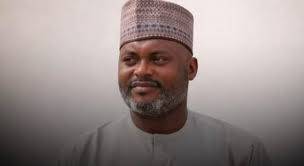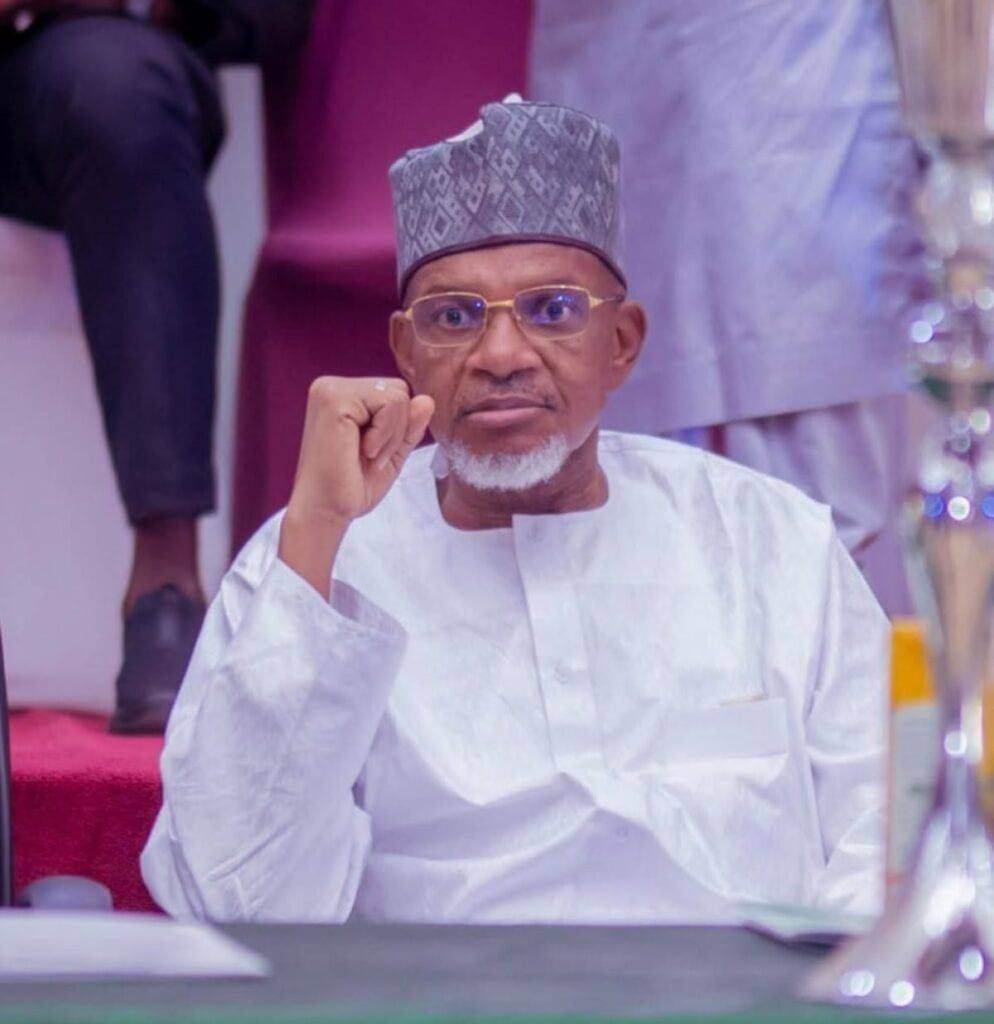

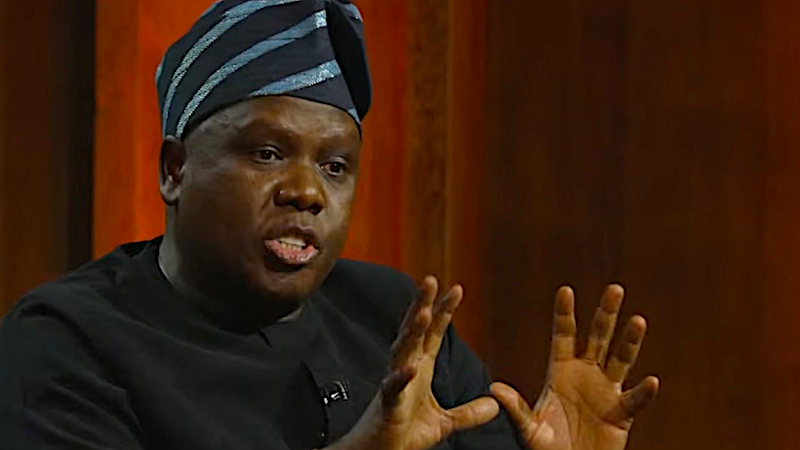

“Nowhere in our almost six months of communication did they mention that they were going to challenge my past. If that had been their plan, ethically and professionally, they were supposed to inform me so I could prepare my response.” — Daniel Bwala
My first encounter with Daniel Bwala was in 2018 at the campaign office of Adams Oshiomhole, then national chairman of the All Progressives Congress (APC).
I had travelled from Lagos to Abuja to interview Oshiomhole about his plans for the party. My publisher linked me with a party chieftain, Ayiri Emami. We first went to Oshiomhole’s residence where we met him having breakfast — my first meeting with his wife, Iara Oshiomhole.
I thought the interview would be conducted there, but Oshiomhole said it would take place at his campaign office. When we arrived, the reception was already crowded with people waiting to see the former Edo governor.
While I waited, Bwala was ushered in and sat beside me. He introduced himself as a lawyer and we struck up a conversation about the state of the nation. I was impressed by his depth of knowledge, particularly on APC affairs, and I requested his phone number so we could schedule an interview later.
After about an hour of waiting, Bwala stepped out briefly, saying he would return shortly. Minutes later, Oshiomhole concluded a tensed meeting with Chris Ngige, then minister of labour, and came out asking repeatedly: “Where is the lawyer? Where is the lawyer?”
His aides looked puzzled. “Which lawyer?” they asked.
“The lawyer,” Oshiomhole insisted. “I was told he is waiting for me. He has a copy of the speech I will read tomorrow.”
That was when I remembered Bwala mentioning he was a lawyer. I told Oshiomhole that he had stepped out. Since Bwala could not be found, I asked if I could conduct my interview instead. Oshiomhole declined, saying he had too much on his mind and not in the best frame of mind. I returned to Lagos.
From then on, I began interviewing Bwala regularly on national issues. From his comments, it was clear he was sympathetic to the APC and often spoke glowingly about Bola Ahmed Tinubu. He later told me he was a staunch member of the party.
That was why his defection to the Peoples Democratic Party (PDP) in August 2022 came as a surprise.
Explaining his decision, Bwala said the APC government had run the country badly since coming to power about seven years earlier under Muhammadu Buhari. According to him, the administration had done too much damage to allow any successor from the party to win the 2023 presidential election. He also criticised the APC’s Muslim-Muslim ticket, arguing that the party had chosen “politics over unity” and ignored the values of “inclusivity, tolerance, common prosperity and diversity.”
At the time, I supported Bwala’s decision to leave the APC, especially because of the Muslim-Muslim ticket. However, I was surprised when he later began gravitating towards President Tinubu while simultaneously attacking Peter Obi, the presidential candidate of the Labour Party, and his supporters popularly known as “Obidients”.
When I asked him if anything had changed to warrant this shift, Bwala said the Supreme Court of Nigeria had validated Tinubu’s election. As the man piloting the aircraft of the country, he argued, Nigerians must join hands with him to move the nation forward.
I lost my respect for him after that.
In March 2024, Bwala asked President Tinubu to sack Yemi Cardoso, governor of the Central Bank of Nigeria. He urged the president to “appoint a new CBN governor without a history of bank executive role who would be ruthlessly committed to this reform (if the present CBN governor is not prepared for that). Cardoso appears to be dancing around the elephant in the room. President Bola Tinubu must succeed with his reform agenda.”
Yet during an interview I conducted with him, published by TheCable on March 23, 2024, Bwala denied making such a statement.
“I never said President Tinubu should fire the CBN governor,” he insisted. “As a matter of fact, the CBN governor is one of the few persons in this cabinet who is working hard.”
That is why Bwala’s barefaced volte-face during his recent interview with Mehdi Hasan on Al Jazeera, when confronted with his past criticisms of Tinubu, did not come as a surprise to me. He denied all his earlier positions and Mehdi even had to ask him ‘do you agree with Daniel Bwala or not? Have you just disowned everything you said in order to work for this president?’
A fidgety Bwala said ‘ I want to put it on record, on my own honour, that is not what I said’. He even said the interviewer had a mistaken identity. Yet, all the receipts of what Bwala denied are all flying on social media.
When Bwala was eventually appointed as one of the president’s spokespersons, I made it clear that he had no business occupying that role.
In my article titled “Tinubu administration: Many spokespersons, zero communication,” published by TheCable on April 7, 2025, I wrote:
“Bwala, an erudite lawyer, has been trying his best to communicate the policies and reforms of the president to Nigerians. However, many Nigerians hardly take what he says with a pinch of salt, given his antecedents and previous negative remarks about the personality of the president.
While he claimed he joined the administration to support President Tinubu in delivering his Renewed Hope promises, many Nigerians see Bwala as a two-faced Janus and sycophant who did a 360-degree turn from his former principal, Atiku Abubakar, after he lost the presidential election.
Of course, you can’t blame Nigerians for not believing anything Bwala says. How can you successfully market a president whom you accused of electoral fraud and certificate forgery? How can you sell the policies of the same president whom you said would fail like his predecessor, Muhammadu Buhari? Or didn’t Bwala even say that if you give President Tinubu 30 years in office, he will achieve nothing? Only an irredeemable irredentist who is completely bereft of intellect will believe any positive thing such a man now comes back to say about the president.”
After the fiasco, Bwala issued a statement that Al Jazeera never informed him during six months of communication that he would be challenged with his past statements about Tinubu. According to him, had he known, he would have prepared his response. What response would Bwala have prepared on his past indicting statements? Lies?
After that embarrassing interview, I expected him to bury his head in shame. Instead, the episode further damaged the president’s already battered image in the global community. In my view, Bwala is more of a foe than a friend to the Tinubu administration.
In truth, that global embarrassment also serves President Tinubu right. We now appear to have a president who does not want opposition or constructive criticism. That is why people like Bwala Femi Fani-Kayode and Reno Omokri have been drawn closer to the administration. Yet, they are causing him more harm than good. Omokri, whom Tinubu recently appointed as Nigeria’s ambassador to Mexico, was asked why he accepted the position after previously vowing never to work for Tinubu. His response was: “I work for Nigeria, not Tinubu.” But who appointed you ambassador in the first place?
I often laugh when APC members boast about controlling 30 out of Nigeria’s 36 governors, with more allegedly set to join. Just as Bwala’s interview embarrassed the presidency, such political arrogance may yet embarrass the ruling party.
Like Bwala, all these recruits they are celebrating now may end up being the biggest political liabilities to the party and the president.
I end with the words of Walter Lippmann, American journalist and political analyst: “The opposition is indispensable in a democracy. The opposition must be tolerated and maintained because it is in fact indispensable. The democratic system cannot be operated without effective opposition.”
Temidayo Akinsuyi, former group politics editor of the Daily Independent, writes the United Kingdom. He can be reached at shabydayo@gmail.com