


The Federal Competition and Consumer Protection Commission (FCCPC) is considering compelling airlines that took undue advantage of the December 2025 festive period by increasing their fares to refund excess charges to passengers who were allegedly exploited.
This disclosure was made by the Executive Vice Chairman and Chief Executive Officer of the FCCPC, Tunji Bello, on Thursday while briefing State House correspondents at the Presidential Villa in Abuja.
Bello revealed that the commission has concluded investigations into price-fixing allegations against approximately five or six airlines and will soon release a final report outlining specific penalties.
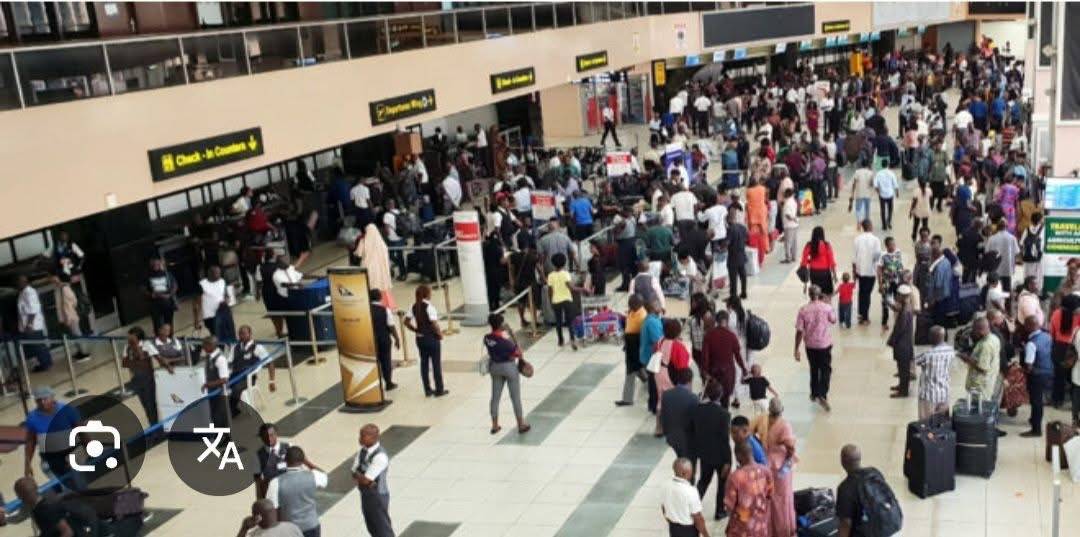
According to the investigation findings, airline tickets that ordinarily cost between N45,000 and N50,000 were outrageously hiked to between N400,000 and N670,000 during the Christmas period.
“We investigated following the complaints that they fixed prices during the Christmas period. Prices of tickets were around N45,000 to N50,000, and suddenly became N400,000 to N500,000, from N400,000 to N670,000 during Christmas period,” Bello stated.
“So, we followed up through our investigation, and we were able to conclude that it was a kind of price-fixing mechanism.”
The EVC explained that the commission’s preliminary report has already found the airlines culpable of price exploitation, with a final report and specific penalties to be released shortly.
“And what we are also considering is to look at a situation where we have to ask them to refund the excess to the passengers which they exploited. By the time we come up with the final report, you will see that,” Bello added.
When pressed to identify the airlines involved, he declined but confirmed that about five or six carriers are currently under investigation.
The commission’s action follows widespread complaints from Nigerians who travelled during the Christmas and New Year period and were forced to pay exorbitant fares for domestic flights due to high demand and limited seat availability. Many travellers had taken to social media to protest the sudden spike in ticket prices, which they described as exploitative and insensitive given the prevailing economic hardship.
Bello noted that the FCCPC’s preliminary findings suggest airlines may have engaged in collective price-fixing, a practice prohibited under the Federal Competition and Consumer Protection Act. Price-fixing occurs when competing businesses agree to set prices at a certain level rather than allowing market forces to determine pricing, and is considered anti-competitive behaviour punishable under Nigerian law.
Previous enforcement actions by the FCCPC have typically focused on fines and penalties payable to the government.
During the briefing, the FCCPC also addressed concerns about electricity tariff bands, with officials defending the Band A classification while acknowledging that consumers are not always receiving the promised 20 hours of daily power supply.
The Commission’s Executive Commissioner of Operations, Mr Louis Odion, explained that the FCCPC’s role is not price control but ensuring consumers are not exploited through the pricing of products or services.
“In the electricity sector, that is where we have most of the challenges that consumers contend with in this country,” Odion stated.
He disclosed that Band A consumers, who pay higher tariffs, are entitled to at least 20 hours of electricity supply daily, while Band B consumers should receive 16 hours. He urged consumers to formally complain when they do not receive the promised hours of supply, noting that the commission operates on an evidence-based system.
“A lot of times, if you go ask them, they will tell you this estate is actually on Band A, but we haven’t received any formal complaint from the estate as to the fact that this is the number of hours of electricity we are receiving. Our operational working is evidence-based. If we do not have evidence of a particular issue, we are not able to actually act on it,” he explained.
On prosecution powers, the commission’s Head of Legal Services, Chizenum Nsitem, revealed that the FCCPC has prosecuted over 25 cases since the operationalisation of the Federal Competition and Consumer Protection Act in 2019.
“At the last count, we have over 25 cases that we have been able to prosecute given the infractions of the provisions of the FCCPA. For the fear of being prosecuted, undertakings have relatively complied with provisions of the FCCPA,” Nsitem stated.
He disclosed that the commission has over 30 cases pending at the Federal High Court and the FCCPC Tribunal, including five cases at the Court of Appeal where undertakings have appealed tribunal decisions.
Nsitem also cited Section 20(2) of the FCCPA, which empowers legal officers to prosecute on behalf of the commission, and Section 113, which allows referral of cases to the Attorney-General of the Federation.
The FCCPC was established to protect and promote the interests and welfare of consumers, ensure that consumers’ rights are respected, and provide consumers with access to information to enable them to make informed choices.